
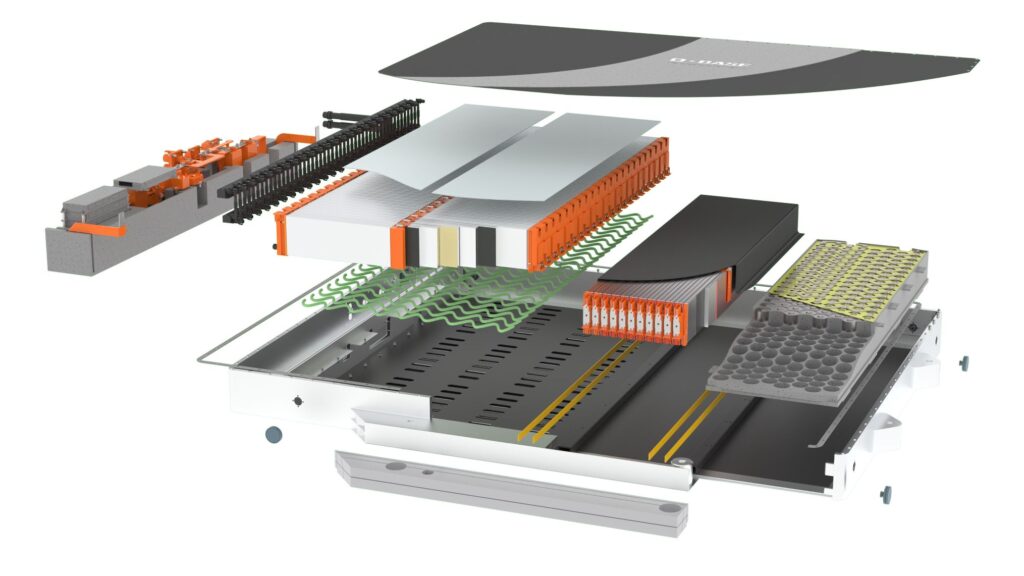
A concept solid state battery pack jointly created by BASF, the Yangtze River Delta Physics Research Center, and WELION New Energy Technology Co., Ltd.
New materials and compounds are needed to support the transition to solid-state batteries, which will enable longer driving ranges, faster charging times, and enhanced safety.
Automotive Industries (AI) asked Xin Li, Head of the BASF eMobility Innovation Center Asia Pacific, what the thermal management and safety challenges are with solid state batteries (SSBs).
Li: Thermal safety requirements are being made more stringent. For example, China has adopted a new version of the GB standard for the safety of electric vehicles, GB38031-2025. The “no open fire, no explosion” specification has increased from five minutes to two hours.

At the same time the energy density of the battery pack is getting higher and higher. The next trend is using solid state batteries (SSBs), which were regarded as safe.
While the risk of fire is reduced, the maximum temperature can be higher than that of existing batteries, reaching 1,400 degrees C, which makes it harder to control.
AI: How do chemistry and material choices shape cell and pack design?
Li: There are two major cathode active materials in the market. One is LFP (lithium-ion phosphate), and the other NCM (nickel cobalt manganese). Generally, LFP’s maximum temperature is around 800 degrees C, while NCM can reach over 1,200 degrees C.
LFP technology therefore requires less material for fire protection, but SSBs mainly use NCM technology.
For ASSB (All-Solid-State-Battery) under changing/discharging cycles, there is very strong expansion at the cell level, which means a pouch cell format is the most suitable.
Developing the right material that meets these demanding requirements is proving to be a bottleneck in the industry.
BASF is at the forefront of addressing this challenge, and we are confident that we are close to providing a viable solution with our thermoplastic polyurethane (TPU) solutions.
Solving the problem will open up the next wave of battery technology.
AI: What are the key practical, transferable design strategies for managing temperature uniformity, thermal propagation risk and mechanical constraints across emerging battery architectures?
Li: When we talk about thermal runaway, most people focus on the flames.
But even worse is an electric arc inside the battery pack generated by the high-voltage busbar.
It is therefore very important to separate the thermal channel from the electric channel. Battery fires start from the inside, and you have to prevent the fire making contact with the high-voltage busbar channels.
Another strategy is thermal balancing, which becomes an issue with fast charging. Under high-speed charging, the temperature inside the battery pack can be up to 75 degrees C.
And the delta T, the difference between the temperatures of individual cells within the battery, can be up to 12 degrees C.
That is very dangerous for the battery. So, we need two things to solve that problem.
The one is to bring down the absolute temperature. Another is to balance the temperature across the surface of the battery cell.
We think the most efficient solution is to increase the total cooling surface by, for example, integrating or replacing the traditional bottom cooling plate with a vertical cooling plate.
This will provide four times more cooling surface and improve the balance of the surface within the battery cells.
AI: What core thermal and safety principles remain valid across multiple next-generation chemistries and how do they enable more robust and scalable pack designs?
Li: It is not possible to avoid all cases of thermal runaway at a single cell level. But, you can prevent the propagation of the fire from one cell to adjacent cells.
For that, you need to be able to control the spread of the fire.
The most efficient way to do this is to use polyurethane potting materials to seal three sides, while the fourth collapses.
Ai: How does Welion and BASF next-gen battery pack, improve the competitiveness and environmental credentials of next-generation electric vehicles?
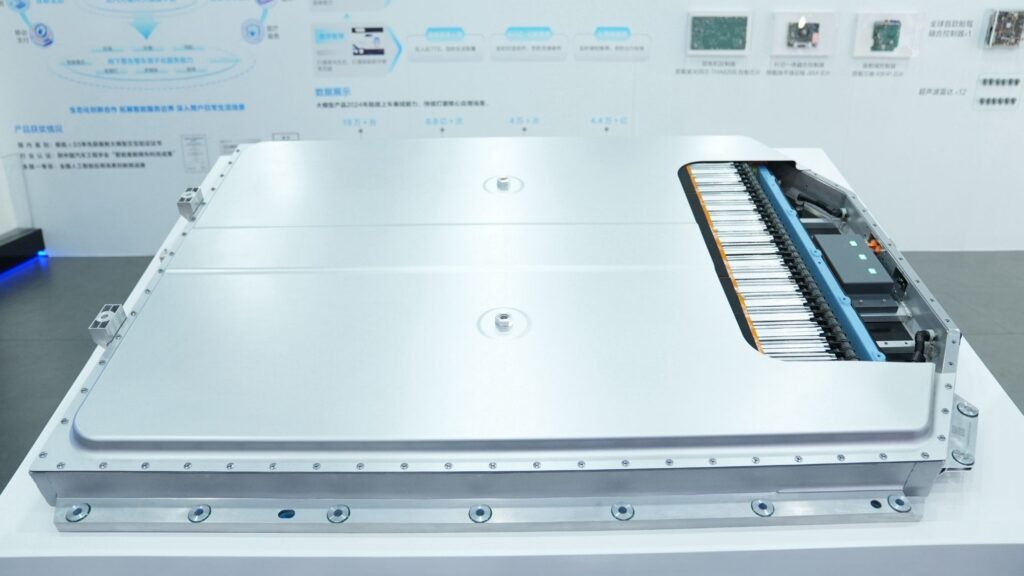
Li: Welion is a very good battery cell company with its own competence in solid-state batteries. They started with so-called semi-solid batteries, which is a polymer oxide, ceramic-based solid-state battery.
And now they are integrating the technology to all-solid batteries.
They need special materials for the assembly of battery cells into the pack.
BASF has the materials and the engineering implementation competence.
Working in partnership, our teams are bringing the product from lab to the real world.
That is just one area in which Welion and BASF are collaborating and will provide solutions for the manufacture of solid-state batteries.
Ai: What weight reduction is achieved using BASF’s Ultramid PA side cooling plates and Eastoflex® PU battery covers?
Li: The battery pack we have launched together with Welion using our vertical cooling plate has a pack level energy system level density of over 300 Wh/kg, which is roughly 50% more than the conventional battery pack level.
The safety performance is much better, which means there is not a trade-off between the energy density to safety.
Ai: How is BASF evolving its materials portfolio to help automotive manufacturers achieve their sustainability goals?
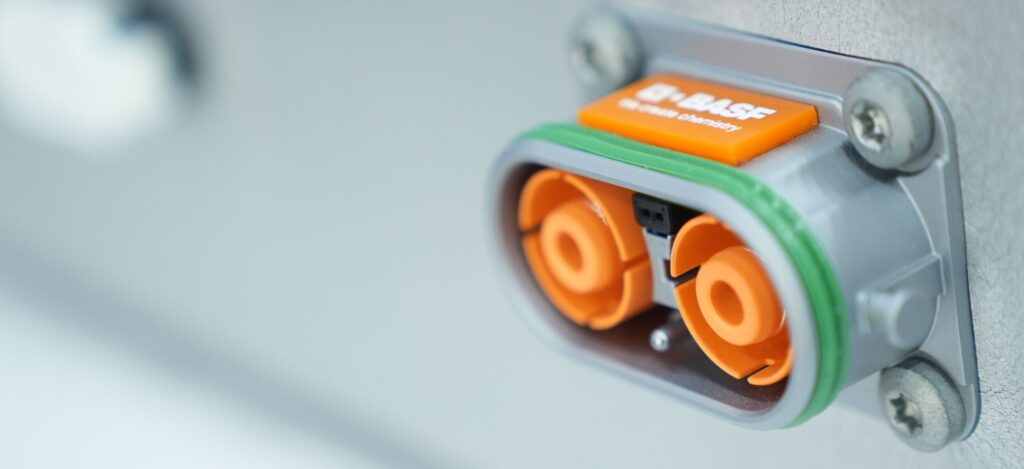
Li: BASF produces circular polyurethane (PU) formulations that meet stringent automotive safety standards, as part of our growing range of bio-based materials.
BASF, Porsche, and BEST successfully complete pilot project on chemical recycling in 2025.
The project demonstrated the recycling that high-performance plastics from automotive shredder residues (ASR), combined with renewable raw materials.
These mixed residues, consisting of plastics, film, paint and foam, currently require thermal recycling. Through gasification, a form of chemical recycling, the project demonstrated that this automotive waste can be returned to the automotive value chain.
AI: What is next for BASF eMobility?
Li: In addition to the electric vehicle technology, we have battery energy storage solutions, provide materials for electric air taxis and high-performance batteries, as well as application robots.
Short term, we have a good solution for the semi-solid battery, and there will soon be comprehensive solutions for all solid batteries, as well as applications in battery energy storage stations, and robotics.
BASF has evolved from being seen as a single material supplier, to a one-stop solution supplier combining expertise in engineering plastics, polyurethanes, and the chemistry inside the battery cell, with a global footprint.
We also provide Ultrasim® – the simulation and engineering implementation services, where we provide the raw materials, and our customers do the molding.
Working very closely with Tier 1s, we can provide solutions to the OEMs
More Stories
Powerstroke Tuner Harness Plug: ECU Wiring Setup Guide
Multi-constellation GNSS positioning, navigation, and tracking Click from MIKROE includes free six-month license of Skylark Precise Positioning Service
Ford and Geely Join Forces as Global Automotive Collaboration Enters a New Phase