
If you’ve been diving into the world of diesel performance upgrades, you’ve probably come across terms like Powerstroke tuner harness plug and tuning modules more times than you can count. These components, specifically the tuner and its wiring interface, are at the heart of how modern diesel enthusiasts unlock the true potential of their engines, and understanding how they interact through proper ECU wiring is the first step toward a successful setup.
Whether you’re a seasoned diesel mechanic or a truck owner taking your first steps into performance tuning, this guide will walk you through what a tuner harness plug does, why it matters, and how to set up the wiring correctly.
What Is a Tuner Harness Plug?
A tuner harness plug is the physical adapter that connects your vehicle’s Engine Control Unit (ECU) to any external tuning device or performance module you plan to install.
However, unlike a "translator," it does not process data itself; instead, it acts as a high-fidelity signal conduit. By connecting in-line or in parallel with the factory connectors (typically via the CAN bus or sensor-specific circuits), it allows the tuner to monitor ECU communications and send modified commands, such as adjusted injection timing, fuel pulse width, or boost pressure, back to the ECU, all without cutting or splicing a single factory wire.
This plug-and-play design ensures a clean, reversible connection that preserves your vehicle’s original wiring integrity.
Why ECU Wiring Setup Matters So Much
The ECU is the brain of your diesel engine, and any interference, whether from poor crimps, incorrect pin assignments, or incompatible connectors, can lead to drivability issues, fault codes, or even component damage. The importance of a proper wiring setup can be broken down into a clear cause-and-effect chain:
1. Physical Connection Integrity
All power, ground, and signal wires must be correctly matched. This is the foundation for preventing short circuits, voltage spikes, and electrical fires.
2. Signal Fidelity
The ECU relies on precise voltage/current signals. Even slight contact resistance or crosstalk can distort these signals, causing erratic injection timing, hesitation, or inconsistent boost response.
3. Diagnostic Robustness
Only when the above two conditions are met will the ECU’s onboard diagnostics (OBD) function as intended. Distorted signals can be misinterpreted as hardware failures, triggering Diagnostic Trouble Codes (DTCs) and potentially forcing the engine into "limp mode," which defeats the very purpose of tuning.
Understanding the Wiring Process
Setting up your tuner harness plug for a Powerstroke engine doesn’t have to be overwhelming. Here’s a practical step-by-step overview:
Step 0 (Safety first): Before touching any ECU connector, always disconnect the negative battery cable and wait at least 5 minutes to allow residual charge in the ECU capacitors to dissipate. This prevents voltage spikes from damaging the ECU during plug/unplug operations.
Step 1: Locate the ECU in your engine bay and identify the specific connector ports. Refer to your vehicle’s factory wiring diagram; connector shapes may look identical, but pin assignments vary significantly across model years.
Step 2: Match the harness plug to the correct factory ports. Ensure the plug aligns properly without forcing; never insert a connector into an unlabeled port.
Step 3: Secure all connections. Press each plug until its locking tab or retention clip clicks firmly into place. Loose connections are a common cause of intermittent tuning issues.
Step 4: Route the wiring harness safely. Keep it away from heat sources (e.g., exhaust manifolds) and moving parts (e.g., fan blades, steering linkage). Use zip ties or wire looms to secure the harness along a protected path.
Step 5: Before closing everything up, connect your tuning device and run a diagnostic scan. Verify that the tuner communicates with the ECU and that no DTCs are present.
Step 6: Reconnect the battery, start the engine, and perform a brief test drive. Then perform a final scan to clear any initial "loss of communication" codes that may have been temporarily stored during the installation.
The Role of Performance Parts in the Bigger Picture
A tuner harness plug is just one piece of the puzzle. When combined with quality Powerstroke performance parts, such as upgraded intercoolers, high-flow exhaust systems, improved fuel injectors, and performance air intakes, you can achieve significant gains in horsepower, torque, and fuel efficiency.
However, it’s important to understand that an ECU tune essentially rebalances your engine’s operating parameters. If you set the tune to deliver substantially more fuel, but your exhaust system or fuel pump cannot keep up, you risk excessive exhaust gas temperatures (EGT) or insufficient fuel pressure.
Thus, tuning strategy and hardware selection should be planned together; not every tune demands supporting hardware, but any major power increase absolutely does.
Common Mistakes to Avoid
Even experienced diesel enthusiasts can make mistakes during tuner harness installation. Here are some critical ones to watch out for, including a frequently overlooked grounding error:
-
Skipping the wiring diagram: Always consult the diagram for your specific year and model. Powerstroke engines evolved significantly, and visually identical connectors may have completely different pinouts.
-
Choosing an incorrect ground point: The tuner harness ground wire must be connected to the same grounding stud as the ECU (typically on the engine block or fender apron). Tapping into an arbitrary chassis point can introduce ground loops and signal noise.
-
Using incompatible harness plugs: Not all plugs are universal. Verify that your harness plug is rated for your exact engine configuration.
-
Rushing the installation: Take your time. A methodical, careful installation will save you hours of troubleshooting and potentially expensive component replacement later.
Final Thoughts
A Powerstroke tuner harness plug may seem like a minor component in the grand scheme of your diesel build, but it plays a foundational role in how your tuning system performs. Getting the ECU wiring setup right means your tuner can do its job effectively, reading data accurately, delivering precise adjustments, and helping you extract the most from your engine.
Whether you’re chasing raw horsepower, improved towing capacity, or better fuel economy, the foundation always starts with a clean, correct, and reliable wiring setup. Take the time to understand the process, use quality components, and don’t rush the install.
Your diesel engine will reward you with consistent performance and fewer unexpected warning lights, and your wallet will thank you for avoiding costly electrical repairs caused by improper installation.

More Stories
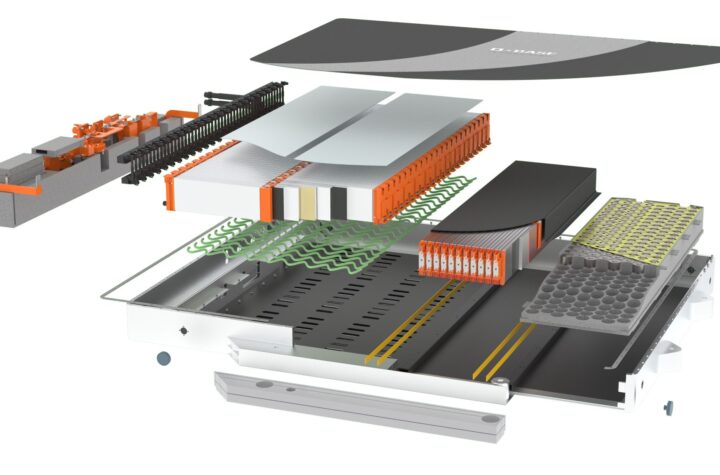
BASF thermal management solutions for solid state battery technologies
Multi-constellation GNSS positioning, navigation, and tracking Click from MIKROE includes free six-month license of Skylark Precise Positioning Service
Ford and Geely Join Forces as Global Automotive Collaboration Enters a New Phase