
















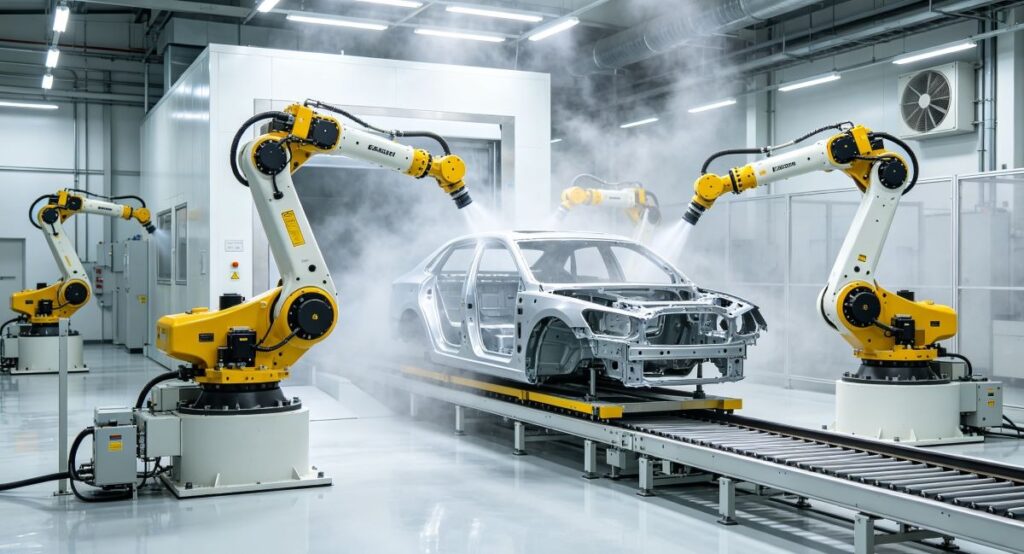
American automotive manufacturing is changing fast. Traditional assembly lines now run alongside electric vehicle production, and both depend on faster, more automated processes. Plants use more chemicals and advanced materials than they did a decade ago. At the same time, OSHA and EPA requirements keep getting stricter, and EV battery production is adding new hazards that many facilities have not dealt with before.
These changes mean gas hazards are no longer simple or isolated. A single production area can now face volatile organic compounds, flammable vapors, carbon monoxide, and oxygen deficiency all at once. Continuous multi-gas monitoring has moved beyond a basic safety requirement. It is now a core part of keeping production reliable, staying compliant, and running an efficient plant.
This raises a practical question for plant managers: why are more automotive manufacturers moving from single-gas sensors to fixed multi-gas detection systems? The answer becomes clear once you look at where the risks actually occur on the production floor.
Where Gas Hazards Exist Across Automotive Production Lines
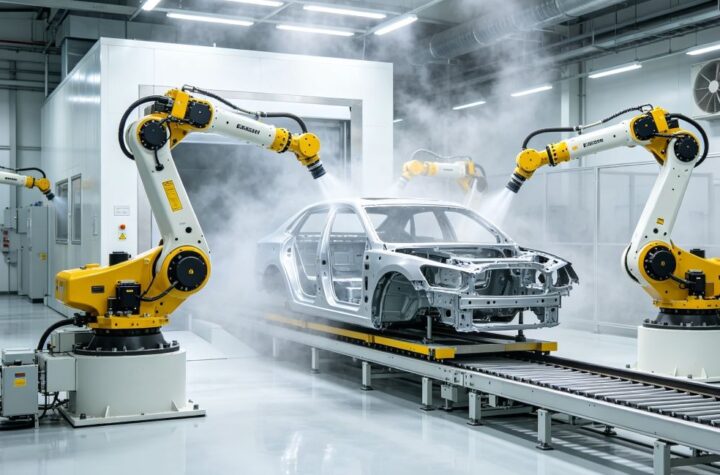
Paint shops carry the highest concentration of risk. Solvents and coatings release VOCs and flammable vapors continuously, and ventilation alone cannot guarantee safe levels at all times.
Chemical storage and material preparation areas add another layer. These spaces handle solvents, adhesives, cleaning agents, and fuels, each with different exposure limits and flammability ranges.
Welding, heat treatment, and assembly operations bring their own risks. Welding produces carbon monoxide, and enclosed heat-treatment areas can quietly deplete oxygen levels over a shift.
Battery manufacturing areas need close attention too. Electrolyte-related vapors, flammable gases, and oxygen displacement risks all need monitoring here, even though these zones look different from traditional engine or body shops.
Maintenance work and confined spaces often see the sharpest spikes in risk. Technicians can walk into a mix of leftover fumes, low oxygen, and residual chemicals with little warning.
Each of these areas carries its own consequences when gas hazards go undetected: safety incidents, unplanned downtime, and regulatory fines that are far more costly than the monitoring equipment itself.
Why Single-Gas Detection Is Not Enough for Modern Automotive Facilities
Single-gas detectors were built for a simpler kind of plant, one where a single hazard dominated a single area. That is rarely the reality today.
A paint shop alone can present VOCs, LEL-range flammable vapors, carbon monoxide, and oxygen depletion at the same time. Battery areas add hydrogen to that list. A single-gas sensor only sees one part of that picture, and it takes several separate units, each with its own wiring and calibration schedule, to cover what one fixed multi-gas detector can handle on its own.
The table below summarizes why this matters:
|
Monitoring Approach |
Limitation |
|
Single Gas Detector |
Only identifies one hazard at a time |
|
Multiple Independent Sensors |
Higher cost and heavier maintenance burden |
|
Fixed Multi Gas Detector |
Centralized monitoring, one system to manage |
For a modern automotive facility, this comparison explains why more plants are shifting toward fixed industrial multi gas detectors that monitor several hazards from a single point, rather than relying on a patchwork of individual sensors.
What Makes a Fixed Multi Gas Detector Suitable for Automotive Applications
A good fixed multi-gas detector needs to match the pace and complexity of automotive production. A few features matter most:
-
24/7 continuous monitoring with real-time alarms, so hazards are caught the moment they appear, not during a periodic check.
-
Flexible sensor configuration, typically combining VOC, LEL, oxygen, and carbon monoxide sensors, with hydrogen or hydrogen sulfide added where needed.
-
Explosion-proof construction built for industrial conditions, including temperature swings and heavy equipment vibration.
-
Remote monitoring that integrates with PLC or SCADA systems, giving control rooms direct visibility into gas conditions.
-
Low-maintenance design with straightforward calibration, which matters a great deal in high-volume plants running multiple shifts.
-
Data logging that supports both compliance reporting and longer-term trend analysis.
Together, these features let a facility monitor several gas types from one connected system, rather than managing scattered single-gas units across the plant.
How to Select the Right Gas Sensors for Automotive Manufacturing
Sensor selection should follow the specific risks in each area, rather than using one generic configuration across the whole plant. The table below outlines a practical starting point.
|
Area |
Main Risks |
Recommended Sensors |
|
Paint Booth |
Solvent vapor, fire risk |
VOC + LEL |
|
Welding Area |
CO accumulation |
CO |
|
Battery Production |
Hydrogen, solvent vapor |
H₂ + VOC + LEL |
|
Chemical Storage |
Chemical leakage |
VOC + LEL |
|
Confined Space |
Oxygen deficiency |
O₂ + LEL + toxic gases |
These combinations are a starting point, not a fixed rule. A gas risk assessment for each area will confirm the right sensor mix before installation.
Common Gases Monitored in Automotive Manufacturing
Automotive plants tend to monitor a consistent set of gases, though the exact mix depends on the area. Knowing why each one matters helps explain the sensor choices covered earlier in this guide.
VOC (Volatile Organic Compounds)
Paint shops and coating lines release VOCs continuously during spraying, curing, and cleanup. These vapors build up fast in enclosed booths and can reach flammable concentrations if ventilation falls behind. VOCs are also regulated air pollutants, so EPA reporting often depends on tracking them accurately. Continuous monitoring gives an early warning before levels turn hazardous.
LEL (Lower Explosive Limit)
LEL sensors measure how close a flammable gas or vapor is to its ignition point. This matters most in paint booths, solvent storage, and battery areas, where vapors can build up quickly in confined spaces. A rising LEL reading is often the first sign that ventilation is falling behind or a leak has started, and a single spark from welding nearby is enough to trigger ignition.
Oxygen (O₂)
Several automotive processes quietly consume or displace oxygen, including heat treatment ovens, nitrogen purging, and battery electrolyte handling. There’s often no smell or visible sign of a problem. Confined spaces and maintenance pits carry the highest risk, since a technician can lose consciousness within seconds of low-oxygen air. Oxygen sensors are usually paired with LEL or toxic gas detectors.
Carbon Monoxide (CO)
CO monitoring is tied closely to welding, brazing, and other heat-intensive work. It forms from incomplete combustion and builds up fast in enclosed bays with limited airflow. Because CO has no smell or color, workers get no natural warning before exposure symptoms begin, which is exactly why fixed monitoring matters most in these areas.
Hydrogen (H₂)
Hydrogen monitoring has become more relevant as EV battery production expands. Battery formation, charging, and certain electrolyte processes can release hydrogen, which is flammable and rises quickly due to its low density. Standard VOC or LEL sensors aren’t always built to catch it reliably, so battery zones need dedicated hydrogen detection to close that gap.
How Multi-Gas Monitoring Improves Production Reliability and Operational Efficiency
The safety case for multi-gas monitoring is well understood. The production case deserves just as much attention.
Continuous monitoring reduces unplanned shutdowns triggered by undetected gas buildup, and it limits equipment damage caused by corrosive or reactive gases. It also streamlines maintenance, since technicians can rely on real-time data instead of manual gas checks across every zone.
Reliable monitoring supports stronger EHS performance and smoother regulatory compliance, both of which matter during audits and inspections. Some systems also tie into ventilation controls, helping plants run exhaust and HVAC systems only when needed rather than continuously.
Avoiding even one major production interruption can often justify the investment in a fixed multi-gas system on its own.
Fixed vs Portable Multi Gas Detection: Building a Complete Safety Strategy
Fixed and portable detectors serve different purposes, and most facilities need both.
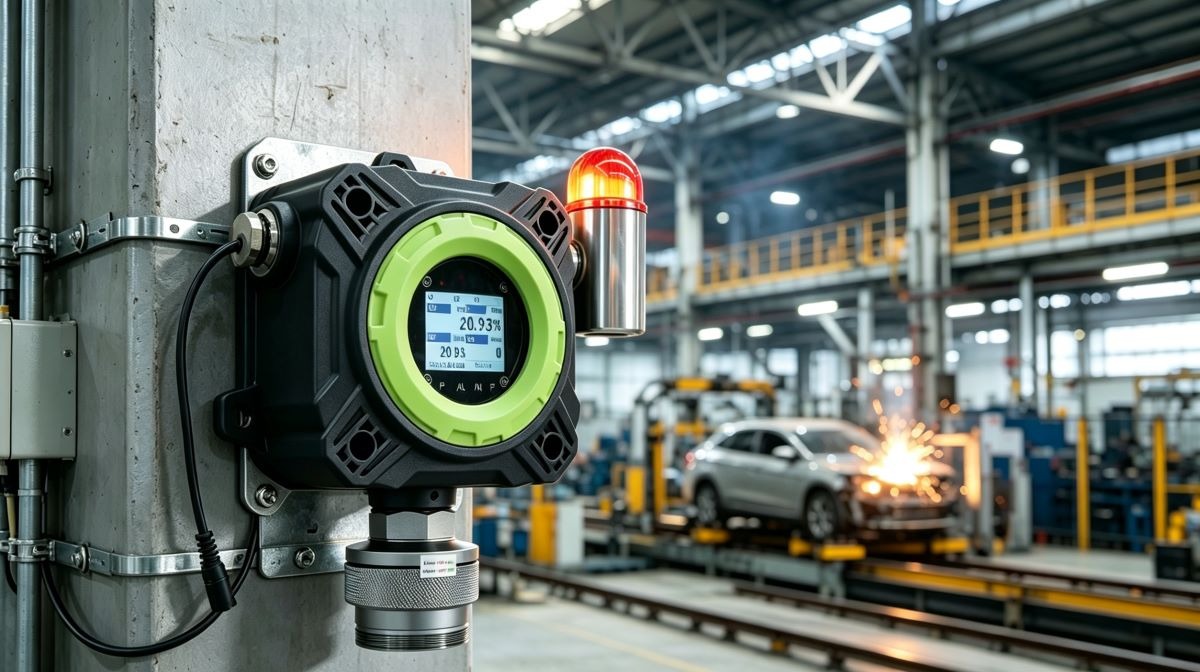
Fixed multi-gas detectors, such as GasDog multi-gas detector(5 gas) units, are built for continuous monitoring in defined areas like paint shops and chemical storage rooms. Portable multi-gas detectors are better suited to maintenance work, inspections, and confined-space entry, where workers move between locations and need a device they can carry with them.
A combined strategy, fixed systems for permanent monitoring and portable units for mobile work, gives a facility complete coverage rather than gaps between fixed zones.
|
Application |
Recommended Detection |
|
Paint Shop |
Fixed VOC + LEL monitoring |
|
Chemical Storage |
Fixed multi-gas monitoring |
|
Maintenance |
Portable multi-gas detection |
|
Confined Space |
Portable O₂ + LEL + toxic gas detection |
Conclusion
Modern automotive manufacturing demands gas monitoring solutions that match the complexity of today’s facilities. By adopting integrated industrial multi gas detectors, plants can protect workers, maintain production continuity, and meet evolving regulatory requirements more effectively.
If your facility still relies mainly on single-gas detectors, it is worth reviewing where the gaps are and considering a combined fixed-and-portable strategy, guided by the sensor selection needs of each area. The right industrial gas detector approach helps build a safer, more reliable, and more efficient automotive manufacturing facility.
More Stories
How to Choose a BLDC Motor Controller for Robotics and Industrial Applications
How to Choose the Right Air-Cooled Industrial Water Chiller for Manufacturing Applications
Why Power Quality Matters in Smart Manufacturing: The Role of Three Phase Voltage Stabilizers