
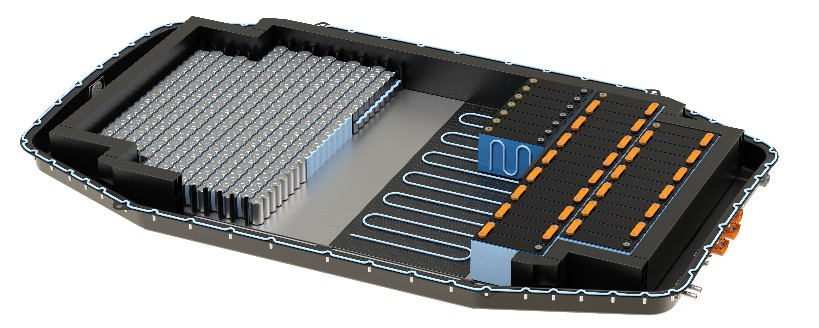
PPG's latest adhesive and sealant technologies are ideally suited to a variety of EV battery pack needs, including sealing of pack shells and components, fixing of cells and modules into packs, structural reinforcement, and impact resistance.
Debonding-on-demand (DoD) technologies enable bonded automotive components to be separated without damage using external triggers such as heat, light, or electricity.
They simplify vehicle repairs, reduce manufacturing scrap, and support the recycling and reuse of high-value parts, including electric vehicle (EV) batteries.
Automotive Industries (A) asked William Brunat, Global Director Product Development Automotive OEM Coatings and Mobility at PPG, what technology the company has adopted for DoD.
Brunat: Thermal, chemical (solvents), and electrical mechanisms are the technologies most mentioned, and other exotics exist. PPG has selected thermal debonding as the most efficient and secure.
Electrical debonding requires a complex and expensive application process and is sensitive to electrical discharges and shorts. Chemical debonding requires aggressive and sometimes toxic solvents which need long diffusion times to reach all areas to be activated.

The chemistry PPG has developed involves an innovative globally viable coating that melts at elevated temperature to allow the debonding.
This coating is applied at low film thickness (30 µm) and is compatible with thermally conductive adhesives (TCAs). It is cured from room temperature to 80 °C prior to applying the adhesive. The typical uses are on aluminum cooling plates and tubes, and it is suitable for other applications. It is also compatible with our dielectric powders and UV-cured dielectric coatings.
To activate the debonding process there are quite a few sources of heat, including infrared, for example. Heat may be applied locally or everywhere in the pack depending on the need.
The major benefit is to allow the repair/replacement of components (cells and modules) within the battery pack, and this brings huge savings in costs and increases sustainability performance. Obviously, it eases the end-of-life dismantling process quite efficiently.
AI: Please provide more background on the overall UV dielectric inkjet process.
Brunat: A UV dielectric coating is the layer protecting an object like a battery cell or a cooling element from electrical hazards. It is a highly insulated organic coating currently applied using conventional spray guns. With the inkjet process, we use an inkjet head instead of spray guns. The function is identical, but the coating needs a significant reformulation to fit the inkjet constraints, including viscosity control and particle size to conform to the different nozzles of an inkjet head.
In summary, this process is very similar to the print heads you can find in your home or office printer and brings the same values and benefits.
AI: How does inkjet printing enable automotive and Tier 1 automotive suppliers reduce waste and enhance their environmental credentials?
Brunat: Inkjet works by jetting small droplets of the liquid coating onto the substrate with a high level of precision. You can print any pattern you want, thus allowing you to avoid complex, time-consuming and expensive masking, and demasking operations. This is the driving force for the introduction of this process.
In addition, it eliminates overspray—the mist of fine liquid coating droplets generated during spray application. With spray guns, only a portion of the coating reaches and adheres to the substrate. The remaining material, even when partially recoverable, is typically lost and can accumulate in the spray booth, requiring regular cleaning and maintenance.
The inkjet eliminates the overspray and therefore reduces the cleaning operations, which in turn lessens the needs of maintenance of the booth. Overspray waste is also almost eliminated.
This process can be cost effective and productive for manufacturing and application.
AI: What UV dielectric repair solutions does PPG offer for automotive applications?
Brunat: Our UV repair system, a patent pending solution, offers an efficient way to avoid scraping highly valuable or incorrectly coated parts. Traditionally, where possible, coaters have had to decoat and later recoat failed parts due to application, handling, storage, and transportation damage or defects. This is an expensive process which adds complexity and cycle time and consumes production capacity.
Our solution allows local application and curing of a patch of UV-cured dielectric coating material. This permits spot repairs to a failed part without needing to decoat and recoat it afterwards.
This, of course, brings very high savings to the repair process. There is no need for decoating machines, and no production capacity is sacrificed by a recoating step. There are only benefits with the potential to increase yield and sustainability of a manufacturing line.
AI: What anti-blast fire protection solutions for electric vehicle (EV) battery packs have you developed?
Brunat: As an industry market leader, PPG recently developed both a new series of battery fire protection coatings and a new application process.
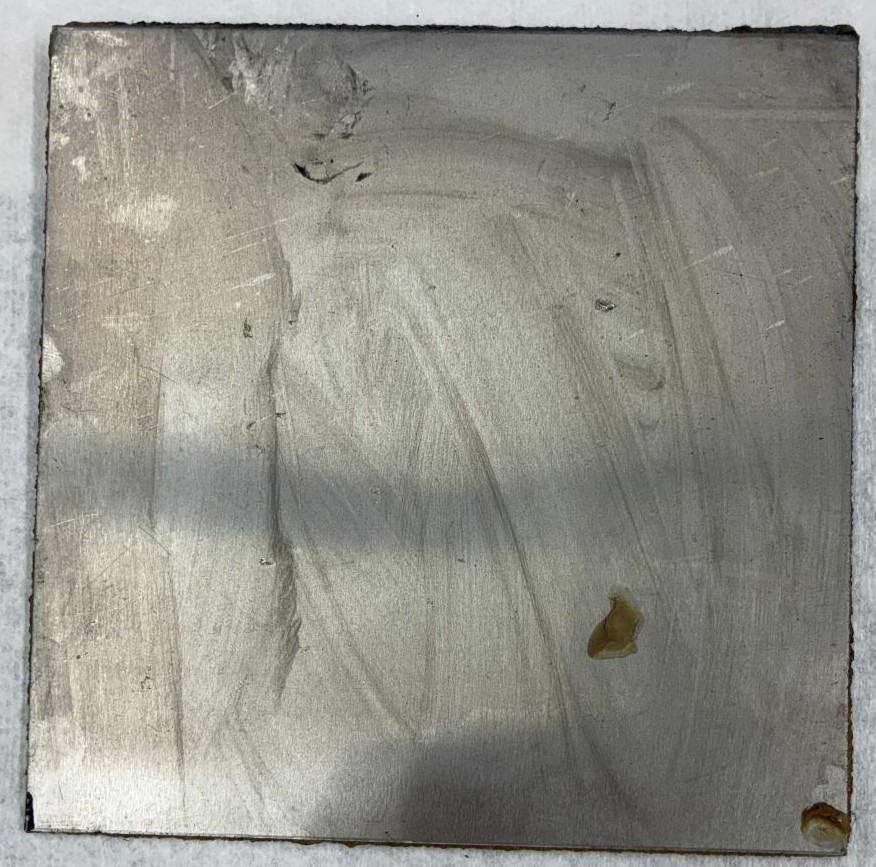
The new CoraGuard® Anti-Blast Series was developed to withstand direct thermal runaway events in nickel-based battery chemistry. These coatings provide exceptional anti-blast performance, helping protect battery packs from the impact of high-energy hot particles ejected during a cell failure.
They maintain dielectric protection throughout and after the thermal event while also providing thermal insulation to the substrate. In addition, the coatings can be applied at reduced thicknesses, particularly for LFP battery cells, while maintaining performance requirements. Their lower intumescence also supports more compact battery pack designs.
PPG has also developed a new application process that shows the potential of reducing application costs by greater than 15% compared with conventional spray application methods, depending on battery pack design and geometry. [AB1.1]
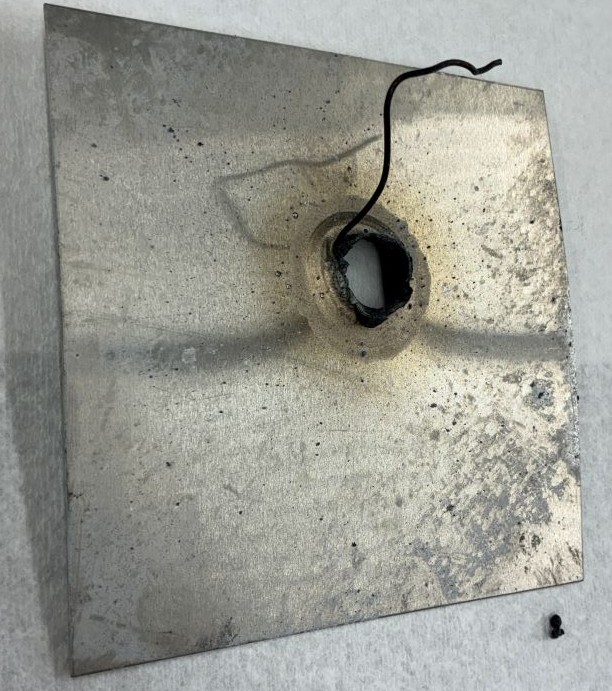
The process combines flat-stream application for large, continuous surfaces with drop-on-demand (DoD) technology for areas where overspray cannot be tolerated and where masking would otherwise be required. To accommodate the high viscosity of battery fire protection coatings, the DoD process uses high-pressure dispensing heads equipped with large nozzles.
This application approach is compatible with both the CoraGuard® Anti-Blast Series and other battery fire protection coatings, including the CoraGuard® 2100 Series.
AI: How do these solutions enhance the safety and performance in battery pack assemblies?
Brunat: The increasing regulations and safety requirements require the development of new materials with improved performance without impacting the total cost of the function.
UV-cured dielectric coatings provide a unique combination of high productivity and speed that meets performance, dielectric strength, adhesion, and durability requirements which cannot be achieved with any other current protective solution. For example, the high adhesion of the coating to the cell permits the cell-to-pack concept which tapes cannot fulfil because of their low adhesion strength.
The development of the new CoraGuard® Antiblast allows better protection of the passengers as it will help to mitigate and possibly prevent worsening damage. The dielectric strength provided during and after a thermal runaway event gives additional protection against blasting particles that would normally wear or be abraded away.
AI: What measures are you focusing on in the development of 1 K battery fire protection?
Brunat: PPG is agnostic to 1K or 2K options. We certainly understand the benefits of 1K versus 2K, and the more complex chemistry required for 1Ks, but we currently have quite mature and patented 1K BFP technology as easy-to-integrate solution for cell-to-body or cell-to-chassis designs. The technology would allow OEM customers to incorporate BFP coating in their automation line with minimum CAPEX investment.
AI: Do you provide customer support through specification, testing, and project development?
Brunat: Yes of course. As with all our coatings for automotive applications including electrification, we accompany our customers all along, from the understanding of the needs, the identification of the best material, the approval testing and of course the development of an appropriate application process.
We start from a total solution approach, from developing the coatings but also designing, implementing, and even running the lines given the customers’ parameters or needs for support. This is PPG’s unique offering as a combination of technical expertise.
Having Optima solutions and Coating Services Solutions divisions within the business for application also gives us insight on the challenges of our customers beyond material needs.
And, finally, we do have European, North American and Chinese technical centers where our customers are welcome to see our global formulating labs, application centers, and coating lines. We can partner with customers to apply parts for their testing and approval needs. We look forward to customer visits.
AI: How do you ensure that the coatings meet fire protection standards while maintaining mechanical and aesthetic properties?
Brunat: The aesthetic of fire protective coatings is not a key performance as it is mostly located inside the battery pack and is therefore not visible by the passengers. When it is applied on the outside surface of the pack enclosures, we need to have an attractive appearance, but of course not with the same aesthetic as a body panel! Achieving good-looking fire protection coating is not a difficult task.
But achieving good mechanical properties both prior to and after the thermal runaway event is a very difficult exercise. Maintaining the required isolation properties after the event is an even more difficult task.
Our formulators have extensive experience and expertise over decades in fire protection from our other segments including protective, marine, and architectural coatings, and have built a toolbox of resins, pigments and additives that allow us to design solutions that have the required high-performance properties.
PPG understands that all components within the pack need different property sets, and we have developed material unique to meet the various challenges of each design or pack architecture. Our technical teams have done this using structure property relationships balancing performance attributes with the value needed to meet today’s market requirements.
AI: What is next for PPG?
Brunat: Our focus is on helping accelerate EV adoption by delivering battery protection solutions that provide performance and cost competitiveness with internal combustion vehicles. We are already seeing this parity—and in some cases an economic advantage—in China, with strong progress in Europe, the Middle East and Africa. As the market continues to evolve, we remain committed to developing solutions that not only meet but exceed customer and industry requirements, while helping drive broader adoption in regions such as North America.
The application of coatings can be a significant part of the total cost of the battery pack as it can be a complex and expensive process, especially if you need masking and demasking operations. With this PPG is actively accelerating programs that look to improve the application portion of coatings.
In addition to the coatings mentioned in the interview, PPG is working actively on battery fire protection technologies including powder, 1K 100% solids liquid, and electrocoat. There is more information to come over the next few months.
Finally, we are always looking at how our materials can go across industries and help new and emerging segments. Such as battery energy storage systems that are supporting our ever-increasing energy demands.
For a link to the PPG Automotive Battery Pack Brochure click here.
More Stories
Envalior on new thermoplastic formulations to meet HV heat challenges
Schaeffler and Sonatus partnership brings Edge AI to motion control for software-defined vehicles
How Marelli is supporting the transition from ICE to electric powertrains