
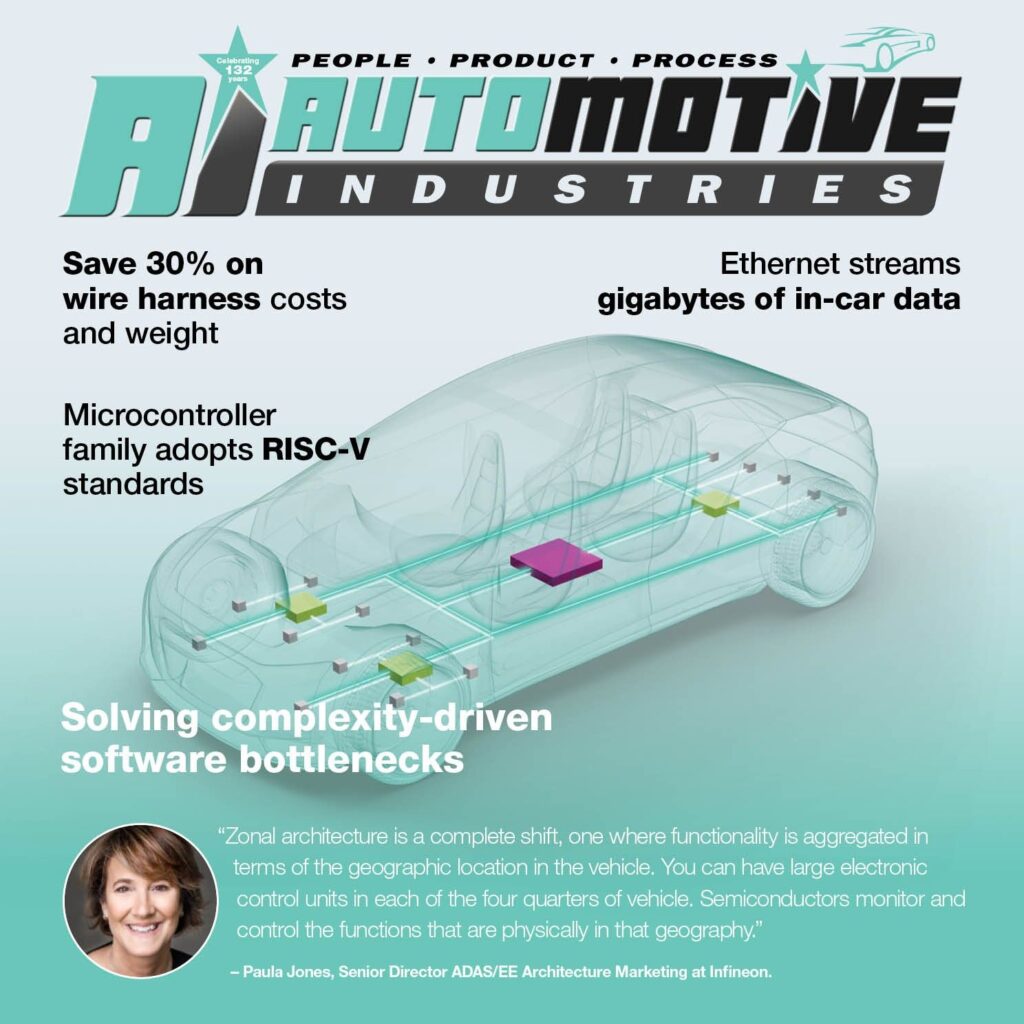
One of the ways the evolution of software-defined vehicles (SDVs) is transforming the automotive industry is a shift from domain-based to zonal architecture. This transition enables greater customization, enhanced in-vehicle experiences, and improved convenience through seamless over-the-air updates.
To find out more, Automotive Industries spoke to Paula Jones, Senior Director ADAS/EE Architecture Marketing at Infineon.
AI; What is the role of semiconductors in software-defined vehicles?
Jones: Semiconductors provide a foundation for software-defined vehicles.

The complexity of SDVs is leading to software bottlenecks. OEMs are solving the problem by separating the hardware from software. Once you do that you are able to remove some of the complexity by using standardized silicon hardware.
With standardization you are able to better scale software for low- and high-end vehicles.
You are able to reuse software much more readily, and you’re able to deploy it safely and securely and update it.
AI: What role does silicon play in the interaction between software and hardware?
Jones: Let us put the semiconductor role in the software-defined vehicle in three buckets
One is the compute, where you have the brain of the system. That allows you to control all the power and actuators in the vehicle, as well as updating. It is one of the areas in which OEMs want to standardize.
The second is networking and communication within the vehicle. There are different layers of compute. Think of it as an IT system on a wheel connecting all the different layers of compute within the vehicle and also acting as an interface to the outside of the vehicle.
The third element manages the distribution of power from the battery or the internal combustion infrastructure to the rest of the vehicle.
These are three key enablers in the software-defined vehicle. The role of semiconductors is to smartly distribute power throughout the architecture of the vehicle.
AI: Is silicon used to distribute both power and data?
Jones: It does both. We have power distribution systems that smartly send power to where it is needed. This changes when the vehicle is charging, having an over-the-air update or accelerating.
On the data side, there is this Ethernet backbone, which collects and distributes information. So, there are two networks – to distribute power and data.
AI: Please tell us about the shift from domain-based to zonal architecture, and how it is applied to SDVs.
Jones: There can be anywhere from 70 to 100 discrete ECUs or electronic control units distributed through a vehicle. To consolidate the management and control OEMs used domain architecture, where certain functions are aggregated together.
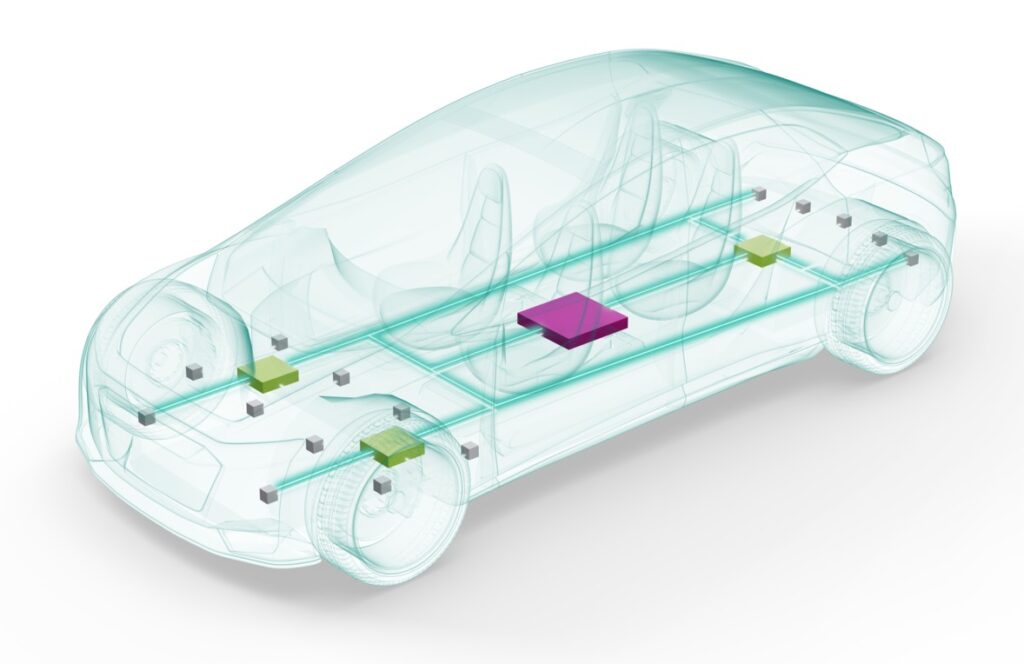
Zonal architecture is a complete shift, one where functionality is aggregated in terms of the geographic location in the vehicle. You can have large electronic control units in each of the four quarters of vehicle.
Semiconductors monitor and control the functions that are physically in that geography.
AI: What are the advantages?
Jones: You reduce your wire harness by up to 30%, with some OEMs reporting they have stripped out 600 meters of wire, which reduces weight. But, at the same time, you are improving the efficiency of the power distribution system.
Additionally, if an OEM wants to update a vehicle or fix a bug, they do not have to talk to 100 different ECUs. They can connect through the central computer which then communicates with the zones and updates the software and firmware when necessary. So, the zone approach is a smarter way to manage the overall infrastructure of the vehicle.
AI: Does this mean OEMs have to redesign from the ground up?
Jones: One of the struggles that the industry has is that they are dealing with legacy modules. If you are a startup company, it is easy to begin from scratch with zonal architecture. The struggle comes when you have to keep your costs down by retaining some legacy ECUs.
AI: Where does Infineon fit into this shift to SDVs?
Jones: It is pretty exciting for us. We have a very large and broad portfolio, with an estimated 3,000 individual components suitable for use in zone control systems.
At the center of this is our microcontroller portfolio. Infineon is the largest supplier of automotive microcontrollers. We have two main products. The 32-bit AURIX™ microcontroller is well suited to high security requirements and providing real-time information.
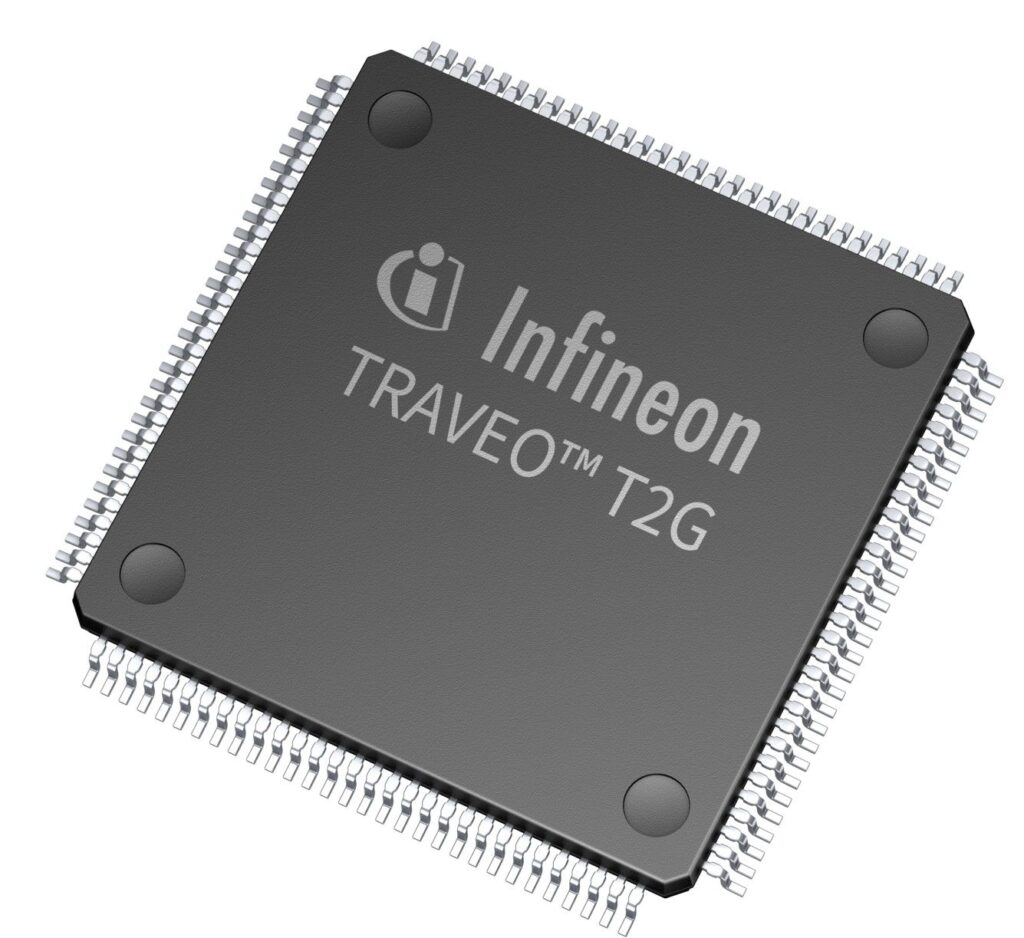
The second is our TRAVEO™ T2G Arm® Cortex® family of 32-bit automotive microcontrollers, which are designed to power scalable automotive zonal architectures.
In addition to our microcontrollers, we have a whole host of other products, including scalable smart power switches that replace traditional fuses, optimized transceivers, robust Ethernet networks, MOSFETs (Metal-Oxide-Semiconductor Field-Effect Transistor), memories and sensors
There is a series of new products in the pipeline to support the shift to more efficient, safer and more secure devices.
AI: Can some legacy devices be retained?
Jones: OEMs can decide on a step-by-step approach or start from the ground up. There are some edge nodes, for example that an OEM may not want to change. They may have an electronic power steering module because which is highly effective, amortized, and cost effective.
They could elect not to include the steering module into a zonal architecture, while integrating body control functions such as a door lift or power seat controls.
Each approach has its own cost-benefit implications.
Electric vehicles are more likely to have a zonal approach because they are newer.
AI: How does your technology support zonal areas?
Jones: Our SPOC (Software Programmable Output Controller) devices are multichannel smart high-side power switches for automotive applications. They combine built-in protection, advanced diagnostics, and a Serial Peripheral Interface (SPI) to deliver scalable, software-configurable power distribution.
What is important when integrate all of these devices is that you have freedom from interference.
You do not want a fault in your window lift mechanism affecting your power steering, for example.
These new devices also use e-fuses, which replace mechanical fuses and relays. The smart devices are more efficient, more effective in monitoring potential faults in the vehicle and react very quickly to any kind of fault detection.
AI: How does the Ethernet help transfer raw data into real-time awareness?
Jones: In August 2025 Infineon acquired Marvell’s automotive Ethernet business as a strategic move that complements our microcontroller strength because we see more and more that an Ethernet backbone is critical to the success of software-defined vehicles.
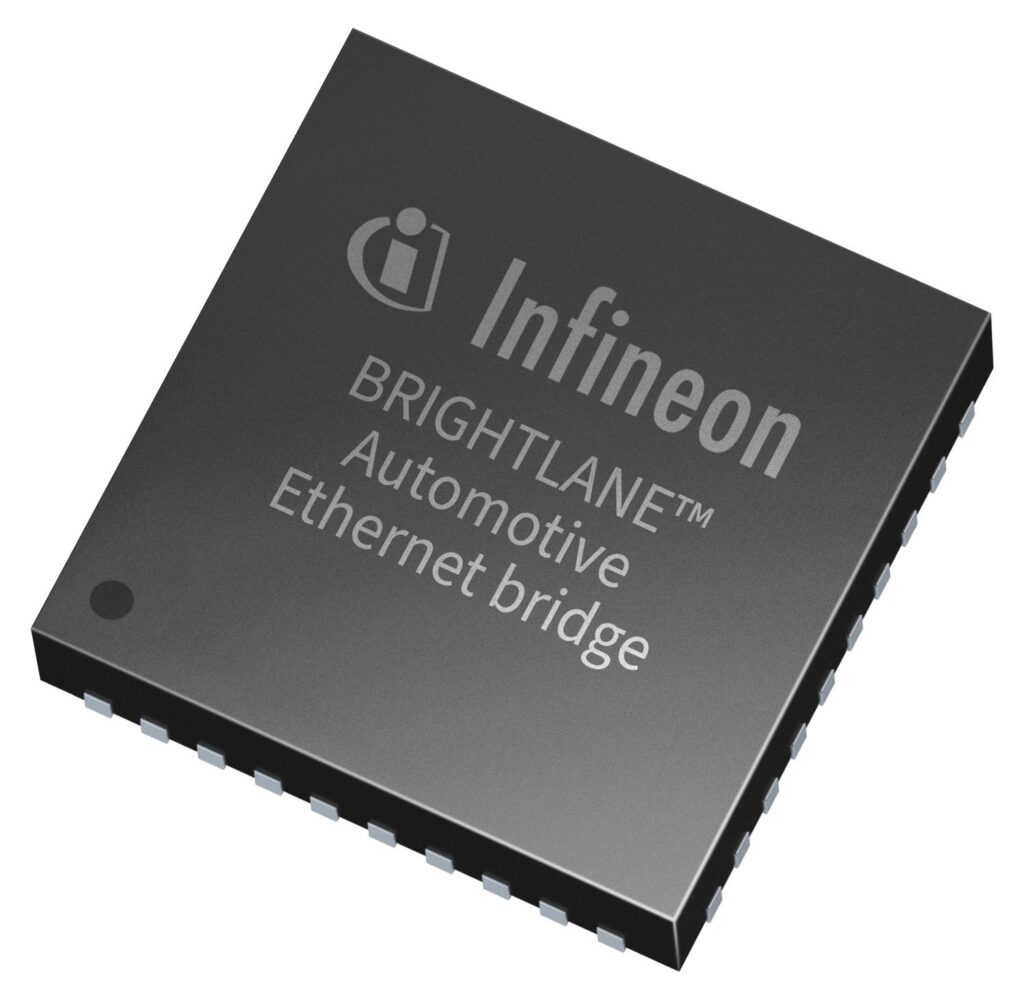
Ethernet data rates are much higher bandwidth and much lower latency than traditional vehicle bus system which are CAN (Controller Area Network) and LIN (Local Interconnect Network) based, and with a greater level of security.
Because of the higher bandwidth and the security and safety, we are able to take raw data that’s streaming from a vehicle’s camera or radar and translate that into real information that can be either computed into an action by the vehicle or translated into information for the occupants to see.
What we are seeing in Ethernet vehicles that have either a mixed domain or zonal system in place is speeds of between 100 megabits per second to a gigabit per second. With an Ethernet backbone we believe this can go up to 10 gigs or even 25 gigs a second.
That means we can push vast amounts of data from sensors on the inside and outside of the vehicle without losing data packages.
AI: Where do you stand on the shift to open-sourced platforms?
Jones: One of the exciting moves that Infineon has announced is our next generation microcontroller family adopting RISC-V standards. RISC-V is an open instruction set architecture that is well established in industry.
It was developed at Berkeley many years ago, but it’s being used primarily in consumer space. We see that there is a great fit for this open-source standard to move into the vehicle, particularly with the move to software-defined vehicle.
Open instruction does not limit innovation. Many people can use it. There are no royalties involved. You can standardize all your different tools from ecosystem partners, as it is easy to transfer software from one device to the next.
This makes it more scalable for the devices we provide to meet many different requirements within a vehicle.
We have also co-founded a non-profit called Quintauris, which includes members from our industry ecosystem. We are working together to enable the RISC-V open-source approach to be adopted not only by Infineon, but other companies as well to support the move to SDVs.
AI: With the change in the business model, what are you selling?
Jones: There are going to be different business models for how software and how silicon are enabled within these next generation vehicles. With OEMs moving to models that support software subscriptions, or that allow the unlocking of features via software, semiconductors must support these models with robust, secure and scalable solutions
Microcontrollers are changing as well. We are beginning to see virtualization of semiconductor chips, so you can start development on a virtual platform even before the silicon is available.
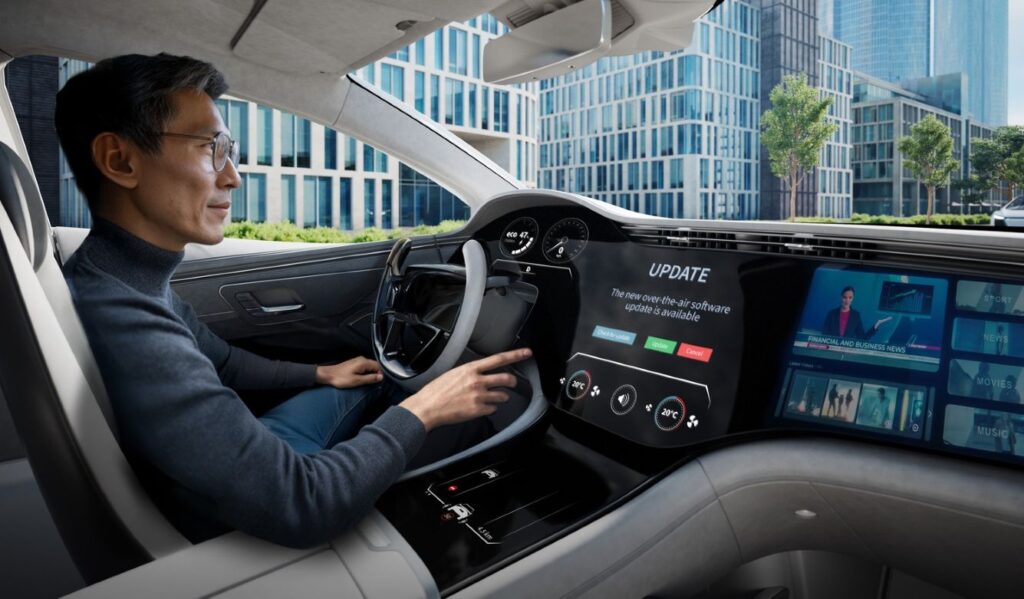
Software defines functionality, but semiconductor hardware defines the limits and possibilities of a vehicle.
Traditional OEMs are also having to change their business models as they will be investing a lot more on software. A 2025 McKinsey study confirms that the automotive and software market is transitioning to zonal and central computing architectures.
In contrast to the overall vehicle market, which is growing by around 1% CAGR annually, the global automotive software and electronics market could grow by 4.5% CAGR and reach $519 billion by 2035. Vehicles equipped with ADAS and autonomous driving systems could account for nearly 70% of vehicle sales by 2035, according to McKinsey.
More Stories
Envalior on new thermoplastic formulations to meet HV heat challenges
How Road Conditions Can Contribute to Motorcycle Accidents in Washington
The Step-by-Step Panel Beating and Repair Handover Process with Certified Auto Body Specialists