
Global real estate group JLL and Rolls-Royce have built on their strategic partnership, with JLL securing a broader mandate to deliver lease administration, transaction management, and additional services across a 16 million sq ft global real estate portfolio.
Headquartered in London, UK, with primary operational hubs and manufacturing bases in Derby, Bristol and Friedrichshafen, Rolls-Royce has a global footprint spanning more than 50 countries, and has experienced significant growth over the past year, with cutting-edge technology in aerospace manufacturing, marine and industrial power systems, defense applications, and nuclear power solutions.
The agreement will see JLL provide crucial support for Rolls-Royce’s diverse real estate portfolio optimization and strategic decision-making, ensuring the firm’s infrastructure scales efficiently and effectively with its business expansion.
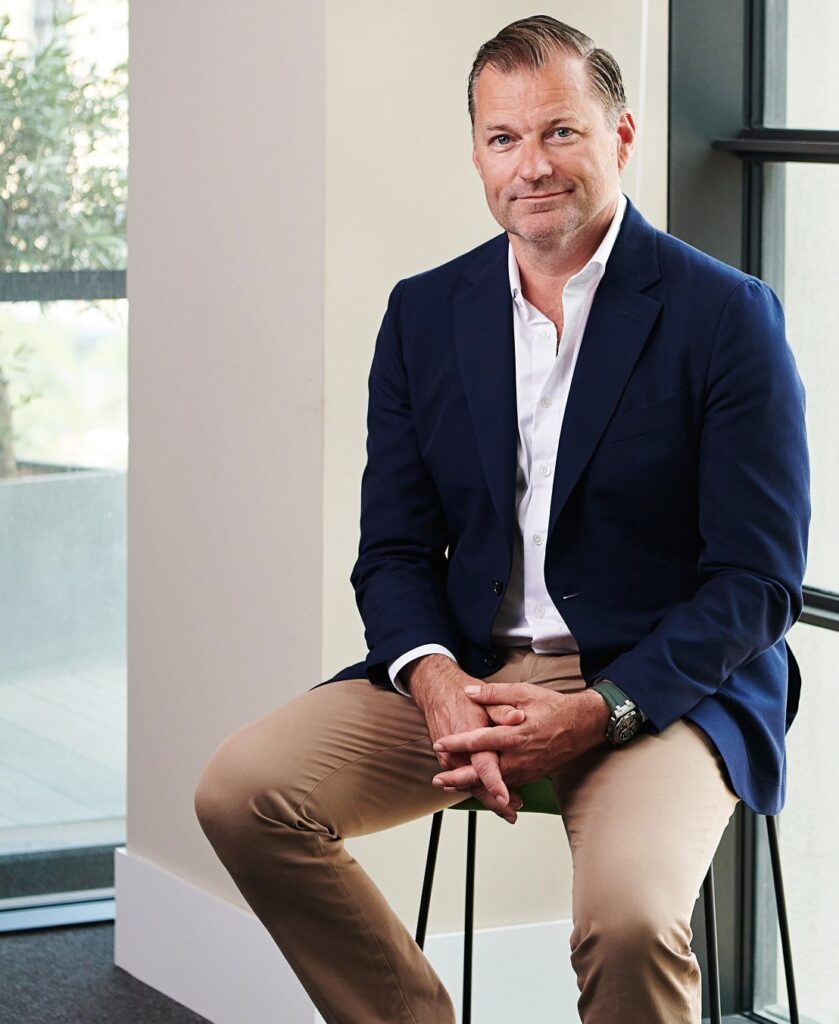
“We’re thrilled to expand our relationship with Rolls-Royce in an agreement that represents substantial growth in both scope and square footage,” said Martin Jensen, EMEA Divisional President, JLL.
“By leveraging our global leadership team and the strong relationships we’ve built through our facilities management work across Rolls-Royce’s divisions, we are now delivering a truly integrated approach to their real estate portfolio,” he added.
Automotive Industries (AI) asked Jensen how the expanded Rolls-Royce mandate reflects the growing demand from industrial clients for a more integrated real estate model.
Jensen: Feedback from our clients highlights their needs are transforming in line with a rapidly evolving market, new ways of working and the shifting geopolitical climate. Businesses coming to market are now placing much more value on the data firms like JLL can accumulate across all their departments, service lines and industries, making internal alignment essential.
Companies across all industries are seeking commercial real estate partners and looking for an integrated offering that comprises the services we are already well known for providing separately. It is clear that connectivity has now become an essential quality that companies are prioritizing when going to market.
AI: What were the key factors that led Rolls-Royce to deepen its relationship with JLL?
Jensen: Our clients can see us bringing value with the likes of our advisory, consultancy and portfolio management offerings, the topline elements they would expect to get from partner like JLL.
That is just not integrated facilities management. It’s capital projects, it’s advisory, it’s real estate transactions, etc. Clients like Rolls Royce don’t just want to work with facilities management providers, they want to partner with a true strategic real estate partner.
AI: Rolls-Royce operates across more than 50 countries and multiple major hubs, so how are you tailoring your global platform to support consistency, compliance, and local market responsiveness at the same time?
Jensen: In order to tailor for global platforms and support consistency, we have built a single digital solution for them. So, what we do in Germany is the same as what we do in the US when it comes to compliance, when it comes to engineering, when it comes to delivery of services.
Also, the data they see is very consistent across each of the regions. It’s not a different set of data in Germany as it is in the US. We’re now measuring the same output in each of those countries, which gives them a very singular pane of glass to benchmark from to review their costs, their efficiencies, and their overall business in the client real estate.
AI: With the addition of lease administration and transaction management, how will JLL help Rolls-Royce turn real estate data into faster, smarter decisions that support its wider transformation and growth?
Jensen: We have access to a lot more of their data through lease administration and transaction management, and we’ve given them a single integrated solution for all of their data inputs, whether it’s integrated facilities management, project cost, or energy management.
That’s where we’re going to build the next generation of data and products for them. The fact that it’s built on our technology meant they didn’t need to make any investment themselves. By working with JLL, we have given them a single integrated approach for all their data and their systems, which we manage on their behalf.
So, when we want to look at the cost of portfolios in Germany to the cost of portfolios in Brazil, we can do that now quite easily from correlating all that data for them.
AI: The agreement highlights digitized processes, prop-tech, IoT sensors, and AI-powered analytics. How are these technologies changing the way industrial real estate portfolios are managed in practice?
Jensen: We’re slowly but surely moving to outcome-based contracting and demand-based facility management and services. So, if I look at cleaning, property management, construction management and assets, by introducing all of these technologies, then we actually find out what we really need to clean, what waste management we really need to take on, do we actually need to do these project managements or can we do condition based maintenance and so on.

Investing in these technologies brings you that much closer to demand-based facility management, demand-based services.
AI: What opportunities do you see for combining portfolio strategy, FM performance, and occupational data to create measurable value for a complex engineering business like Rolls-Royce?
Jensen: By having all your information and aggregated on a single integrated system, instead of having to pull it through so many, now you’ve got one system, you can start to really make that data work for you.
For example, if I want to go to demand-based facility management, demand-based cleaning, then I need to know what the population is in the building every day. A truly integrated approach gives us far more data to work with to maximize outcomes and efficiency.
AI: From business rates and subtenancy management to strategic negotiations and compliance, which service areas do you expect to have the biggest impact on portfolio optimization for Rolls-Royce?
Jensen: I foresee growth, transformation and change is going to happen in their defense business and also their power systems business. Both of those are going to look at going through very significant growth currently and into the future.
They’re going to have to understand if their portfolio is efficient. Do they need to build those locations or buildings? Have they maximized what we have today? I think that’s huge value we provide. That they can start looking at that data and then answer it pretty quickly, instead of taking it weeks and months to collate that data like they would have in the past.
AI:How does this expanded contract strengthen JLL’s position in supporting large industrial and manufacturing clients that are balancing growth, transformation, and operational efficiency?
Jensen: A lot of the automotive clients, industrial clients in general, all have very similar topline objectives and pain points. The automotive industry is probably a lot more focused on cost because of the competition with China.

And then backed up by the cost of fuel, which is probably having a massive impact in their business. There’s a lot more competition in the market. If you look at the likes of BMW and Mercedes in Germany, for example, they have offshored a lot of their manufacturing over the last few years because they’re just too expensive in that country.
No matter how efficient they are, they’ve come to the conclusion that it’s just too expensive to do all of this assembly in Germany. So, they ship it out to Slovakia and other parts of Eastern Europe, Africa, other places as well. We can support clients in ensuring they’ve got sites in the right locations that reflect their growth plans for their business.
AI: Looking ahead, what does this partnership signal about the future of commercial real estate services for global industrial companies that increasingly want one trusted partner across their entire portfolio?
Jensen: Facilities management is just one element of the total cost of ownership when you look at client to client real estate.
So, when you look at the total cost of what it takes for them to manufacture an engine or a car or whatever, the facilities are actually quite a minor cost in total. Now, a lot of companies recognize that they can’t just keep beating up the FM cost because there comes a point in time where you just can’t go any lower.
So why do I want to waste all my time and energy in that when I should be looking at how much is the actual lease cost, how much is the facility costing me, how much is energy costing me, and start tackling those problems, which would probably bring a lot more savings for them in the short and longer term.
I think when companies understand that, it changes their buying habits by default because service companies are not real estate companies, so they can never help them in that arena.
Can they really help them in energy management? Not really. Can they help them in portfolio optimization? Absolutely not. And that’s where our advisory support can really come in and help.


More Stories
BASF thermal management solutions for solid state battery technologies
Powerstroke Tuner Harness Plug: ECU Wiring Setup Guide
Multi-constellation GNSS positioning, navigation, and tracking Click from MIKROE includes free six-month license of Skylark Precise Positioning Service