
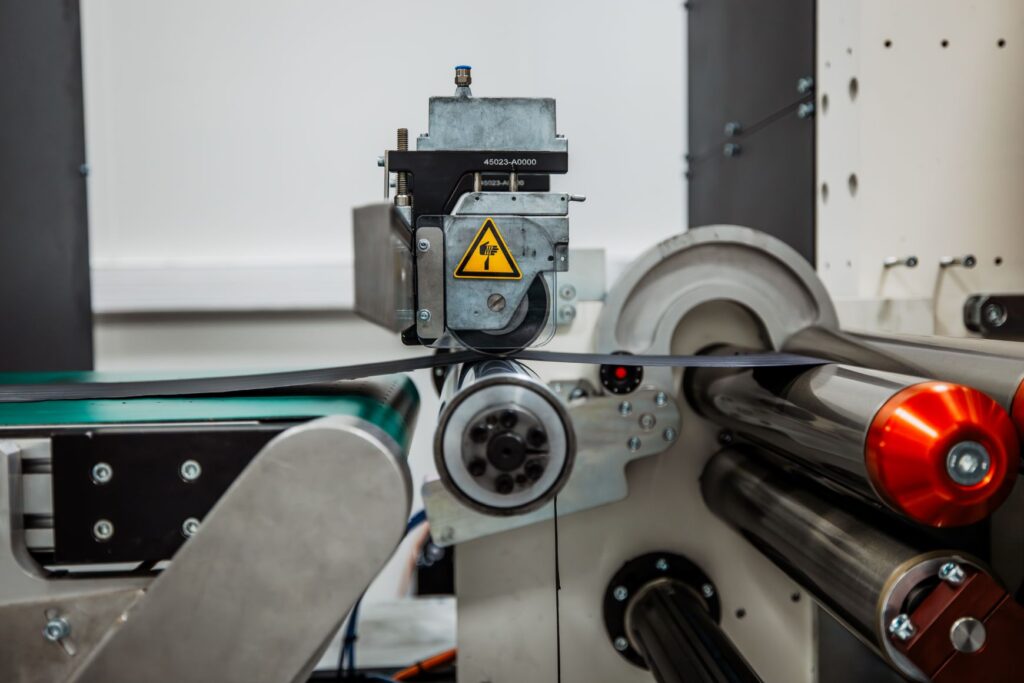
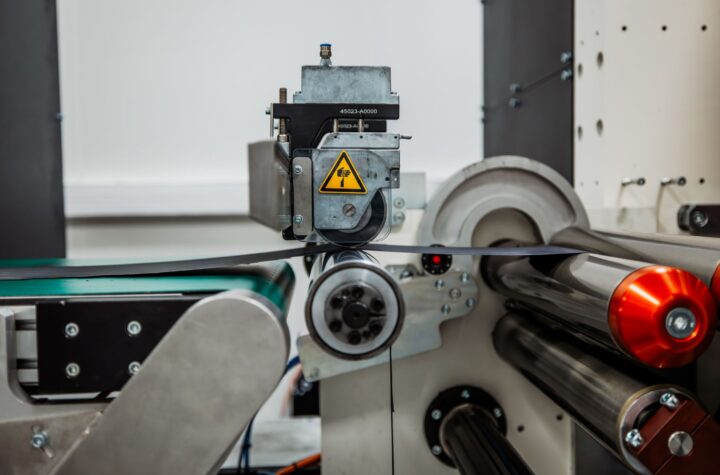
In dry electrode coating with X.Cellify DC, a powder mixture is pressed to form a film, which runs through the system without a carrier foil.
Material waste in battery electrode manufacturing can be reduced by replacing conventional wet coating with dry coating, according to Dürr, which has successfully proved the technology and showcased it at the Battery Show 2026, along with a micro dispensing unit for adhesive applications.
Automotive Industries (AI) spoke to Sebastian Gries, Senior Manager Dispense/Battery Systems, and Stefan Doose, R&D Manager LiB at Dürr.
AI: How is Dürr positioned as a supplier of battery production technology?

Gries: Dürr is a supplier of high quality and innovative technologies in electrode coating, calendering, electrolyte filling, and battery dispensing processes, complemented by end-to-end IT solutions.
With our innovative technical solutions, we aim to stand out in the market and offer battery manufacturers benefits in terms of product quality and manufacturing efficiency.
AI: What innovations did you present at this year’s Battery Show Europe?
Doose: We see dry coating as the technology for next-generation electrode manufacturing. X.Cellify DC is a solution ready for use. The technology saves space and energy, and it also comes with benefits in terms of flexibility and cell quality.
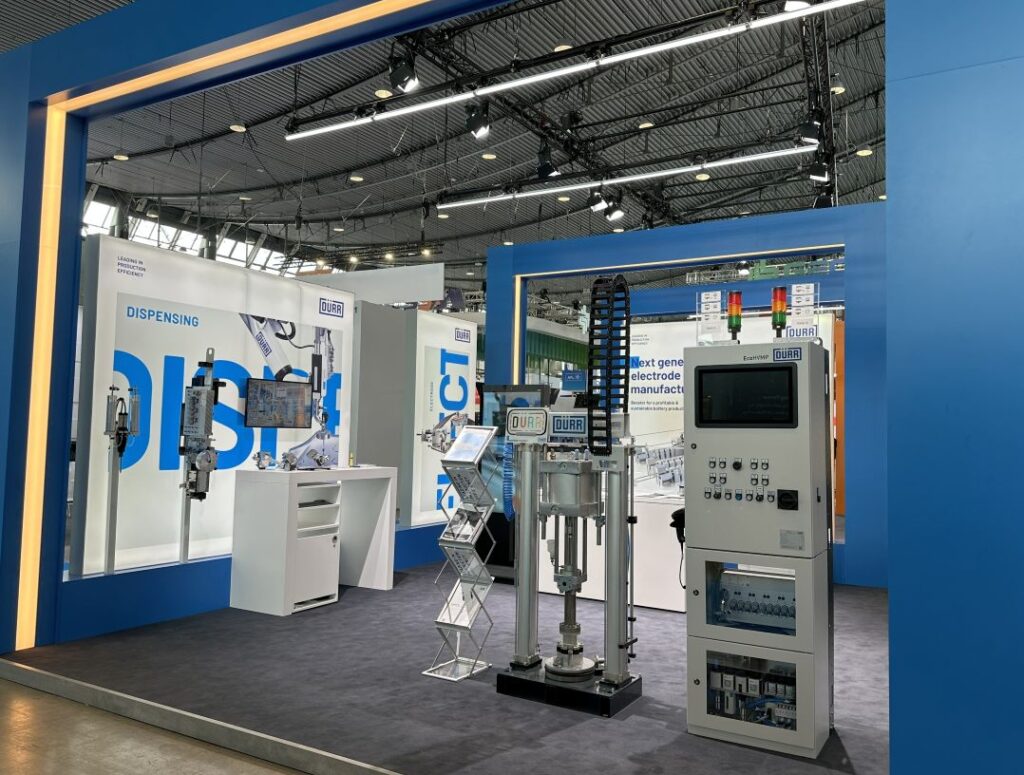
Gries: In battery dispensing we are expanding our portfolio with a solution for the application of very small volumes of adhesives and sealants. The EcoMeter XS micro dispensing unit is the perfect fit for battery assembly, electric motor production, production and assembly of power electronics and small-volume potting applications.

We can apply volumes below half a cubic centimeter, which is required in all sealers for e-drives, thermal interface adhesives, in electronics, and for all small electronic parts, including mobile devices.
There has been very good feedback from customers about this new strategic product line, and we have already received our first orders.
AI: How does it work?
Gries: It is a progressive cavity pump, which means it can apply micro volumes continuously without refueling.
This makes it suitable for E-drive sealers, for bonding magnets, and for thermal interface materials.
It can also be used for potting, as well as a number of applications in new markets for us.
AI: How does the dry coating process with X.Cellify DC work?
Doose: The process itself is different to the conventional wet coating process where the active material is dispersed in a solvent.
It combines Dürr’s expertise in web handling, coating, calendering and process integration.
Instead of conventional slurry, the process uses a dry-mixed active material. This powder mixture is dosed and pressed into a free-standing film using calenders. Additional process steps bring the film to the desired product parameters. Finally, one film is laminated onto the collector foil from each side.
Because the carrier foil is used only in the lamination step, any film that does not meet specifications in the process can be fully reused. This closed-loop approach prevents the loss of valuable active material and significantly reduces waste – an important benefit in battery production.
The process is suitable for lithium-ion technology and solid-state batteries.
The proof-of-concept plant is located in Chassieu in southern France, in a dry room environment at Ingecal, a Dürr Group company specializing in calendering technology. Tests have shown that the process is reliable and scalable, opening the door to gigawatt-scale and pilot projects.
AI: When it comes to integrating dry coating into their production processes, what approach do battery cell manufacturers take?
Doose: After the first round of investment in gigafactories, most manufacturers are now searching for the next generation of technologies that they can implement in their manufacturing facilities.
So, they are looking mainly for brownfield applications beside new greenfield applications.
They also want to minimize risk. In the past when they were ramping up new factories the risk was really high, along with costs.
We are now working closely with our customers to ensure short ramp up times and satisfactory quality right from the start for the next generation of batteries.
AI: How would you summarize the feedback from visitors of The Battery Show regarding the new technologies?
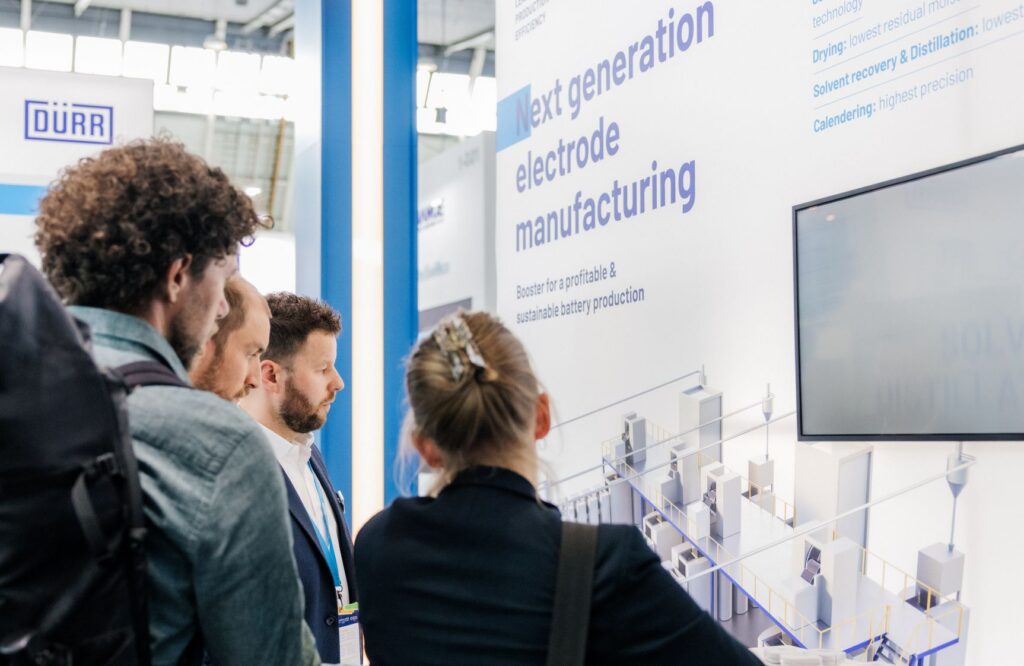
Doose: We received very positive feedback. There has been a number of requests even before the show for meetings to talk about the new technologies, and also a lot of interest shown by visitors to the booth. Clearly, customers are interested in the new technology, and we will build on this to establish a good footprint in the market.
AI: What are the next steps?
Doose: I think the next steps are quite clear. We will continue improving and adapting the technologies in response to feedback from customers, in order to meet their requirements.
Gries: We are ready to scale both the dry coating and micro dispensing technologies, and are already in direct discussions with customers.
So, the next step after the show is to continue the discussions with customers in order to have the technology on factory floors at production scale.
More Stories
McKinney Welcomes $919 Million LITEON Investment, More Than 600 New Jobs
Team Shelby and Historic Shelby American GT40s Roll into Goodwood Festival of Speed with Support from Goodyear
Immersive In-Car Gaming Becomes Reality: The Cinemo and SmashLabs Partnership