

Designed for early detection of critical battery conditions, the Marquardt battery sensor monitors pressure, temperature and hydrogen to identify potential anomalies before they escalate.
As electrification advances, battery systems are becoming more powerful, more complex and more deeply integrated into modern vehicle and energy architectures.
Safety in these systems is no longer defined by the monitoring of individual parameters alone. It depends on understanding how physical, electrical and thermal changes interact – and on translating this insight into coordinated system behavior.
Marquardt, a specialist in mechatronics, addresses this challenge with a portfolio of solutions, each of which fulfills a clearly defined role within the battery system: from detecting physical processes inside the battery to controlling system behavior, monitoring electrical integrity, managing energy flow and securing the charging interface.
The battery safety sensor detects what happens inside the battery
At the center of the early detection layer is the Battery Safety Sensor. It captures key physical parameters directly within the battery pack and combines multiple sensing principles in one unit.
“Battery safety today is no longer about looking at isolated parameters, but about understanding their interaction,” explains Dr. Patrick Mattes, Vice President of the Power and Energy Solutions business unit.

“With our Battery Safety Sensor, we are effectively creating an early-warning capability that identifies critical developments before they become visible or have any serious impact.”
The sensor detects mechanical impacts such as crash events, identifies pressure changes as an indication of gas formation, monitors thermal development and analyzes gases generated during electrochemical reactions.
By correlating this information, the system can reveal patterns that would remain hidden if each signal were evaluated individually.
This is particularly relevant because conventional detection methods can reach their limits when used in isolation. Surface temperature may react too slowly, pressure signals need to be distinguished from environmental effects, and voltage changes can occur only when internal damage has already progressed. Combining different physical signals makes early detection more robust and reduces the risk of false interpretations.
The battery management system turns data into decisions
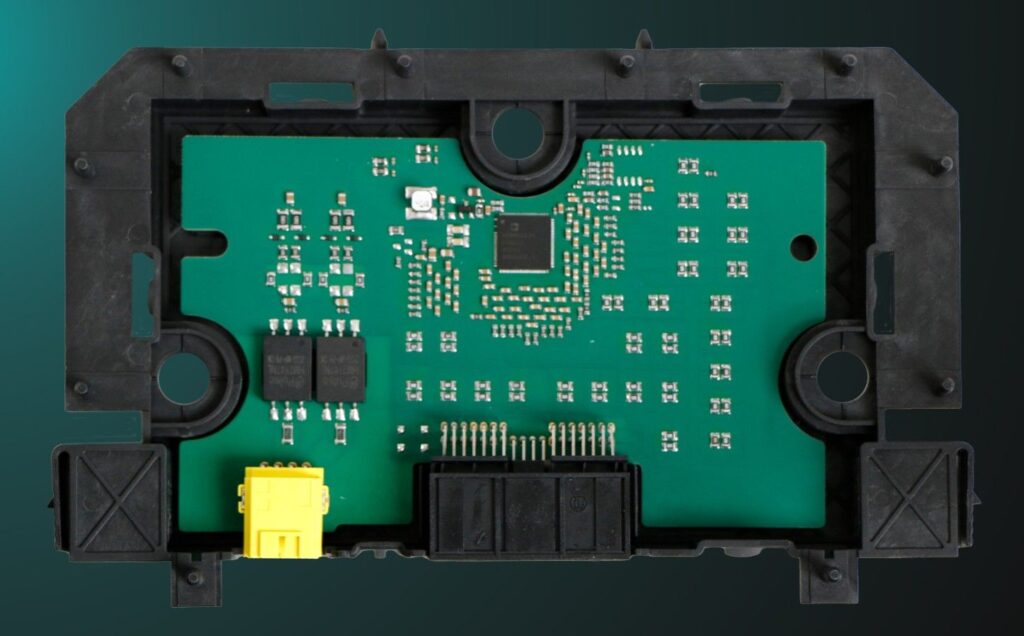
While sensing provides the necessary insight, battery safety ultimately depends on how the system reacts.
This is where the Battery Management System (BMS) takes over the central control function. The BMS processes data from across the battery system, monitors voltages, temperatures and currents, estimates key operating states such as State of Charge (SOC) and State of Health (SOH), and controls balancing and protection mechanisms.
By integrating inputs from the Battery Safety Sensor, the BMS can respond not only to electrical limits but also to physical changes inside the battery.
“We are taking a decisive step forward by not only capturing data but also linking and interpreting it,” says Mattes. “This allows risks to be identified much earlier and assessed with significantly greater reliability.”
In this role, the BMS determines the appropriate system response in everyday operation as well as in critical situations.
The cell module controller captures data at cell level
For these system decisions to be reliable, the BMS depends on precise information from the cell and module level.
The Cell Module Controller (CMC) provides this data layer within the battery architecture.
Operating at module level, the CMC enables accurate measurement of cell voltages and temperatures, supports reliable data acquisition and allows flexible integration into different high-voltage battery architectures.
It creates transparency down to the cell level and delivers the detailed information required for higher-level system control.
The HV sensor monitors electrical integrity
Beyond physical processes, electrical conditions must remain within safe limits at all times.
The High-Voltage Sensor (HV Sensor) continuously monitors current, voltage and insulation resistance. It helps detect abnormal electrical conditions such as leakage currents or insulation faults at an early stage.
While the Battery Safety Sensor focuses on physical changes within the battery, the HV Sensor provides the electrical protection layer of the system.
The charging process as part of battery safety
Battery safety does not end inside the battery pack. It also extends to the way energy enters the system and how the charging interface is secured during operation.
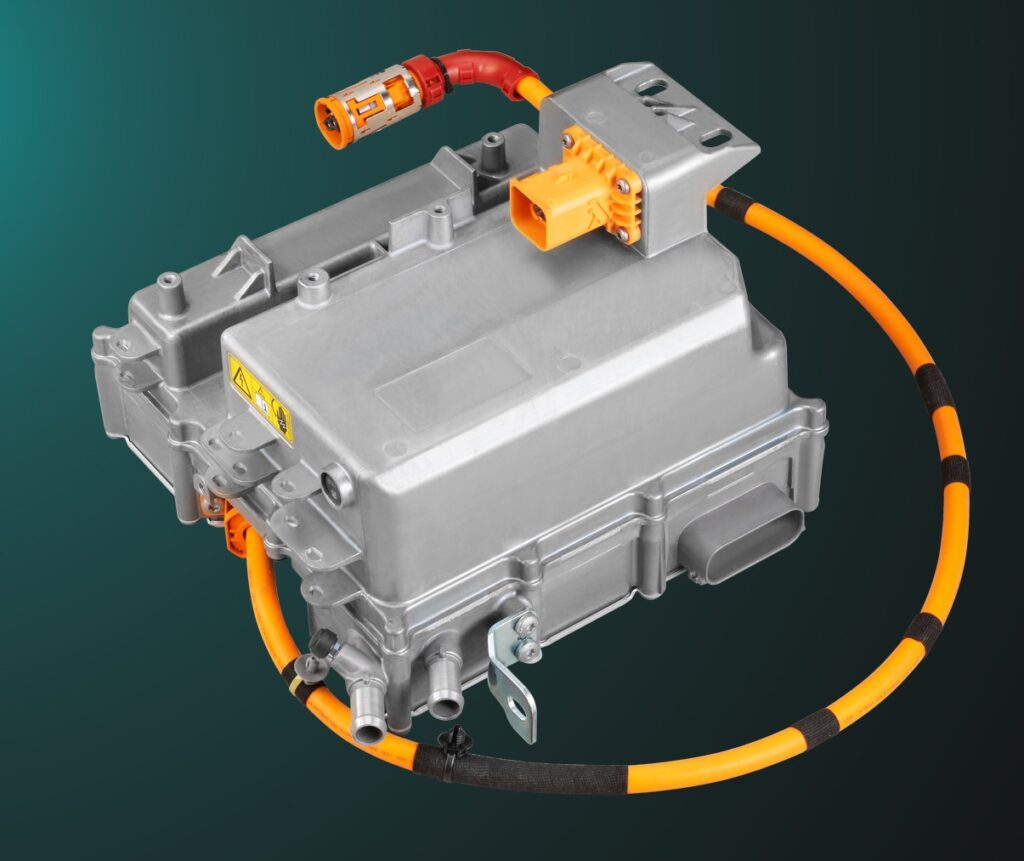
The Onboard Charger (OBC) converts AC power from the grid into DC energy required for charging the battery. In doing so, it directly affects charging efficiency, thermal behavior during operation and overall system integration within vehicle architectures.
As vehicle platforms evolve, the OBC becomes more than a standalone component. It interacts with battery management and safety systems to ensure controlled and efficient charging processes.The E-Lock adds another important layer to this architecture.
As a mechanical safety component, it secures the charging connector during operation, maintains a stable connection under load and enables controlled unlocking after charging. It protects the physical interface between user, vehicle and charging infrastructure.
A layered architecture with clearly defined roles
This structured approach reduces interface complexity, improves transparency and supports more predictable system behavior under both normal and critical conditions. For developers and system integrators, this creates a reliable basis for implementing safety-relevant functions across different battery platforms.
As battery systems grow in complexity, clarity in system design becomes increasingly important. Instead of adding isolated functions, each component is assigned a clear responsibility within the overall safety chain.
Physical changes are detected earlier, operating conditions are evaluated centrally, electrical limits are monitored continuously, charging is controlled and the interface is secured mechanically.
Applications across industries
This system-oriented approach is relevant across multiple application areas. In electric vehicles, it supports safe and efficient operation by combining continuous monitoring and coordinated system control.
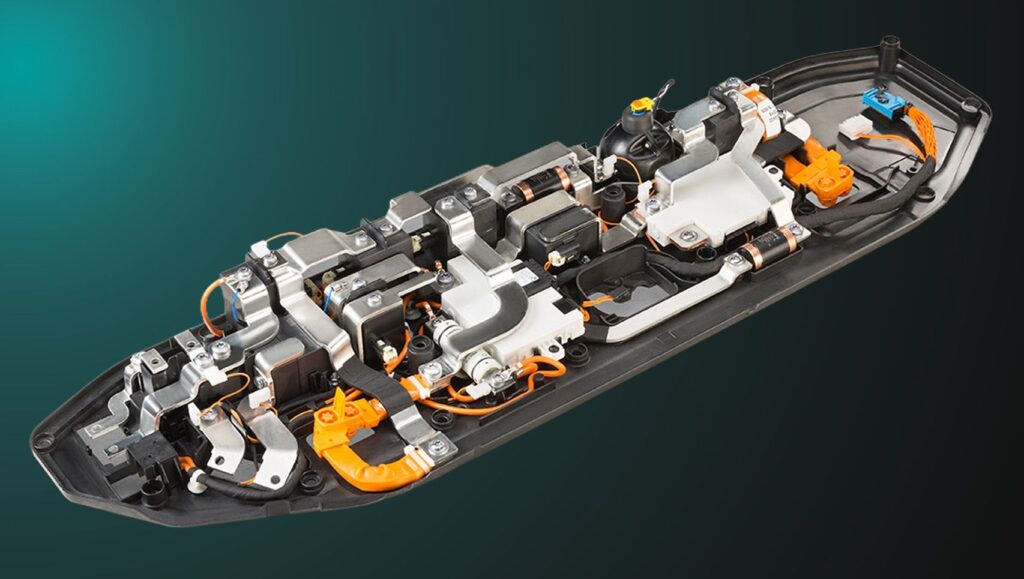
In commercial vehicles, it addresses demanding requirements for robustness, reliability and stable performance under intensive operating conditions.
Beyond mobility, the same principles apply to stationary energy storage systems, where early detection of critical conditions and long-term system stability are essential. In these applications, the challenge is to prevent local cell failures from spreading inside large battery enclosures or containerized systems.
Early detection of gas formation can create a valuable time window for preventive measures such as ventilation, controlled shutdown or other protection strategies before a critical event escalates.
Across these applications, the central challenge remains the same: battery systems must become safer without becoming harder to manage.
As high-voltage architectures continue to evolve, system thinking becomes a decisive factor.
For Mattes, this is the key to the next generation of battery safety: “Only by bringing together physical processes, electrical behavior, and energy flow into one coherent system can the next generation of safe and high-performance battery systems be realized – and that is exactly the path we are consistently pursuing at Marquardt.”
More Stories
Envalior on new thermoplastic formulations to meet HV heat challenges
Schaeffler and Sonatus partnership brings Edge AI to motion control for software-defined vehicles
How Marelli is supporting the transition from ICE to electric powertrains