

Should you be concerned if a puddle suddenly forms under your car? After all, nothing should leak from a properly functioning car! Should you take it to a repair shop immediately, or can you put it off until you have some free time? It depends on what exactly is leaking.
Professional mechanics from the Autoland Jacksonville used car dealership have compiled a list of possible leaks and explained how to distinguish different fluids by color and feel.
Condensation
You’ve probably even been in this situation: you park outside a store on dry pavement in the heat, and when you return with your groceries, you see a small puddle near the front bumper. Should you be alarmed? Not at all. If you were using the air conditioner, the puddle would be condensation formed during operation. Condensation itself is harmless, but keeping an eye on fluid leaks helps protect your engine and extend your car’s mileage.
Condensation often forms in the exhaust system as well. If you notice water dripping from the muffler after starting the engine, don’t panic. The drip will stop once the exhaust system warms up properly and the water turns to steam.
How to identify it
Tip from the Autoland service department: Touch the wet spot with your hand or a napkin – it shouldn’t have any odor or oiliness. It’s just water.
Motor Oil
Motor oil typically leaks through the gaskets, so you won’t see a large puddle. If you do, things are bad – most likely, you’ve damaged the oil pan or encountered another serious problem, such as a leaking oil filter.
A few drops of oil under the car, while not a sign of a problem, still require further diagnosis. The best solution is to raise the car on a lift and inspect the area where the drip is occurring. These spots are usually easy to see due to dirt clinging to the oily surface.
If you can’t take it to a service center right away, at least check the oil level before driving. It’s a good idea to place an empty container under the leak overnight to prevent environmental pollution.
How to identify
Motor oil is usually dark in color, even if it’s been changed recently. It’s hard to mistake it for other fluids by touch. Touch the leak with your finger and try rubbing it against another finger – you’ll immediately know it’s oil.
Transmission Fluid
Another component that contains oil is the transmission. It’s located slightly behind the engine, if you’re looking from the front bumper, or to the left (if the engine is transversely mounted). Therefore, leaks tend to form in a slightly different location.
The recommendations here are roughly the same as for internal combustion engines: if you suspect a leak, raise the car on a lift and inspect the joints between the components for cleanliness. Leaks typically occur through gaskets or output shaft seals.
However, checking the transmission fluid level isn’t always possible, so don’t delay diagnosis – a significant amount may have already leaked.
How to identify
Automatic or continuously variable transmission fluids typically have a reddish or green tint. If the transmission is manual, its lubricant is similar in appearance to engine oil. However, it has a more pungent, sulfurous odor. The same applies to the fluid in gearboxes or transfer cases in SUVs.
Power Steering Fluid
Power steering fluids typically use the same fluid (oil) as automatic transmissions. And it most often leaks from roughly the same area – from the steering rack.
However, as with any hydraulic system, leaks in hoses and pipes cannot be ruled out. A significant leak will be noticeable by a drop in the fluid level in the reservoir.
How to identify
The actions as with automatic transmissions.
Antifreeze
If a puddle has formed near the front bumper, it is most likely coolant from the radiator. But this isn’t the only location: a puddle of antifreeze can form under any part of the engine compartment – even in the cabin, under the front passenger or driver’s feet. This is because the cooling system permeates the entire compartment and connects several large components: radiators (including the interior heater), the expansion tank, the water pump, and, of course, the engine.
Driving with such a leak is possible, but you should check the fluid level in the expansion tank or radiator (open the caps only after the engine has cooled) and top up if necessary. Also, don’t forget to keep an eye on the engine temperature gauge while driving.
How to identify
Antifreeze is usually colored. If you’re not looking at a puddle, but just wet asphalt, try blotting the stain with a white cloth. Coolant also feels oily to the touch (due to its glycerin content), but it’s thinner and less slippery than oils. Most importantly, it washes off your fingers easily with water.
Brake fluid
Fortunately, leaks are extremely rare. However, they are also the most dangerous: you could suddenly lose your brakes. Most often, leaks occur near the wheels and in the suspension area when a hose or brake line is cracked.
Traffic regulations prohibit driving with a faulty brake system, but if you’re in a desperate situation, drive at a low speed.
Check the brake fluid regularly, and periodically test the braking effectiveness by lightly pressing the pedal. Brake fluid is also used in the hydraulic clutch system, but a puddle under the car most likely indicates complete clutch failure, which is difficult to miss.
How to identify
If a stain appears near the wheels, it’s most likely brake fluid. There are no other fluids in this area. It feels oily to the touch and has a yellow tint.
Fuel
This is an even more dangerous type of leak, as it creates risks even when the vehicle is stationary. If your car is leaking gasoline, a cigarette butt carelessly discarded by a passerby can instantly start a fire.
The fuel line runs from the rear of the car (the tank) to the front (the engine). So, stains can be expected in any part. However, leaks most often appear after replacing the fuel filter if mechanics forget to install new O-rings or do not tighten the clamps properly (in older models). Theoretically, fuel can leak from a rusted fuel tank or from damaged fuel lines in the engine compartment.
Driving with a fuel leak is strictly prohibited. Furthermore, you should try to keep strangers away from the car and get it towed as quickly as possible. If this is not possible, it’s best to drain the fuel from the tank, for example, by disconnecting the fuel filter.
How to identify
Both gasoline and diesel fuel are easily identified by smell. When exposed to water, they leave rainbow-colored stains.
Summing up
-
If water is dripping from the air conditioning condenser or exhaust pipe, don’t worry—it’s a natural process.
-
A fuel or brake fluid leak can make driving dangerous—it’s best to call a tow truck.
-
Driving with a leaking power steering is prohibited by traffic regulations.
-
With minor leaks of oil and antifreeze, you can drive for some time, but you need to monitor their levels.


More Stories
Roboteon’s Raj Senguttuvan on AI Orchestration, Digital Twins and the Future of Intelligent Factory Automation
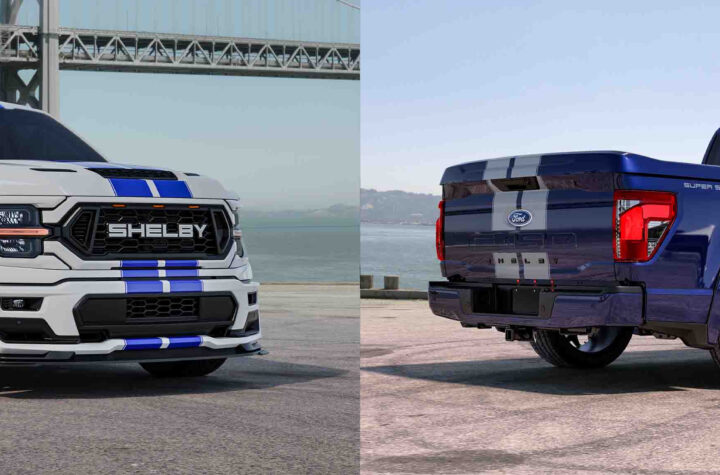
It’s the “Return of the King” as Shelby American Reintroduces F-150 Super Snake Sport Two Door Truck with 810+ Horsepower
Pulse of Quality in Manufacturing Survey Reveals Impact of Geopolitical Tension, Recalls, Trade Tariffs on Automotive Sector