

Car buyers today do not just walk into showrooms; they start their journey online. From browsing vehicles to securing financing, they expect a seamless digital path.
As a result, automotive retailing at dealer level is being transformed by artificial intelligence (AI) – driven systems, which Spyne says enables the transition from traditional on-premises car buying to virtual spaces that simplify the process, from browsing to end purchase.
Spyne enables car dealers with AI-driven tools to take control of their digital retail, helping them move inventory faster and build stronger, more profitable customer journeys, according to the company.
Facilitated by technologies such as AI-based recommendations, e-contracts, and virtual showrooms, it enables customers to purchase at their convenience with maximum transparency and personalization.
Dealerships get to enjoy more customer engagement, better inventory insights, and reduced costs. Key drivers such as seamless integrations, real-time support, analytics, and omnichannel strategies make it an effortless implementation.
An example is Spyne’s AI-driven platform, which features automotive digital retailing solutions that enable dealerships to create interactive virtual showrooms where customers can explore vehicles in a 360-degree environment. The vehicle configuration features of the platform also enable customers to personalize their vehicles online, creating a personalized and engaging shopping experience.
Automotive Industries (AI) interviewed Sanjay Varnwal, Co-founder and CEO, Spyne.ai.
AI: At operational scale, what specific Spyne AI workflows are US dealers using week-to-week (not pilots)? For example, at dealers like Paragon Honda, which once-promising features have dealers quietly dropped after real-world use?
Varnwal: At scale, dealers do not adopt “AI.” They adopt workflows that remove bottlenecks. Week-to-week in the US, the heavy usage is split into two buckets:
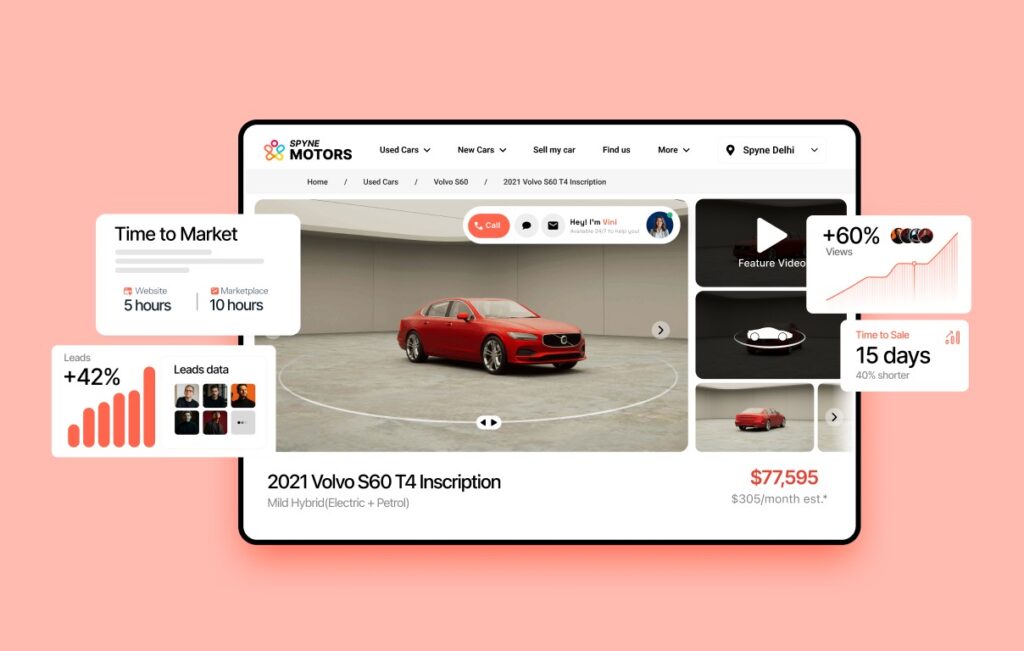
Studio (Merchandising AI): “Get inventory online faster, cleaner, consistently.”
Standardized photo ops: Consistent backgrounds/lighting corrections so cars look “frontline-ready” without a studio crew. This is the unsexy workhorse that drives high volume, daily.
Car tour / rotating view merchandising: When the dealer is serious about used-car velocity and online trust. It is adopted when it is operationally easy (guided capture + auto processing), not when it is a “marketing project.”
Listing cycle compression: Dealers use Studio to reduce time between vehicle arrival → photos → live VDP (Vehicle Detail Page). That reduction becomes real money when floorplan costs are high, and supply/demand is broken.
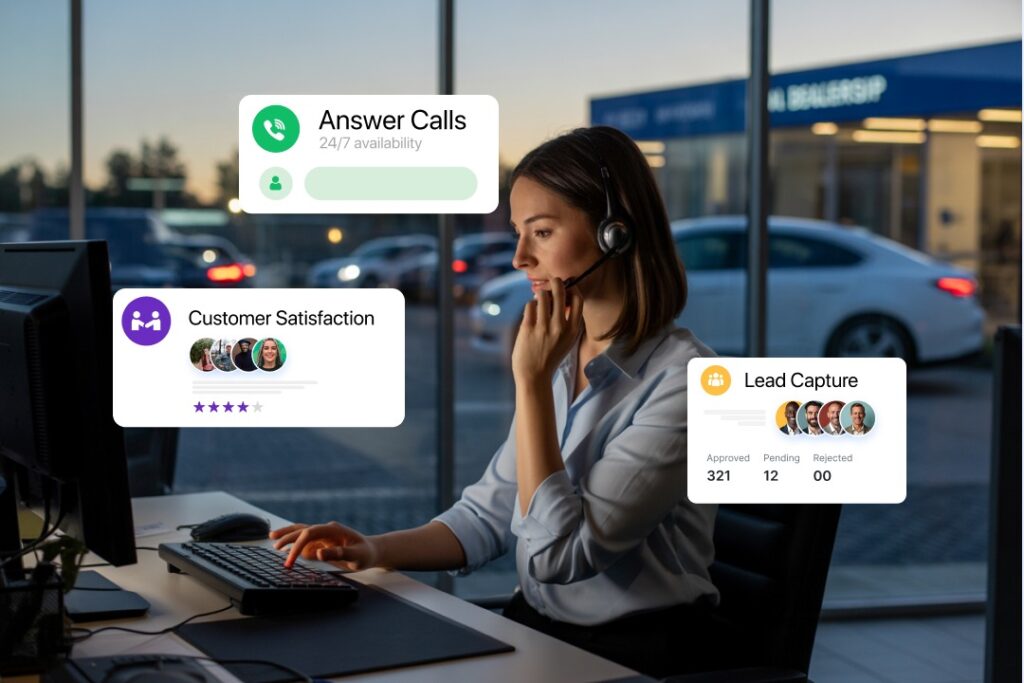
Vini (Conversational AI): “Never miss a customer conversation.”
24×7 call + chat coverage, especially after-hours and overflow hours. Dealers hate missed calls because it is literally paid demand leaking out the door.
Appointment scheduling + rescheduling (for both service and sales) because that’s measurable, immediate, and ties directly to RO hours and sold units.
Callback handling + handoff to humans with context (not blind transfer). Dealers do not want AI to “handle everything.” They want AI to handle the repetitive part and tee up the humans to close.
AI: What gets dropped after real-world use?
There are two patterns:
“AI that creates extra steps.” If it forces BDC/service advisors to learn a new console, label conversations, or double-enter notes, adoption dies quietly. That is why we tend toward embedding into the systems they already live in.
“Too-clever, low-trust automations.” If an agent answers with anything even slightly wrong about availability, pricing, or policies, the store loses confidence fast. Dealers will keep AI on the narrow roads first, including answer, qualify, book, route, and then expand.
AI: How does Spyne measure and prove the direct P&L impact of its AI on a single dealership’s margins, floorplan costs, and days-to-sale, and what KPIs should dealers insist on when evaluating AI vendors?
Varnwal: We prove impact by tying every workflow to a financial line item and not vanity metrics.
Studio (Merchandising) → P&L link
Time-to-list (hours/days from intake → VDP live): Faster listings generally reduce aged inventory risk and help sell cars before price compression hits.
Days-to-sale / days-in-inventory movement: Compare cohorts (before/after) for similar makes/segments.
VDP engagement lift (SRP→VDP clicks, VDP time, media engagement): Better merchandising increases buyer confidence; independent research in the industry has shown measurable purchase-rate lift when shoppers engage with richer media.
Reconditioning + photo ops labor minutes per car: The “real” ROI often starts here, all with less rework, fewer retakes, and less back-and-forth.
Vini (Conversational AI) → P&L link
Inbound lead coverage rate: What % of calls/chats got answered (not “sent to voicemail”)? Dealers running serious operations push toward full coverage.
Speed-to-response (seconds) + appointment set rate: This is where the money is.
Show rate + sold rate from appointments set by AI vs humans: (tracked via tags/UTMs/call disposition + CRM outcome).
Service RO booked per 100 inbound service calls (especially after-hours): Ties directly to fixed ops profitability, which matters more as front-end margins get squeezed.
KPIs dealers should insist on (non-negotiable):
- Answered rate (calls + chats, business hours and after-hours separately)
- Appointment set rate and appointment show rate
- Time-to-list and % inventory live within SLA (e.g., same day / 24 hours)
- Days-to-sale improvement for targeted cohorts (not hand-wavy “overall improved”)
- Cost per incremental appointment/cost per incremental sold (the CFO metric)
The key: If a vendor cannot instrument outcomes into your CRM/service scheduler, it is not ROI, it is vibes.
AI: You say Spyne helps standardize vehicle presentation and compress listing cycles. So, walk us through the exact end-to-end process (image capture → AI processing → VDP live) and where human staff still sit in that loop.
Varnwal: Here’s the clean operational flow dealers run:
- Capture (human-led, guided): Porter/photographer uses a guided process (angles/sequence), so we do not get random, unusable sets.
- Upload/ingest: images sync into Studio.
- AI processing (machine-led): Background standardization, visual cleanup, consistency enforcement, and packaging into dealer-ready assets.
- Quality gates (human-in-the-loop where it matters): Humans intervene for exceptions, such as odd vehicles, bad captures, compliance edge cases, or when something looks off.
- Publish to VDP/listings: Output is pushed into the dealer’s website/listing workflow, so the VDP goes live fast.
Humans stay in the loop for capture discipline and exception handling, while AI owns the repetitive production work.
AI: Inventory intelligence is becoming a profit lever. What kinds of predictive signals is Spyne generating (pricing, demand windows, marketplace recommendations), and how do dealers operationalize those signals without overwhelming their CRM/ops teams?
Varnwal: Inventory intelligence only matters if it becomes one of three actions: price it, promote it, or move it (wholesale/transfer).
Signals we focus on (practical, not academic):
Demand windows: Which cars will move in 7/14/30 days in this zip code and channel mix.
Merchandising gaps that suppress conversion: Missing angles, weak imagery, missing car tours/media where the segment expects it; this is a silent killer.
Follow-up priority signals: “Hot intent” conversations across calls/chats tied to inventory context (availability, alternatives, appointment readiness).
How we avoid overwhelming ops teams:
No new dashboard religion. We push the insight into the system where a decision already happens (inventory tool/CRM/desking/service scheduler). Fragmentation is the #1 reason “AI insights” die.
Actionable thresholds, not infinite recommendations. Dealers do not want 200 alerts. They want: “These 12 units are aging risk, drop price X or switch channel.”
“These nine have high-intent demand, push to front page + prioritize callbacks.”
This aligns with where the broader dealer software market is heading: predictive AI and market-based inventory tools are already a competitive battleground, and dealers are leaning in.
AI: Platforms like VINCUE are embedding Spyne’s AI. How do you approach integrations so dealer workflows do not fracture, and what have you learned about adoption friction when your capability lives inside another vendor’s UI?
Varnwal: Integration is not a “nice-to-have.” It is a survival because dealers already have too many logins.
Our approach is to embed the capability where the decision happens. With VINCUE, the point is to make AI operational inside the workflow dealers already use for inventory and lifecycle decisions, so adoption does not require behavior change.
What we have learned about adoption friction when embedded:
The win: Time-to-value is faster because users do not need to “go to Spyne” to benefit.
The risk: If the embedded experience is slightly slower, slightly confusing, or does not map to dealer roles (GM vs used car manager vs BDC), usage drops even if the AI is strong.
So, we design around role-based moments. A used manager needs “what to price today,” a BDC needs “who to call next with context,” and a service advisor needs “book it now without chaos.”
Also, the industry is finally admitting the core pain, i.e., conversations leak when systems do not talk. That is exactly why these embedded partnerships exist.
AI: For independent and mid-market dealers under intense margin pressure in 2026, what low-effort, high-impact Spyne features should they prioritize first to see real cashflow relief within 60-90 days?
Varnwal: In 2026, dealers are dealing with margin pressure and high carrying costs, and floorplan is not forgiving.
So, I would prioritize two fast ROI plays:
1) Vini for missed call + appointment capture (Sales + Service)
Start with: After-hours + overflow coverage, appointment booking, and clean handoffs. That usually delivers immediate lift because it plugs an existing leak.
2) Studio “listing velocity pack”
Standardize images + reduce retakes + get inventory live faster. Even a modest improvement in time-to-list matters when floorplan costs are high, and price competition is intense.
If a dealer does only these two well, they feel it in 60-90 days with more booked appointments, more show-ups, faster online merchandising, and fewer aged units.
AI: Spyne offers virtual car tour image processing and conversational AI. How do you prevent feature bloat and ensure those tools reduce workload rather than add work?
Varnwal:
Feature bloat happens when vendors sell “capabilities.” Dealers buy less work and more outcomes.
So, we enforce a simple internal rule where every feature must delete a task. If it adds a task, it must delete two. Practically, this means:
No parallel workflows. If the AI requires a separate daily ritual, it is dead on arrival.
Human-in-the-loop only for exceptions. If humans are reviewing everything, we fail.
Adoption is measured by usage in the flow of work, not logins.
Also, we are ruthless about narrowing the first deployment. Vini starts with answering + booking + routing; Studio starts with consistent assets + publishing speed. Then we expand.
AI: Looking ahead for four to five years, which dealer functions do you expect to be almost entirely AI-driven, and which will remain human-led? How will that shift change dealer organizational structure?
Varnwal: The future is not “AI replaces dealers.” It is AI that replaces dealership busywork and upgrades the best operators.
Mostly AI-driven (because it is repetitive + rules-based):
Lead triage and first response across voice/chat/text (24×7).
Appointment scheduling/rescheduling and routine confirmations.
Merchandising production pipeline (image cleanup, packaging, publishing).
Monitoring + nudges, including aging inventory alerts, follow-up reminders, and missed-opportunity capture.
Human-led (because trust + negotiation + judgment):
Deal structuring, negotiation, trade appraisal judgment
High-emotion customer moments (complaints, escalations, loyalty saves).
GM-level strategy, including inventory risk posture, pricing philosophy, and brand positioning.
Organizational structure shift:
BDC becomes smaller but higher skill with more closers, and fewer “dialers.”
Marketing becomes more ops-integrated (because merchandising is ops now).
Fixed ops lean on AI for throughput but keep humans for relationship and trust.
Also, the macro trend supports this. Dealers are explicitly planning to increase AI spending and treat 2026+ as operational AI adoption, not experiments.
AI: Finally, please share a success story where Spyne’s AI materially changed a dealer’s economics. What was the baseline, what did you deploy, and what were the measurable results?
Varnwal: One example I like because it is clean and measurable is what we have seen with dealers deploying Vini for full inbound coverage.
At Dimmit Automotive Group, leadership has publicly pointed to outcomes like 100% inbound lead coverage, 26% appointment conversion rate, and 2× closures per month after deploying Spyne’s conversational AI in their inbound workflow.
What matters in that story is not the marketing claim, it is the mechanic:
Baseline problem: Calls and chats are leaking, especially outside business hours, plus inconsistent follow-up.
Deployed: Vini to answer, qualify, book, and hand off with context across channels.
Measured: Coverage rate + appointment conversion + downstream closes.
And the broader point is that when dealers stop losing conversations because their systems do not talk, the economics change. The industry press has been blunt about that “disconnect” problem, and it is why embedded AI inside core platforms is accelerating.
More Stories