
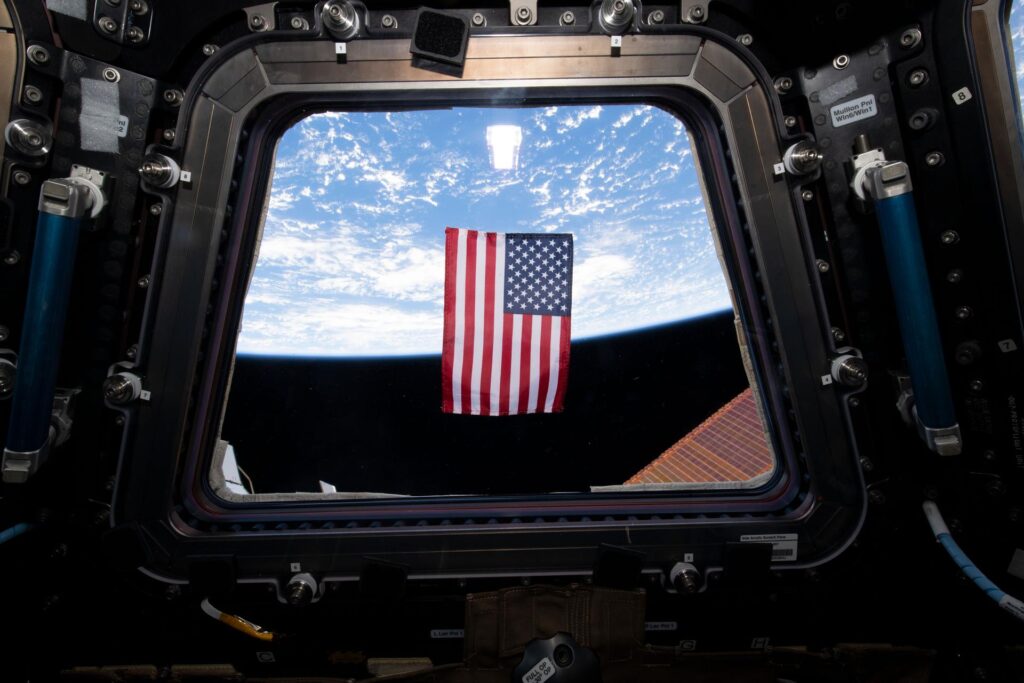
As the United States moves toward its 250th anniversary, NASA is marking the moment with a celebration that links the nation’s founding spirit to its boldest ambitions in space. Under the theme of “Freedom 250,” the agency is honoring 250 years of American history while looking ahead to a new era of discovery, innovation, and human exploration that could carry astronauts back to the Moon and eventually to Mars.
NASA’s celebration is not simply about commemoration. It is about connection. The agency is drawing a direct line between the courage of America’s earliest explorers and the astronauts, engineers, scientists, and visionaries who continue to push the boundaries of what is possible. From the earliest flights that transformed transportation to the Apollo missions that placed Americans on the Moon, NASA has long served as a symbol of the nation’s drive to explore, invent, and lead.
NASA Administrator Jared Isaacman has described this moment as one of gratitude and momentum, pointing to the agency’s legacy while emphasizing the promise of the future. That message sits at the heart of NASA’s anniversary campaign. The agency is framing America’s semiquincentennial not only as a time to look back on a remarkable history, but also as a chance to renew the nation’s commitment to scientific leadership and space exploration.
The centerpiece of the celebration is the “Rocket’s Red Glare” theme, a phrase that evokes the imagery of the national anthem while also capturing the drama and power of rocket flight. The name is designed to symbolize the daring spirit that has always driven American progress. It reflects the idea that every generation inherits a challenge: to build on the achievements of those who came before and to reach even farther than they did.
NASA’s Artemis program is central to this story. Artemis II, the next crewed test flight in the agency’s lunar campaign, is expected to carry astronauts around the Moon and back to Earth. The mission will include Reid Wiseman, Victor Glover, Christina Koch, and Jeremy Hansen, and it stands as one of the most visible expressions of NASA’s renewed lunar ambitions. The flight is intended not only as a technical milestone, but also as a powerful symbol of national aspiration.
In the context of America’s 250th birthday, Artemis II represents more than a mission. It represents continuity. Just as the Apollo era embodied the determination of the United States during a defining chapter in its history, Artemis is meant to mark the start of a new chapter, one in which the country once again aims to place humans on the lunar surface and prepare for even deeper exploration. NASA has made clear that the lessons learned from the Moon will help shape future efforts to send the first astronauts to Mars.
To support the celebration, NASA is also organizing a series of aircraft flyovers at major events across the country. These appearances are scheduled to bring the agency’s aerospace legacy directly to the public through high-profile moments of pageantry and pride. The planned flyovers include the Sun ‘N Fun Aerospace Expo in Lakeland, Florida, on April 16; the Salute to America fireworks celebration in Washington, D.C., on July 4; EAA AirVenture in Oshkosh, Wisconsin, on July 23 and 24; the Freedom 250 Grand Prix in Washington, D.C., on August 23; the Pacific Air Show in Huntington Beach, California, on October 3 and 4; and the Commemorative Air Force Wings Over Houston Air Show on October 31 and November 1.
These events are meant to showcase the public side of aerospace innovation. They connect NASA’s work to the broader American story of flight, from early aviation breakthroughs to modern space travel. The agency’s presence at air shows and national celebrations reflects a desire to make exploration feel tangible, visible, and shared. In doing so, NASA is highlighting a truth that has always defined its mission: space exploration is not only about hardware and science, but about inspiration.
The celebration also underscores NASA’s historical role since its founding in 1958. Over nearly seven decades, the agency has turned once-impossible ideas into practical achievements. It has launched probes beyond the solar system, advanced our understanding of Earth and climate, improved weather forecasting, supported disaster response, and enabled technologies that have found their way into medicine, communications, and daily life. NASA’s work has reached far beyond the launch pad, creating value across the nation and helping fuel both economic growth and scientific progress.
That broader impact remains central to the agency’s message. NASA’s mission is not just to explore for exploration’s sake, but to deliver benefits that matter on Earth. Its innovations have supported new industries, opened research pathways, and inspired generations of students to pursue careers in science, engineering, and technology. In that sense, the agency’s anniversary celebration is also a celebration of American ingenuity itself.
The Freedom 250 campaign links these themes with a clear narrative: the United States has always advanced by daring to attempt what others thought unattainable. From the first aircraft to the first Moon landing, from the creation of NASA to the Artemis era, the story is one of persistent ambition and shared achievement. As America marks 250 years since declaring independence, NASA is inviting the public to see space exploration as part of that same tradition.
In honoring the past, the agency is pointing toward the future. The next Golden Age of science and discovery is not presented as a distant dream, but as a goal already taking shape through missions, technology, and the people who build them. If the nation’s history has been defined by exploration, then NASA is positioning itself as both guardian and driver of that legacy.
America’s 250th birthday is, in NASA’s telling, a milestone worth celebrating not only for what has been accomplished, but for what still lies ahead. The Moon is no longer the end of the journey. It is the next beginning.


More Stories
Marquardt on rethinking battery safety as a system
McKinney Welcomes $919 Million LITEON Investment, More Than 600 New Jobs
Team Shelby and Historic Shelby American GT40s Roll into Goodwood Festival of Speed with Support from Goodyear