
Industrial zone, Steel pipelines, valves and ladders
Walk into a modern facility, and a clear pattern emerges. Equipment no longer operates in
isolation. Systems exchange signals, adjust behaviour, and respond to changing conditions with
minimal intervention. Industry 4.0 underpins this shift, though its influence often manifests in
less obvious areas, particularly when older equipment meets new expectations.
Demand has not simply grown. It has shifted in character. Many operations still rely on
established infrastructure, yet expectations around connectivity and data have changed how
those assets are evaluated. This article explores how Industry 4.0 developed, what it means for
legacy components, and how informed support can guide effective upgrades.
From Mechanical Systems to Connected Assets
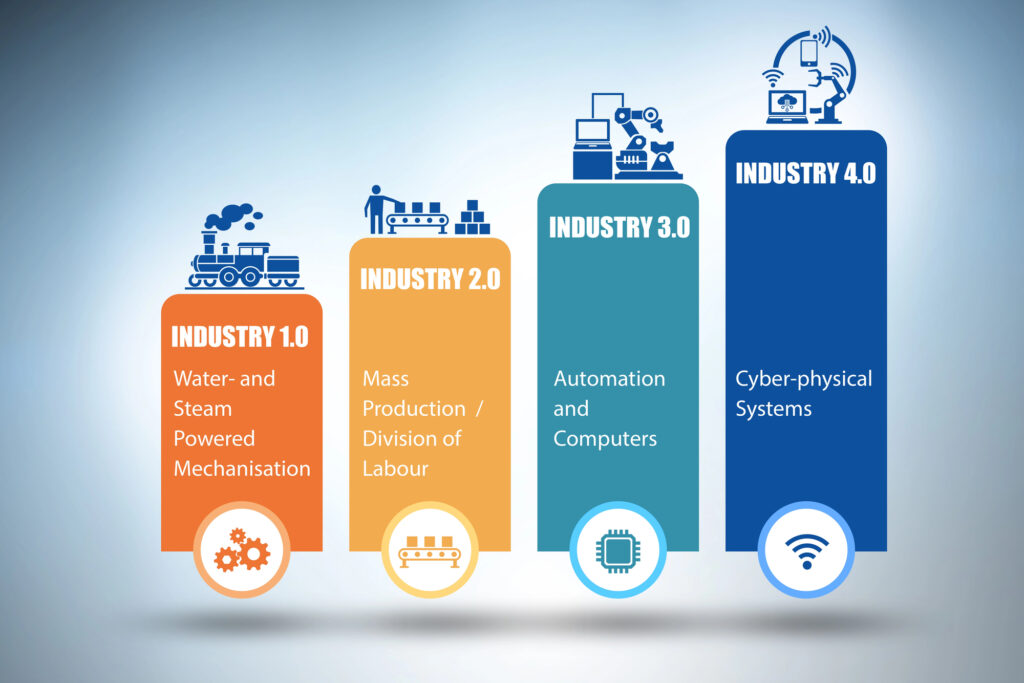
Industrial progress followed a steady path. Early mechanisation introduced powered production.
Electrification improved scale and consistency. Digital control then allowed programmable
systems to take over complex tasks. Industry 4.0 builds on this foundation by linking equipment
through continuous communication.
That shift places pressure on existing installations. Older systems often perform reliably within
their original scope, yet lack the ability to share data or integrate with newer platforms. A
machine that once met every requirement may now sit outside a connected workflow.
Rather than full replacement, many facilities are exploring ways to extend the life of these
assets. Retrofitting communication modules, upgrading control hardware, or introducing
interface layers can bring older equipment into a connected environment without disrupting
entire processes.
Updating Legacy Components for Modern Systems
Legacy PLCs remain common across many sites. While dependable, earlier models may not
support current communication standards. In such cases, engineers often consider partial
upgrades. Adding gateway devices or replacing key control units can allow existing systems to
exchange data with newer infrastructure.
Drives and motors present a similar challenge. Mechanical performance may still meet
operational needs, yet diagnostic visibility often falls short. Upgrading to drives with integrated
feedback or adding external monitoring can improve insight without requiring a full system
redesign.
Sensors frequently become a limiting factor. Older devices may provide basic signals, though
modern systems expect richer data and higher accuracy. Replacing selected sensors can
improve overall system awareness, especially when condition monitoring is involved.
Interface components also deserve attention. Human-machine interfaces designed for earlier
setups may restrict access to system data. Updating these elements can improve visibility and
allow operators to interact with connected systems more effectively.
Each adjustment depends on context. Some environments benefit from targeted upgrades,
while others require broader changes to achieve compatibility.
Consequences of Leaving Systems Unchanged
Retaining older components without adaptation introduces gradual constraints. Data gaps
become more apparent as connected systems rely on consistent input. Limited visibility can
restrict maintenance planning, making it harder to anticipate developing issues.
Integration challenges also increase over time. New equipment may require additional
configuration to work alongside legacy systems, adding complexity to installation and support. In
some cases, this leads to isolated sections within a production line, reducing overall efficiency.
There are operational risks as well. Inconsistent communication can lead to delayed responses
or misinterpretation of system status. While equipment may continue running, decision-making
becomes less precise.
These effects rarely appear all at once. They build gradually, often becoming noticeable only
when performance begins to diverge from expectations.
Practical Routes Toward Improved Integration
A structured approach helps reduce disruption during upgrades. Many facilities begin by
identifying which systems would benefit most from improved connectivity. This allows resources
to focus on areas where data access or responsiveness has the greatest impact.
Phased implementation often proves effective. Rather than replacing entire systems,
incremental updates allow operations to continue while improvements take place.
Communication modules, updated controllers, and enhanced sensors can be introduced step by
step.
Compatibility testing plays a key role. Ensuring that new components interact correctly with
existing infrastructure avoids unnecessary delays during commissioning. This stage often
reveals where additional adjustments may be required.
Documentation and system mapping also support smoother transitions. A clear understanding
of how components interact makes it easier to introduce changes without affecting surrounding
processes.
Aligning Upgrades With Informed Component Support
No single approach suits every installation. The importance of each component varies
depending on process design, operating conditions, and long-term plans. What limits
performance in one facility may have little impact in another.
Working alongside an automation parts provider can bring clarity to these decisions. Detailed
knowledge of component behaviour, compatibility, and lifecycle trends allows for more accurate
planning. This support often highlights where upgrades will deliver meaningful improvement and
where existing equipment can continue to operate effectively.
It also helps identify ageing parts that may restrict future integration. Addressing these elements
early reduces the risk of larger disruptions later on. Guidance around suitable replacements or
retrofit options can simplify what might otherwise become a complex process.
Industry 4.0 continues to shape expectations across the automation sector. Its influence
reaches beyond new installations, affecting how existing systems are maintained and
developed. Updating legacy components, when approached with care and informed insight,
allows facilities to adapt without losing the value built into their current infrastructure.
Header Image:
Internal Links:
https://ai-online.com/2022/01/say-goodbye-to-data-silos-with-industry-4-0/
https://ai-online.com/2020/09/the-connectivity-enabling-industry-4-0/
External Links:
https://www.cjsautomation.com/


More Stories
Marquardt on rethinking battery safety as a system
McKinney Welcomes $919 Million LITEON Investment, More Than 600 New Jobs
Team Shelby and Historic Shelby American GT40s Roll into Goodwood Festival of Speed with Support from Goodyear