
Mobility is evolving as internal combustion engines are replaced by electric, reducing the environmental impact of road transport. To support this trend, automotive OEMs require advanced materials to improve electric vehicle safety, reduce weight, and boost sustainability.
One of the leaders in meeting this need is Envalior, which was established in 2023.
It has a 100-year history backing its position as global leader in performance materials, specialty materials and intermediates, formed through a merger of DSM Engineering Materials and LANXESS High Performance Materials.
The company’s portfolio of tough, lightweight materials enables manufacturers to create components that are lighter, reduce friction, perform in extreme conditions, including high temperatures, and significantly lower carbon footprints.
To learn more, Automotive Industries (AI) spoke to Rio Takao, Regional VP Americas, and Jose Chirino, Director of Application Development and Technical Services and New Business Development at Envalior.
AI: What is the most positive development you witnessed in the North America mobility sector in 2025?
Takao: After a difficult 2024, the automotive industry continues to face challenges in 2025, and this is expected to remain the case in 2026. Despite the challenges, we have secured new business thanks to our strong relationships with key OEMs and Tier suppliers in North America.

One of the positive developments is the growing focus on sustainability, which is one of our core values and a proven dedication to sustainability. We are committed to driving carbon-efficient and circular material solutions that protect our planet and support a more sustainable future.
This commitment has been recognized by the industry. Recently, Envalior was awarded the EcoVadis Gold Medal. EcoVadis is one of the world’s most trusted sustainability rating platforms, assessing over 130,000 companies globally.
This rating places Envalior among the top 3% in our industry. Our strongest areas are environment, labor, and human rights. The recognition gives our customers greater transparency, lower supply-chain risks, and access to innovative, sustainable materials
AI: Are there any emerging mobility trends in North America you would like to highlight?
Takao: The adoption pace of electric vehicles has been slowing, but there is a resurgence of hybrids as a middle step between internal combustion and full electric power trains.
Reducing charging time for EVs and PHEVs is a key industry focus. By 2025, 800-volt charging technology is expected to become mainstream.
Many Tier suppliers were shifting from PBT (polybutylene terephthalate) to PA66, as a halogen-free PBT with a CTI of 600 volts and strong mechanical performance was not available, until now.
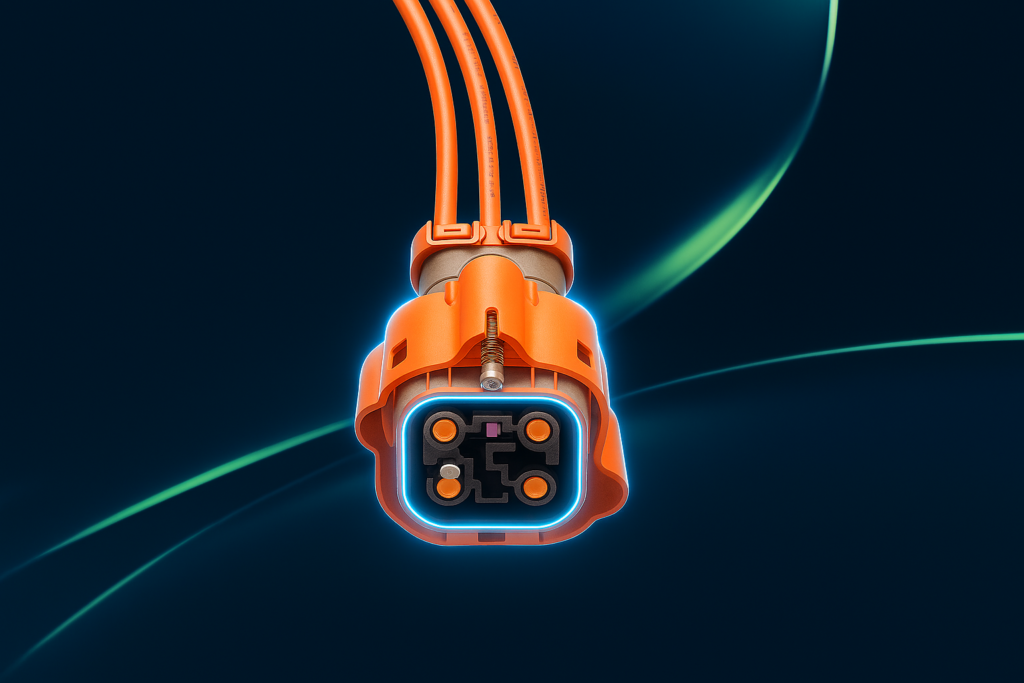
We have also developed a game-changing, halogen-free, flame-retardant Pocan® PBT grade that combines the advantages of PBT and PA6/PA66. It is ideal for connectors in ultra-fast EV charging stations (800-volt systems) and DC-powered applications such as AI data centers.
It exhibits the strengths typical of PBT, such as high dimensional stability, low propensity for electrochemical corrosion, and excellent electrical insulation behavior at higher temperatures. Plus, it offers high levels of hydrolysis resistance, creep resistance, and elongation at break, comparable to those of PA6/66
AI: What’s next for Envalior in the North America mobility market?
Takao: PPS (Polyphenylene sulfide) is the material of choice for e-powertrain components, such as busbars, terminal blocks, and insulated gate bipolar transistor (IGBT) boards due to its excellent chemical and hydrolysis resistance, extremely stable heat aging performance, low moisture absorption, high dimensional stability, and inherent flame retardance that meets UL94 V0.
Envalior’s Xytron® is recognized as one of the highest-quality PPS materials in the industry and is widely used in the Chinese EV market. Envalior has started local compounding of Xytron® in Europe, providing customers in both Europe and North America with the latest material solutions and enhanced supply security.
There is a continued focus on battery weight reduction as the battery weight affects driving range, microparticle emissions from tires and brakes, and the overall driving experience.
Lightweighting is even more critical for electric vehicles than for internal combustion cars.
Depending on the platform, a high-voltage battery adds about 400 – 700 kg to a vehicle.
In response to the need to reduce battery weight, Envalior has developed a plastic battery enclosure using a PA6 matrix with localized reinforcement from Tepex® organo sheets.
This solution offers high resistance to extreme conditions such as battery fires during thermal runaway.
Tests have shown that it can fully replace traditional aluminum and steel enclosures.
AI: What North America regulatory concerns have led manufacturers to seek PFAS-free alternatives to PTFE additives in wear and friction applications?
Chirino: PTFE (polytetrafluoroethylene) additives have long been used to provide important anti-wear and lubrication properties in high friction applications.
However, growing regulatory scrutiny of PTFE, which is classified as a PFAS (polyfluoroalkyl substances) chemical, has led many manufacturers to look for PTFE-free alternatives for parts such as gears and bearings.

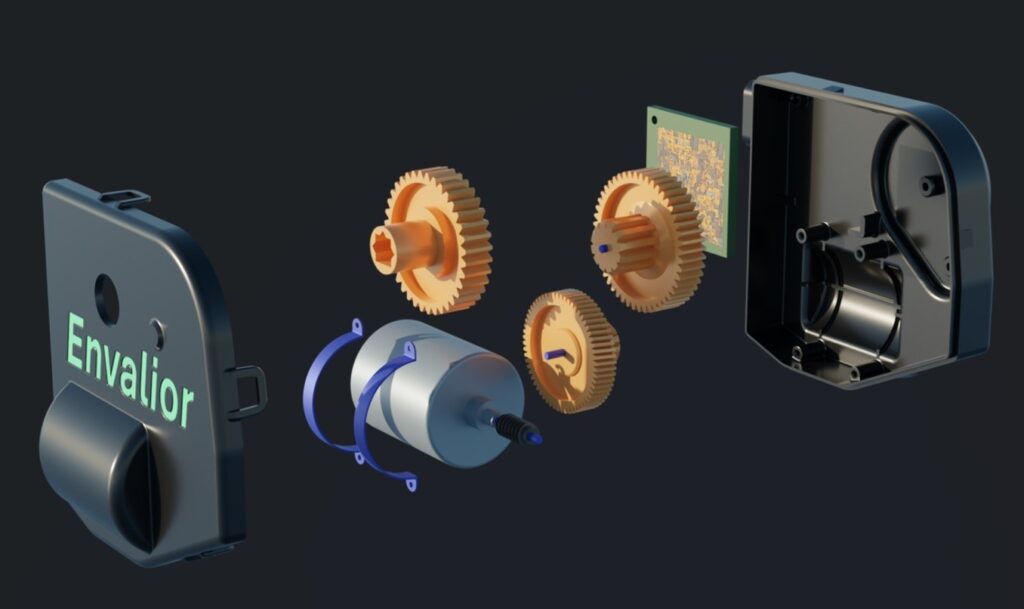
Envalior offers both PTFE-free and PTFE-containing Stanyl® PA46 solutions. Thanks to its strong heat resistance, wear resistance, and low-friction performance, PTFE-free Stanyl® can outperform materials such as POM (polyoxymethylene, polyamide 66, and PPA (polyphthalamide) – even those containing PTFE. This enables manufacturers to future-proof their products while maintaining the highest performance standards.
AI: How does PTFE-free Stanyl® PA46 perform compared to materials like POM, PA66, and PPA in high-friction applications?
Chirino: We are committed to developing PTFE-free solutions that meet tribological demands without compromising on performance. Our Stanyl® PA46 is a PTFE-free option that offers key tribological properties like low friction, wear resistance, and temperature stability. This allows industries to meet regulatory demands while maintaining high performance.
Stanyl’s high temperature properties and excellent wear resistance demonstrate that it is possible to achieve high performance without PFAS.
By partnering with lubricant manufacturers, we are maximizing synergies between PTFE-free plastics and lubricants to deliver robust solutions.
AI: What properties make Akulon® Fuel Lock and Durethan® BC550Z PA6 suitable for Type IV high-pressure hydrogen storage tanks?
Chirino: The Akulon® Fuel Lock product family and Durethan® BC550Z grades have been developed based on worldclass barrier material expertise and solid product development. A dedicated set of Durethan grades has been specifically developed as a liner material for hydrogen tank applications, providing state-of-the-art functionality.
This advanced PA6 material is designed specifically for type IV pressure vessels, providing a host of benefits:
- Weight reduction: Akulon and Durethan are 70% lighter than traditional steel alternatives, improving vehicle load capacity and fuel efficiency.
- High mechanical strength: Both material solutions offer excellent impact resistance and dimensional stability across the tank’s lifespan.
- Superior permeation barrier: Both materials minimize hydrogen leakage, enhancing vehicle safety and fuel efficiency.
AI: How does Envalior’s Xytron™ G2084LT compare to standard laser-weldable PPS grades in terms of laser transmittance rate?
Chirino: Xytron™ G2084LT is a 20% glass-fiber-reinforced, laser-weldable polyphenylene sulfide (PPS) grade that achieves a laser transmittance rate of 23% at 1 mm thickness – compared to the standard 17%. Its excellent chemical resistance, dimensional stability, and high-temperature performance make it an outstanding choice for precision-engineered parts.
AI: How does Envalior’s rotomolding grade benefit the production of fuel tanks?
Chirino: The newly developed FuelLock rotomolding grade (Akulon FLX-RTM) can be used for small-series or longer liners (over 2.5 meters).
This grade can also be used for fuel tanks in a variety of outdoor power equipment and vehicles.
Rotomolding allows for direct insert integration, in the case of hydrogen liners, direct integration of the boss part, and rotomolded parts have no weld seam (as in IM) or pinch-off lines found in blow molding.
AI: What is the significance of the carbon-fiber-based EcoPaXX™ UDea tape in manufacturing thermoplastic pressure vessels?
Chirino: This was developed to support the production of all-thermoplastic pressure vessels, promoting end-of-life recyclability and enabling complete integration of the liner and composite structure.
Applying this thermoplastic tape with a laser assisted tape placement method (through localized heating), eliminates the curing process and the emission of volatile organic compounds (VOC) emitted by thermoset materials. Therefore, the production process using EcoPaxx UDea tape is much cleaner.
AI: Which characteristics of Xytron™ PPS compound grades support the use in e-powertrain components?
Chirino: Xytron PPS grades offer excellent flame-retardant properties, outstanding electrical insulation across a broad temperature range (from -40 to 160ºC), superior long-term heat aging performance and thermal shock resistance, and excellent dimensional stability.
AI: What is next for Envalior?
Takao: In general, weight reduction is a key consideration in the automotive industry. There is a constant search for solutions, not only for electric vehicles, but also for internal combustion and hybrid vehicles.
Significant savings come from replacing metal components with plastic, and Envalior already offers a wide selection of substitutes, particularly in battery construction. Going forward, it will be important to replace metal with lightweight plastic.
More Stories
Envalior on new thermoplastic formulations to meet HV heat challenges
Schaeffler and Sonatus partnership brings Edge AI to motion control for software-defined vehicles
How Marelli is supporting the transition from ICE to electric powertrains