
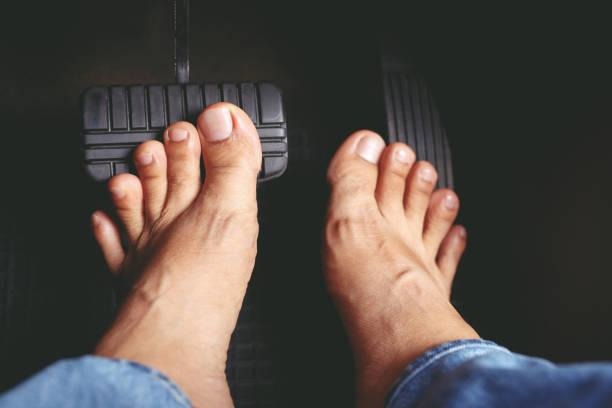
Driving barefoot is generally considered unsafe because it can reduce your grip on the pedals, limit your control over braking and acceleration, and increase the risk of your foot slipping at a critical moment. Although driving without shoes is not illegal in most states, it can make it harder to respond quickly in an emergency. Wearing secure, well-fitting shoes is usually the safer choice when operating a vehicle.
Many drivers remove their shoes for comfort, especially after spending time at the beach, pool, or gym. While it may seem harmless, driving barefoot can affect how your feet interact with the vehicle’s pedals. Even small changes in pedal control can make a difference when quick reactions are needed.
Understanding the dangers of driving barefoot can help you make safer decisions every time you get behind the wheel. A simple choice, such as wearing proper footwear, may reduce your chances of losing control during an unexpected situation.
Reduced Grip on the Pedals
Shoes are designed to provide traction and stability.
Bare feet can become sweaty or wet, making them more likely to slip off the brake or accelerator. If your foot slides while trying to stop suddenly, the extra seconds needed to regain control could increase the likelihood of a collision.
Good traction helps drivers operate the pedals more accurately.
Less Protection for Your Feet
Driving barefoot leaves your feet exposed.
Sharp objects inside the vehicle, rough pedal surfaces, or debris on the floor can cause discomfort or injury. Even minor pain may distract you from driving or affect how firmly you press the pedals.
Protective footwear provides an additional layer of safety and comfort.
Slower Emergency Responses
Emergency situations require quick, controlled movements.
Whether another vehicle suddenly stops or a pedestrian enters the roadway, drivers must react immediately. Bare feet may not generate the same level of control or braking force as appropriate footwear, especially if the pedals are wet or dirty.
Every fraction of a second matters during an emergency.
Wet Feet Can Increase Risk
Many people drive barefoot after swimming or spending time at the beach.
Wet feet are more likely to slip, reducing your ability to maintain consistent pressure on the pedals. Moisture can also make it difficult to move smoothly between the brake and accelerator.
Dry, secure footwear provides more reliable control.
Improper Footwear Can Also Be Dangerous
Driving barefoot is not the only concern.
Certain types of footwear can also create hazards, including:
-
Flip-flops
-
High heels
-
Loose sandals
-
Shoes with thick or oversized soles
-
Backless footwear
These shoes may become caught beneath the pedals or interfere with smooth pedal operation. Closed-toe shoes with non-slip soles are generally a safer option.
Could Driving Barefoot Affect Liability?
Although many states do not specifically prohibit barefoot driving, it may still become an issue after a crash.
If investigators determine that driving barefoot contributed to the accident by reducing your ability to control the vehicle, that fact could become part of the overall negligence analysis during an insurance claim or lawsuit.
Safe driving practices help reduce both accident risks and potential legal complications.
Drivers Have a Duty to Operate Their Vehicles Safely
Every driver has a responsibility to use reasonable care while operating a motor vehicle.
For example, California Vehicle Code § 22350, known as the Basic Speed Law, requires drivers to operate their vehicles at a speed that is reasonable and prudent for existing conditions. While this law does not specifically address footwear, it reflects the broader legal duty to drive safely and maintain proper control of your vehicle.
Choosing appropriate footwear supports that responsibility.
Make Safety a Habit
Preparing to drive involves more than fastening your seat belt.
Before starting your trip, make sure your footwear allows you to operate the pedals comfortably and confidently. Small safety habits often make a significant difference when unexpected situations arise on the road.
The goal is to reduce distractions and maintain complete control of your vehicle at all times.
Key Takeaways
-
Driving barefoot can reduce pedal grip and vehicle control.
-
Wet or sweaty feet increase the risk of slipping during braking or acceleration.
-
Bare feet provide less protection than proper footwear.
-
Flip-flops, high heels, and loose sandals can also interfere with safe driving.
-
Driving barefoot is usually not illegal, but it could become a factor in determining negligence after an accident.
-
California Vehicle Code § 22350 emphasizes every driver’s duty to operate a vehicle safely.
-
Wearing secure, closed-toe shoes helps improve control and promotes safer driving.
More Stories
Injured in a Motorcycle Crash? Talk to an Attorney Now
What to Do After a Motorcycle Accident to Protect Yourself
Can You Legally Ride a Motorcycle Without a Helmet in Utah