
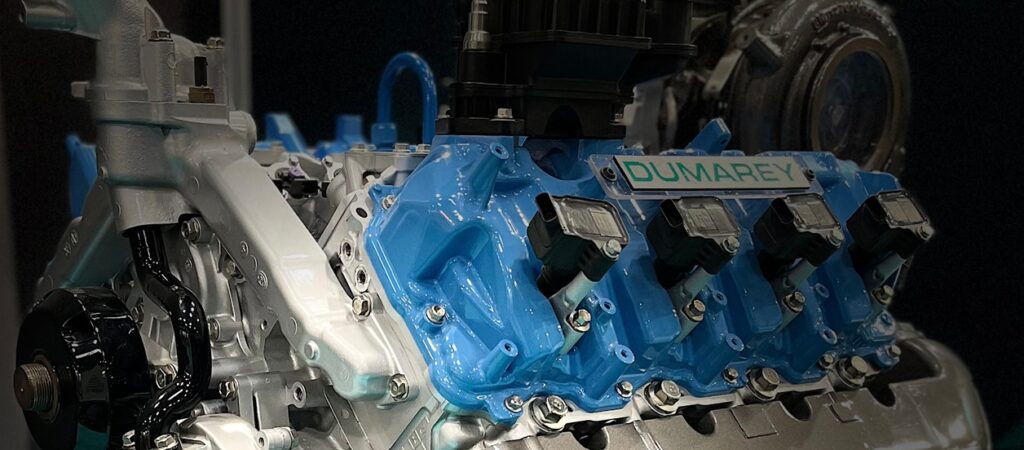
While some markets are seeing a switch to electric vehicles for passenger and local freight transport, global heavy-duty truck activity is expected to more than double by 2050, according to the International Renewable Energy Agency (IRENA).
With continuous reliance on diesel and limited action taken, by then heavy-duty trucks alone could account for over 75% of all road freight-related CO2 emissions and emit between 2.2 Gigatons (Gt) and 3 Gt of CO2, the agency states.
In response, the industry is making breakthroughs in the technology needed to make diesel engines more efficient and on powertrains able to run on alternative fuels. A recent breakthrough is the development of a cost-efficient, flexible, and easy-to-integrate urea injection system for heavy duty vehicles.
Automotive Industries (AI) asked Stefano Scalabrini, Global Key Account Manager at Dumarey Group, what technology is behind the Dumarey DEF (diesel exhaust fluid) system.
Scalabrini: The “diesel exhaust system,” or DEF, is more commonly known as SCR, meaning “selective catalytic reduction.” After 10 years of leveraging in the passenger and light commercial vehicle of SCR dosing unit, we recently presented the SCR dosing system for heavy-duty, at Agritechnica, in Hannover.
To give you context, in January 2024 Dumarey acquired the Pisa former plant of Vitesco Technologies Italy.
This site specializes in gasoline fuel injector systems and urea injectors for diesel after treatment producing more than 40 million SCR injectors, now in the field. By combining our long-standing expertise with these new features, we developed this heavy-duty system.
The Dumarey DEF urea injection system features advanced control strategies for precise reductant fluid dosing and SCR management, seamlessly integrated with the electronics of a compact supply module. The system’s main feature is its flexibility, a characteristic allowing us to offer customized injector spray patterns; it is also possible to adapt the routing for the urea and the coolant lines.
Developed by ActBlue France, the supply module incorporates Dumarey’s proprietary software, eliminating the need for external control units and simplifying integration.
The system can operate as either a dosing control module (managing DEF tank and injectors) or a SCR dosing control module (handling SCR dosing calculations) and can manage all DEF actuators – including coolant valves and line heaters – for maximum flexibility, even in complex SCR layouts.
Another key innovation is the Dumarey Reductant Delivery Unit (RDU). There can be up to two per system featuring customizable spray patterns tailored to customer specifications for optimal urea atomization. By leveraging the volume and scale of production of Dumarey’s passenger and commercial units, we can provide a cost-competitive system for our customers.
AI: For more in-depth context, where does Dumarey fit into the automotive industry supply chain?
Scalabrini: Our contribution is mainly in delivering and developing advanced powertrain solutions, leveraging our decades of expertise.
That expertise is based on being the Turin-based diesel engine development center for General Motors for more than 15 years. Since then, we have expanded our business into industrial engines and commercial vehicles as GM was mainly focused on passenger vehicle engines.
This gives us an OEM perspective, but at the same time the distinctive vision of an agile organization, which is not as complex as a big OEM. In our Turin facility we have expertise in both diesel engine development, as well as alternative fuels.
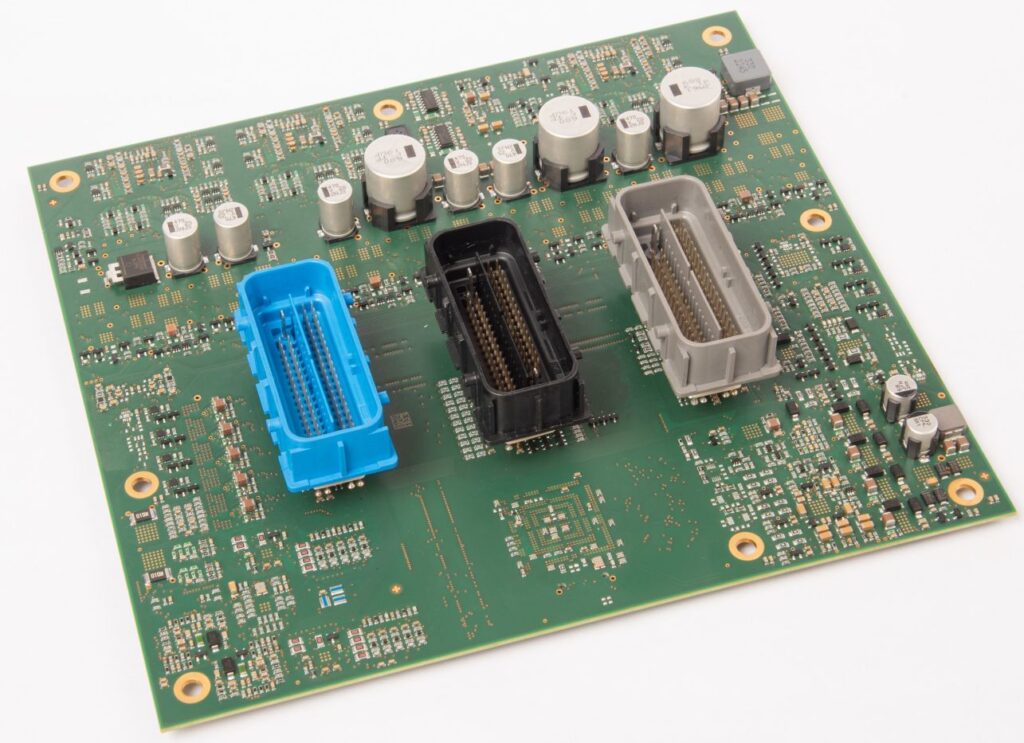
We combine this with expertise in control systems: we develop both the engine hardware and the software to control it, but we are also developing controllers for vehicle applications. This gives us unique strength as the control and engine development engineers work together on a project, which is way more efficient than when they work separately.
In addition, as I said, over the last few years, we invested in the acquisition of an injectors facility in Pisa, focusing on gasoline fuel injector systems and urea injectors for diesel after treatment. By combining all this expertise, we provide a complete powertrain solution for our customers.
On top of this, we recently expanded our footprint by acquiring an engineering center in the United States: this gives us the possibility to work very closely with our customers in the country.
AI: Please tell us more about your heavy-duty strategy.
Scalabrini: We are focused on the heavy-duty sector because it is an area where we think internal combustion engines still have a pretty long horizon of life. The challenge is to improve the efficiency of the diesel engine to reduce CO2 emissions, and in parallel to introduce alternative fuels.
At the same time, we have invested heavily in hydrogen technology to support decarbonization. In fact, it has been more than four years since we are running our hydrogen engine in our test cell here in Turin, accumulating over seven thousand hours of running time.
In 2026 the engine will be certified for application on power generation units. It has served as a valuable platform for building our expertise, which we can now offer to customers to help them fast-track the development of their own hydrogen engines.
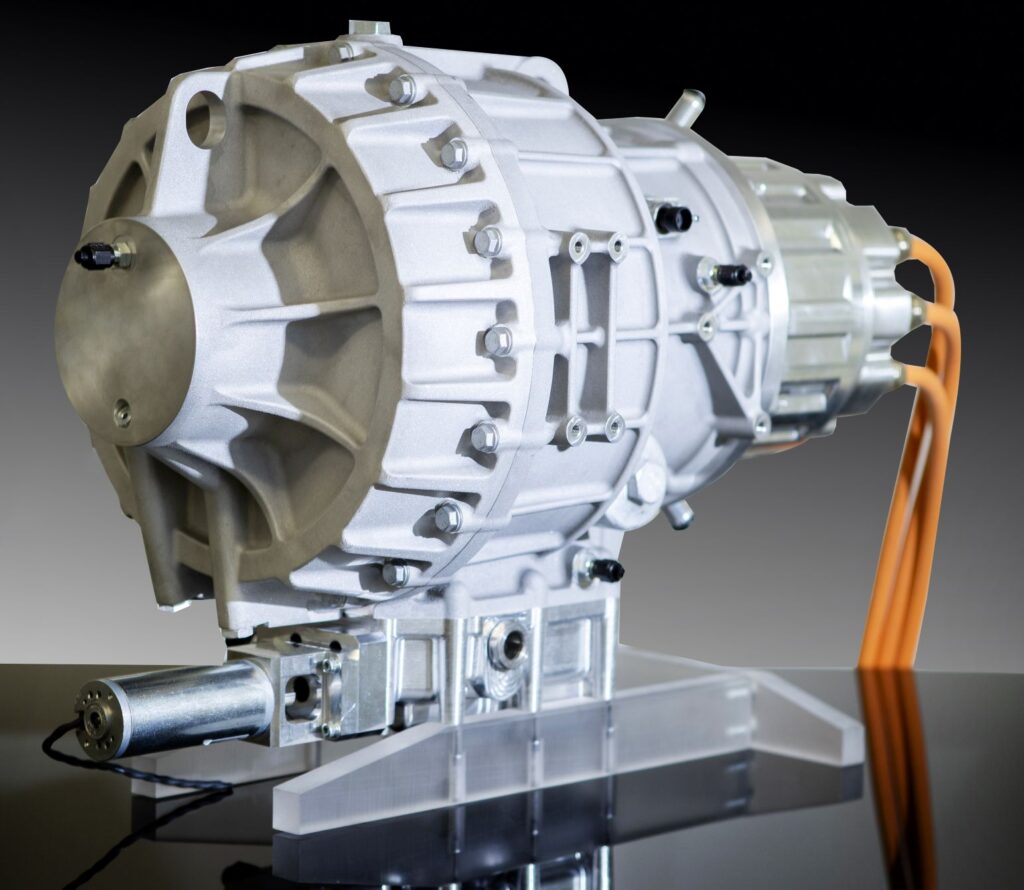
Moreover, by combining the combustion expertise here we have in Turin with the fuel injection know-how based in Pisa, we are developing our own hydrogen injection system. Even though the hydrogen market is slowing down slightly, we are continuing to advance our product so that it will be ready by mid-2026, with samples available for customers to test on their engines.
I believe this truly represents something special. Finally, we are also working on alternative fuels such as methanol, ethanol, and natural gas: our approach is genuinely broad, as we do not see a single technology as the only path to decarbonization.
AI: You got all these different systems, but what is the sort of common factor that joins all these technologies? You know, it seems diversified, but there is a plan.
Scalabrini: Yes, that is right. For example, we can use the same injector for both the hydrogen and the natural-gas applications, which gives customers the flexibility to develop an engine that runs on natural gas until the hydrogen infrastructure is sufficiently developed, and then switch to hydrogen.
Another common point across all these technologies is essentially our expertise in combustion. Our methodology is to start with virtual analysis and single-cylinder engine testing: once we identify the best architecture on the single-cylinder engine testing, we then transfer this technology to the final multi-cylinder engine. And this is the common approach shared across all technologies.
AI: Is the software also common across the technologies?
Scalabrini: This is a good point. There are synergies between the software for natural gas, hydrogen, and diesel. The real commonality is that everything is developed in-house by Dumarey, including both the hardware for the controller and the software.
If the control developers identify an issue or need clarification, they can go directly to where the engine is running and discuss the matter with the development team. This can significantly shorten development time.
AI: Where to for Dumarey and internal combustion engines?
Scalabrini: We are really focused on cutting-edge technologies to improve the efficiency of traditional engines, such as diesel engines, in industrial heavy duty and on off-road applications. I think we need to consider different technologies for the future.
There will be a switch toward electric vehicles in cities and regions where the charging infrastructure is sufficiently developed to support them.
At the same time, I believe hydrogen will probably begin to be used more widely after 2030. It also depends on how quickly authorities accelerate infrastructure deployment.
But there will certainly be countries and regions that will continue to rely on the traditional internal combustion engine. In that case, decarbonization efforts need to focus on reducing emissions through more efficient engines and the use of alternative fuels.
There are so many internal combustion vehicles already on the road with support systems in place that it is not realistic to think everyone will switch to electric vehicles in the short term. As Dumarey, we are really working to support all of this.
More Stories
Envalior on new thermoplastic formulations to meet HV heat challenges
How Road Conditions Can Contribute to Motorcycle Accidents in Washington
The Step-by-Step Panel Beating and Repair Handover Process with Certified Auto Body Specialists