
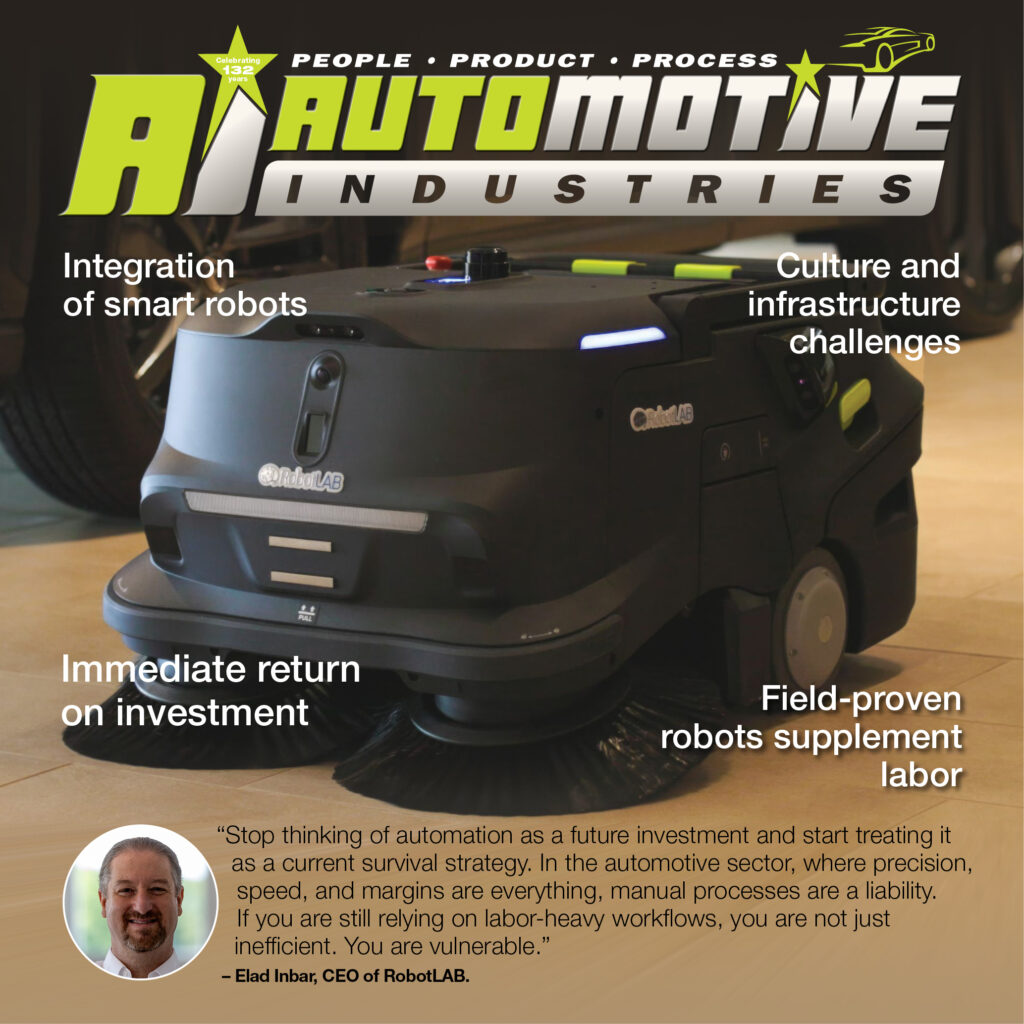
Automation is “no longer optional” says Elad Inbar, CEO of RobotLAB and a visionary in the field of robotics in his new book “Our Robotics Future.”
In the book, Inbar sets out to demystify the robotics market, offering clear insights into the latest technologies and emerging trends that are set to revolutionize the way we work.
Automotive Industries (AI) asked Inbar what first step businesses in the automotive sector should take to avoid falling behind.
Inbar: The first step is to stop thinking of automation as a future investment and start treating it as a current survival strategy.
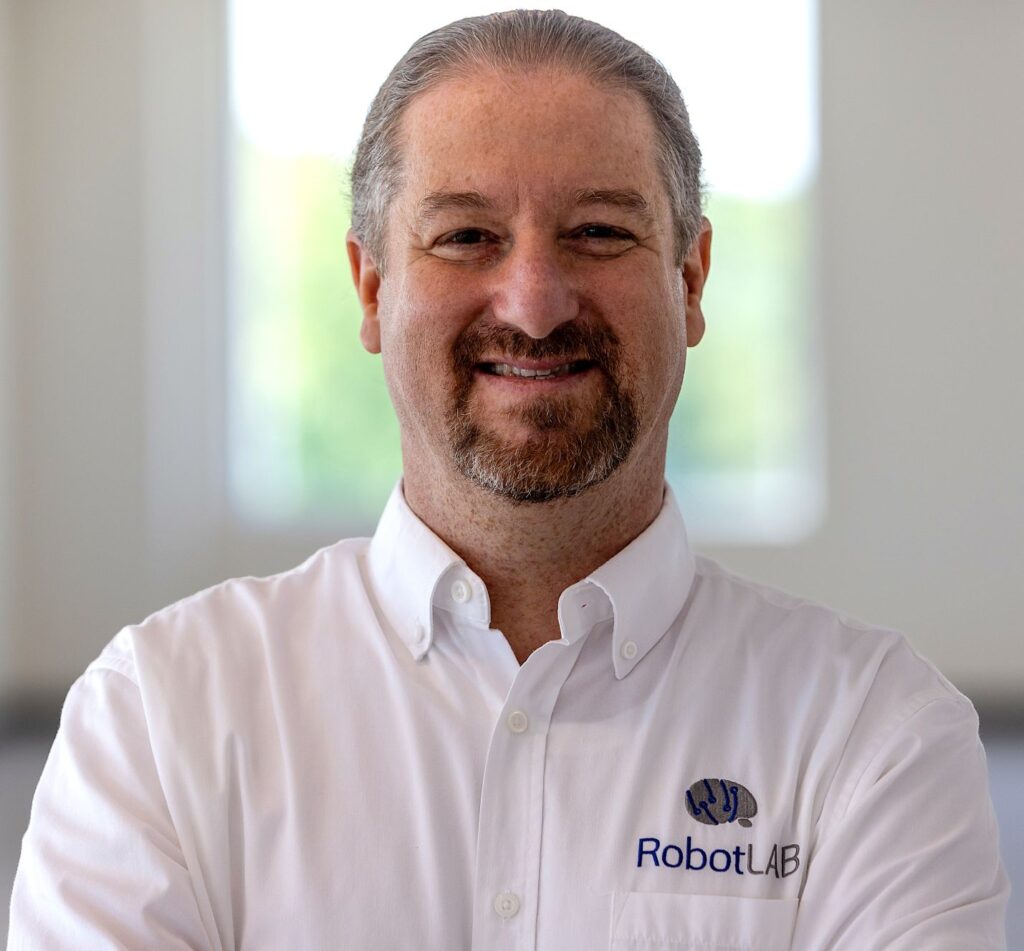
In the automotive sector, where precision, speed, and margins are everything, manual processes are a liability. If you are still relying on labor-heavy workflows, you are not just inefficient. You are vulnerable.
So, the first step is to audit your operations ruthlessly. Identify every repetitive task: inventory movement, surface cleaning, security patrols, last-yard delivery, and ask: Can a robot do this better, cheaper, faster, and 24/7 without calling in sick?
If the answer is yes (and it usually is), start there. The companies that win in this space are not the ones who wait for perfect conditions, they are the ones who pilot, iterate, and scale now.
AI: With RobotLAB’s deployments across so many industries, what unique challenges and opportunities do you see specifically in automotive manufacturing when integrating robotics?
Inbar: Automotive manufacturing is one of the most ripe and paradoxically under-leveraged sectors when it comes to robotics.
It has been using industrial arms for decades, spot welding, painting, assembly, etc. but the real challenge now is integrating smart, autonomous robotics that operate beyond the caged environments of traditional factories.
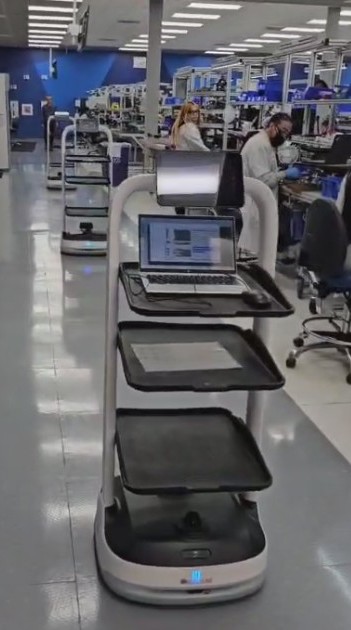
The opportunity is massive. Robots that can navigate dynamic spaces, collaborate with human workers, and collect real-time operational data are unlocking a new layer of intelligence on the factory floor. Think mobile robots delivering parts just-in-time across assembly lines, or inspection units using AI to spot defects before humans even see them.
The challenges are culture and infrastructure. Typical automotive manufacturing environments are optimized for legacy workflows. So, the hardest part is not deploying the robot, it is retraining the process and, often, the people. But the companies that lean into this evolution, rather than fight it, are the ones gaining speed, quality, and resilience.
We are already seeing it with forward-thinking OEMs and Tier 1 suppliers and all the way to car dealerships. The shift is happening, and it is not slowing down. Robotics and AI are not going away.
AI: You talk about human-robot collaboration. How can automotive companies foster a work culture that embraces this partnership rather than fearing it?
Inbar: The key is to reframe robots as teammates, not threats. Automation is not here to replace people, it is here to remove the repetitive, soul-crushing tasks so humans can focus on what they do best: problem-solving, innovating, and building relationships.
In automotive, this means freeing workers from walking miles a day to deliver parts, from tedious inspections, or from physically demanding tasks that lead to injuries. Let the robots handle the grind. Let the people drive the value.
But culture does not shift automatically, you have to communicate the “why” clearly and often. Show teams how robots make their jobs better, not redundant.
Involve them in the deployment. Train them. Reward the ones who adapt fastest. Make them part of the evolution.
At RobotLAB, we have seen it again and again: once people see what automation removes from their plate, they stop fearing it and start asking for more of it.
AI: As labor shortages continue to impact the automotive industry, how can robotics fill the gap without compromising quality or safety?
Inbar: Labor shortages are affecting every industry. And in automotive, they are hitting the worst possible places: logistics, warehousing, line support, cleaning, security.
Jobs that are hard to hire for, hard to keep filled, and critical to operations.
That is exactly where robotics shines. We are not talking about experimental prototypes, we are talking about field-proven, enterprise-ready robots that can work 24/7, without breaks, complaints, sickness, or turnover.
They are already filling gaps in parts delivery, facility maintenance, even front-of-house tasks, without sacrificing an ounce of quality or safety.
In fact, safety often improves. Robots do not get tired, distracted, or injured. And when you design them with humans in mind, as we do, they become reliable collaborators, not risks. The bottom line is that robots do not replace people – they replace vacancies. And right now, the auto industry has more vacancies than ever.
AI: Many automotive suppliers are still hesitant about the cost and complexity of automation. What do you say to these companies?
Inbar: I get it. Automation feels expensive and complex.
But let me be clear:
a) Doing nothing is what is truly expensive and
b) The cost is 1/10th of that of manual labor.
Every unfilled position, every delayed delivery, every human error in a repetitive task is bleeding your margins.
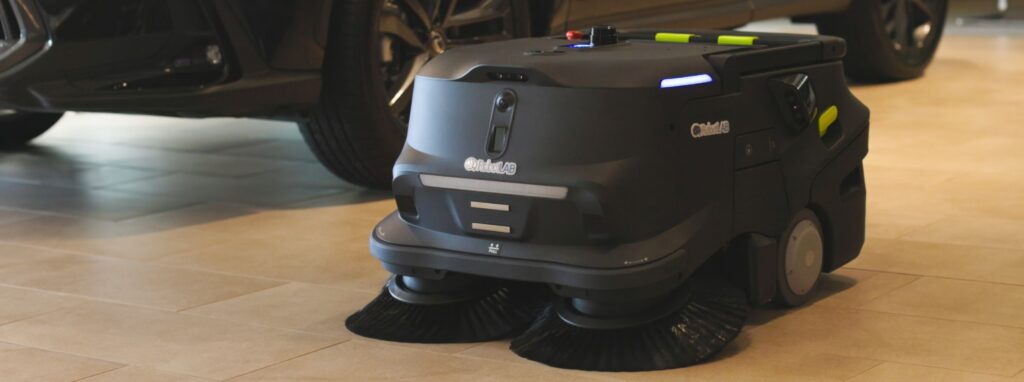
Robots are not a cost center anymore. They are a force multiplier. The ROI is not years away. It is here and now. Our robots can pay for themselves instantly in real deployments. Try hiring someone for $15/day to run deliveries, or $20/day to clean 120,000 square feet.
The ROI is immediate. As for complexity, that is a myth.
Today’s robots do not need an army of engineers. With partners like RobotLAB, with 36 locations in the United States, integration is plug-and-play, service is same-day, and you are not buying a machine, you are buying a solution.
So, if you are hesitating, ask yourself: Are you hesitating because the tech is not ready (it is), or because you are not ready? Because your competitors are. And if you wait too long, they will leave you behind.
AI: What trends in robotics and AI do you foresee reshaping automotive customer experiences, from dealerships to service centers?
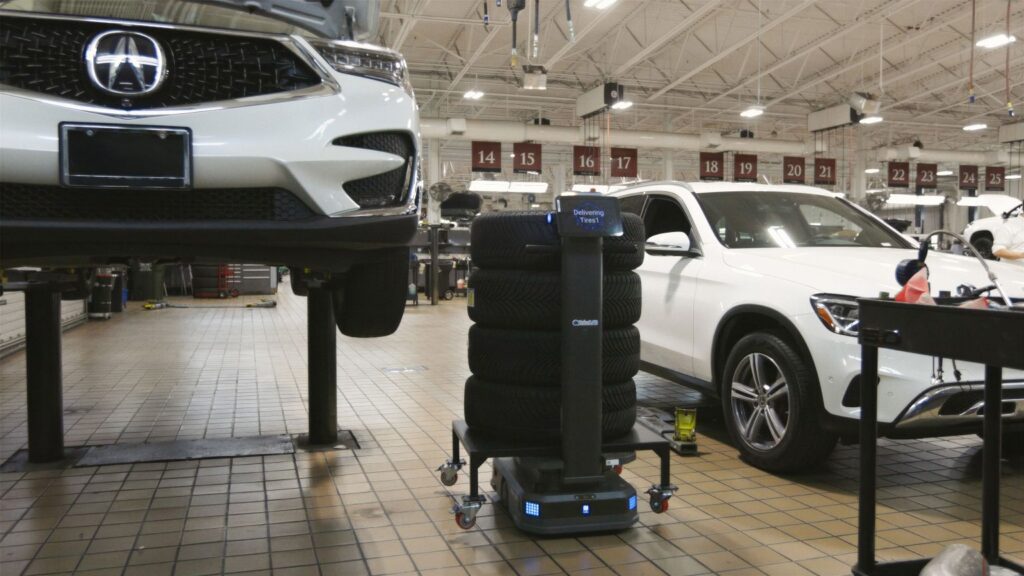
Inbar: We are entering an era where robots and AI are not just behind the scenes, they are part of the customer experience. In dealerships and service centers, which means automation that feels natural, efficient, and even delightful.
Picture this: A customer walks into a showroom and is greeted by a humanoid robot that remembers their last visit, offers them coffee, and answers product questions in multiple languages.
In the service bay, robots handle nighttime cleaning, parts delivery, and even perimeter security, freeing human staff to focus on service, not logistics.
AI is powering predictive maintenance, conversational assistants, and personalized marketing at scale. Customers expect speed, transparency, and engagement, and robotics + AI make that possible, consistently as robots are just physical AI.
AI: You have partnered with giants like Hilton and Disney. What lessons from those large-scale deployments can automotive leaders apply when implementing robotics?
Inbar: Working with Hilton, Disney, and other giants taught us one big lesson: automation succeeds when it is treated as a business initiative – not a tech experiment.
These companies did not deploy robots just because they are cool. They did it to solve real operational pain points: room deliveries, floor cleaning, guest engagement, logistics.
They started with clear ROI goals, aligned the entire team, from frontline staff to executive leadership, and then scaled fast once it worked. Automotive leaders need to take the same approach.
Do not just “try a robot.” Start with a use case that hits your bottom line, parts delivery, showroom concierge, service center cleaning – then deploy, measure, iterate, and expand.
Also, do not underestimate the human factor. Disney did not just drop robots into its resorts or a park, they trained staff, told a story, and made it part of the brand experience. Automotive can do the same: make automation a value-add, not a disruption.
The bottom line is if it works at Hilton and Disney, with their complexity, scale, and guest expectations, it will absolutely work in a factory, dealership, or service center.
But only if treated like a strategic asset, not a toy or a fun experiment.
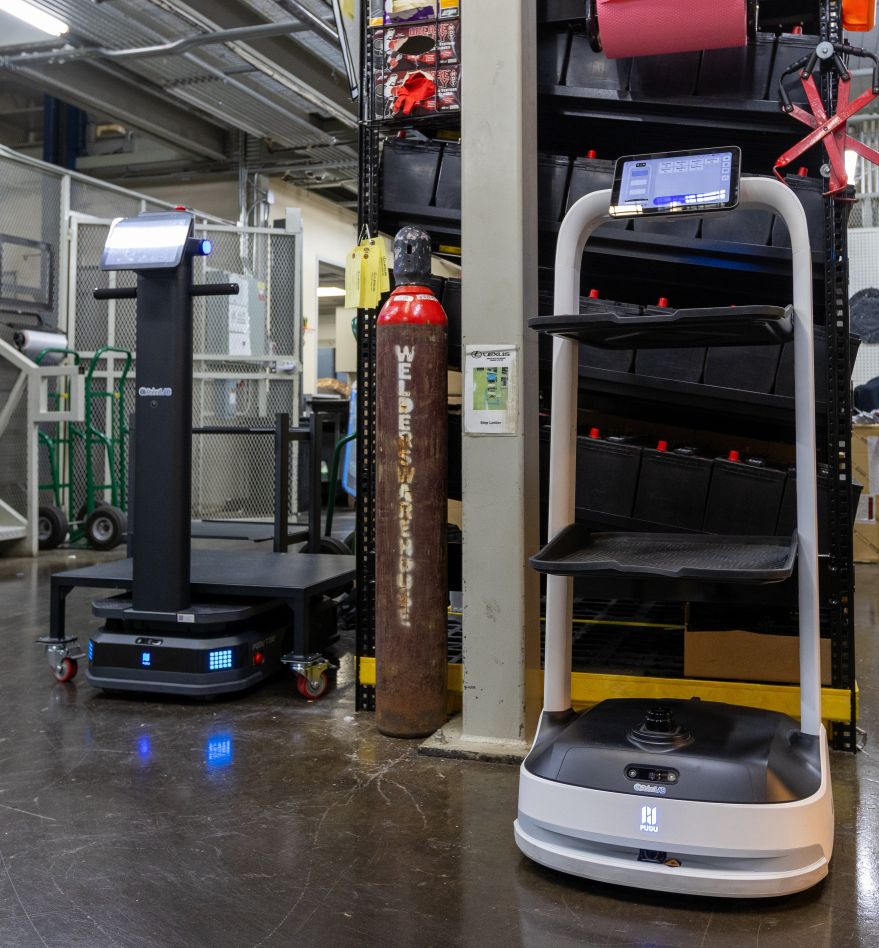
AI: How does RobotLAB’s franchise model help accelerate robotics adoption in traditional industries like automotive?
Inbar: The franchise model is our secret weapon, because it lets us own the last mile of robotics and AI and help the industry to treat and scale robotics like a service business, not a hardware company.
Traditional industries, like automotive, do not need robots shipped in crates. They need trusted local partners who can walk in, understand their workflow, deploy the right solution, and support it on the same day. That is exactly what our franchisees do.
It is boots on the ground, everywhere. They are trained, certified, and backed by our national infrastructure. That means faster deployments, better service, and zero learning curve for the customer.
And because these are entrepreneurs with skin in the game, they move with urgency. They know their market. They care if the robot is still working a year later.
For automotive, that translates into enterprise-grade robotics with small-business responsiveness. It is why we are seeing adoption accelerate in dealerships, body shops, parts distributors – you name it.
In short: We took robotics out of the lab and into your neighborhood. And that is how you drive real change. With 36 locations, and expanding, our goal is to be just two-hour drive away from every customer, nationwide in the United States.
AI: What are your plans for expanding outside of the US?
Inbar: We currently serve customers globally, with a strong footprint across more than 30 markets in the United States and an established presence in Colombia, which acts as our operational hub for Latin America.
Our approach internationally mirrors what has made us successful in the U.S.: local execution backed by centralized expertise. We focus on regions where labor shortages, operational pressure, and automation readiness intersect, and then we deploy robotics as a service—not as a one-off product sale.
Latin America is a key growth market for us, and Colombia gives us strategic reach across the region.
We are not chasing global expansion for the sake of a map. We are scaling where robotics delivers immediate ROI and where customers are ready to move now. That disciplined expansion strategy is what allows us to grow globally without losing speed, service quality, or execution excellence.
AI: Looking ahead five to 10 years, what will a future-proofed, robotics-driven automotive business look like — and what will separate the winners from the losers?
Inbar: By then, the automotive businesses that win will not just be using robotics and AI, they will be built around it.
A future-proofed operation will be fully integrated, where robots and AI are not bolted on. They are embedded in every layer.
Showrooms will have autonomous greeters, digital assistants, and real-time analytics on foot traffic. Parts will move without human touch. Service bays will run like mini logistics hubs – fast, clean, optimized by data. Security, cleaning, delivery – automated, seamless, always on.
But the real separation will not be about tech. It will be about mindset. Winners will be the ones who see robotics as strategic infrastructure, not a gadget.
They will move fast, adapt faster, and measure everything. They will train their teams to collaborate with automation, not resist it. And they will stop waiting for perfect – and start piloting, scaling, and owning the future.
Losers will still be waiting for the “right time” to try their first robot. And by then, it will be too late.
Elad Inbar — CEO & Founder, RobotLAB
Elad Inbar is the founder and Chief Executive Officer of RobotLAB, a pioneering robotics integration company headquartered in Southlake, Texas, that delivers robotic automation solutions to enterprise, healthcare, hospitality, government, education, and commercial sectors.
Since founding RobotLAB in 2007, Elad has led the company’s mission to make robotics practical, scalable, and impactful by bridging the gap between cutting-edge technology and real-world deployment, driving tens of thousands of successful implementations and achieving significant commercial success.
A visionary in robotics and artificial intelligence, Elad champions the idea that automation should augment human work, not replace it, advocating for a future where robots and people collaborate to unlock higher productivity, innovation, and purpose in the workforce.
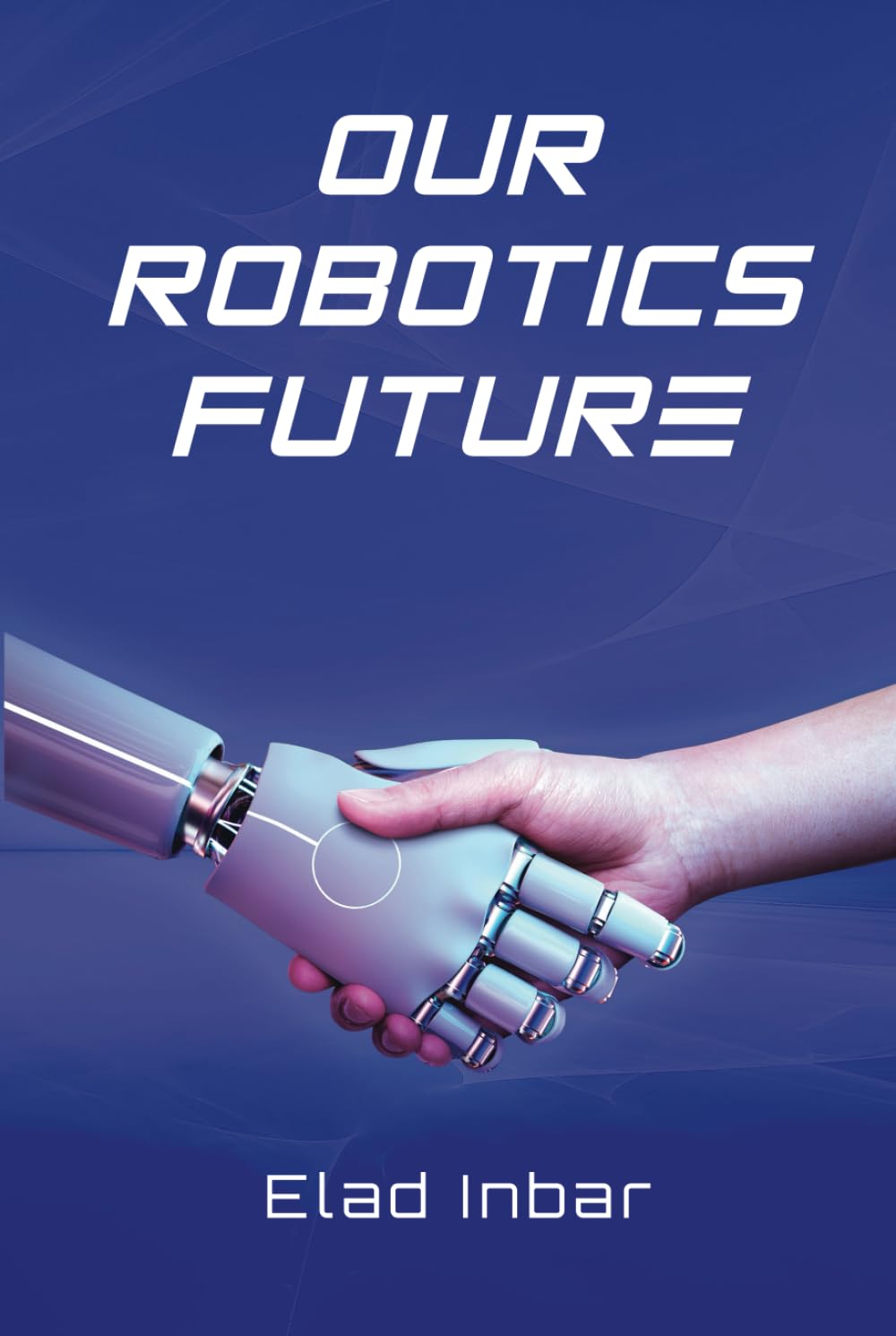
In addition to leading RobotLAB’s growth and industry impact, Elad is the author of Our Robotics Future — a forward-looking guide for business leaders and decision-makers navigating the rapidly evolving world of robotics and AI.
The book decodes emerging trends, provides practical evaluation tools, and offers strategic insights to help organizations assess, adopt, and benefit from robotic automation. Our Robotics Future reflects Elad’s deep industry experience and his commitment to empowering leaders with actionable knowledge on robotics adoption and the future of work.
Under his leadership, RobotLAB has established unique partnerships with major manufacturers and global brands, expanded its footprint through an innovative robotics franchise model, and delivered solutions that help organizations increase efficiency, address labor challenges, and reimagine customer and workforce experiences.
Elad’s thought leadership is frequently sought in industry forums, media, and strategic discussions shaping the future of automation.
To find out more about the book and RobotLAB, click here.
More Stories
AI-Driven Product Security for Software-Defined Vehicles
SABIC SHOWCASES AT THE BATTERY SHOW EUROPE ITS FULL EV BATTERY MATERIAL ECOSYSTEM FOR HIGHER PERFORMANCE FROM PACK TO POWER COMPONENTS
Reducing Buyer Hesitation When Selling Specialty Tires Online