
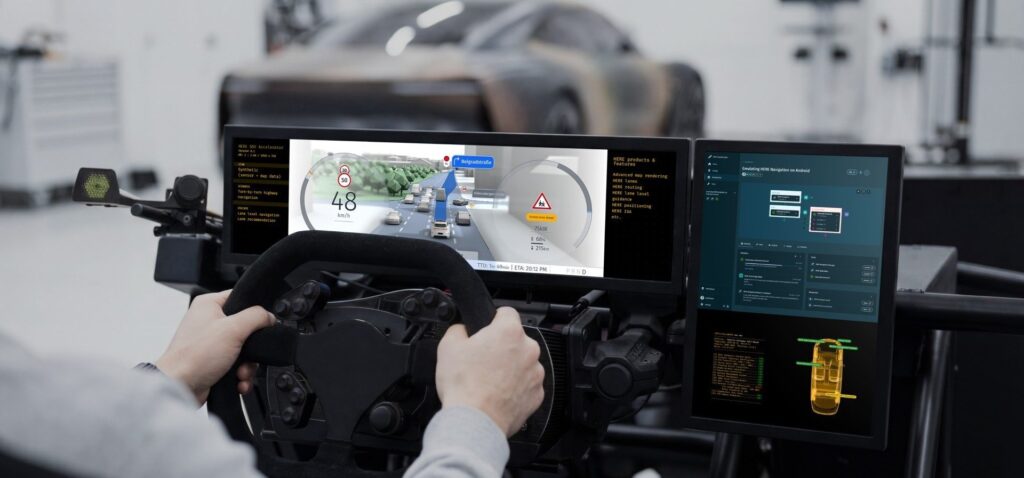
HERE provides software development kits for OEMS and Tiers.
With the UK and EU stepping up their efforts on AI regulation and autonomous vehicle rollout, an important discussion is underway: Are end-to-end AI systems truly the path to safer autonomy, or is this view too simplistic?
Major investments and rapid AI progress suggest end-to-end systems will replace mapped methods. However, effective autonomous systems rely on sensor fusion, prompting concerns about safety, scalability, and regulatory preparedness in Europe.
For a perspective on the issue, Automotive Industries (AI) asked Remco Timmer, SVP of Product & Technology at HERE Technologies, why location technology remains essential for automated and assisted driving.
Timmer: A map is effectively another sensor. Cameras, radar, and lidar can only see what’s directly in front of the vehicle. Location technology gives the vehicle horizon knowledge: what’s behind a hill, around a bend, or beyond traffic.

That enables smoother, safer, and more comfortable assisted and automated driving, and it provides an essential fallback when sensors are degraded by glare, weather, or occlusion.
AI: How does HERE support ADAS and higher levels of automation?
Timmer: We support the full progression:
Level 1: Intelligent Speed Assist, where HERE has very strong market coverage due to accuracy and ease of integration.
Level 2 / 2+: Hands‑free driving enabled by our ADAS maps, which describe lanes, curvature, topology, and road rules.
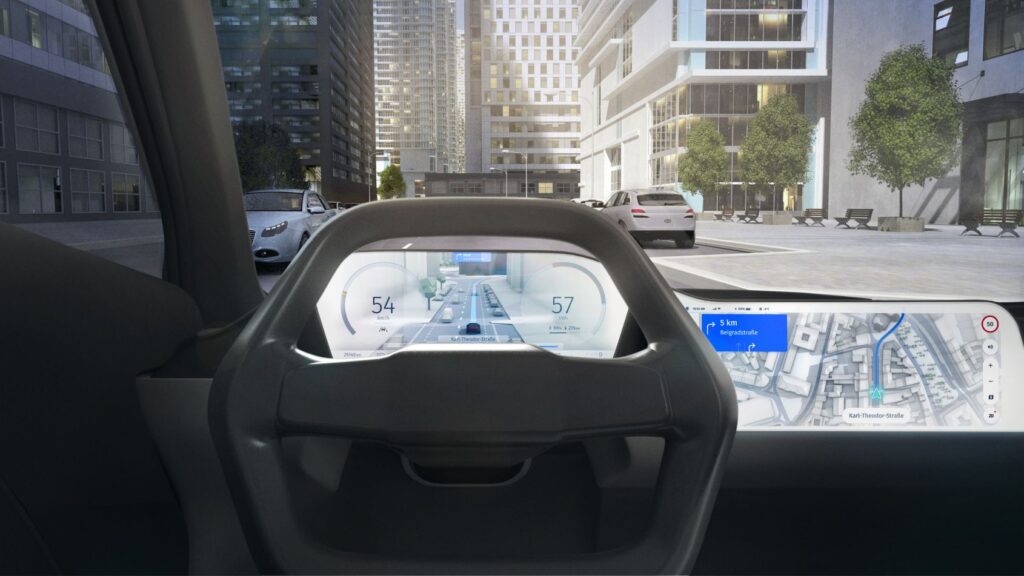
Beyond that: We support autonomy by combining navigation maps, ADAS attributes, and selected HD elements, depending on the customer’s architecture.
Importantly, we don’t just deliver maps. We also provide software development kits, tooling, and user‑experience components so OEMs can deploy these capabilities effectively.
AI: Why is the user experience so important for automated driving adoption?
Timmer: The industry has invested billions in assisted and automated driving, but many features are underused. One reason is that drivers don’t always know when, where, or how they can use them.
We integrate assisted‑driving availability directly into navigation, giving clear, contextual cues. That builds trust, improves usage, and ensures the technology delivers real value.
AI: What role does artificial intelligence play in HERE’s mapping and automotive strategy?
For vehicles, our maps are also used to train and validate driving models, especially in modular and end‑to‑end AI approaches. High‑quality location data is essential for safe and scalable deployment.
AI: How does HERE support OEM differentiation in the software‑defined vehicle era?
Timmer: AI has always been part of how we build maps, but recent advances have dramatically increased productivity, freshness, and precision. AI helps us extract structure from massive volumes of sensor data, while human experts remain in the loop to validate and train the models.
Timmer: HERE provides OEMs with flexible building blocks like maps, SDKs, rendering, and ADAS capabilities, so they stay in control of their architecture, bill of materials, and brand experience.
Differentiation in automotive increasingly comes from software and in‑car experience, and location technology is a core enabler of that.
AI: How does regulation affect automated driving, and how does HERE help?
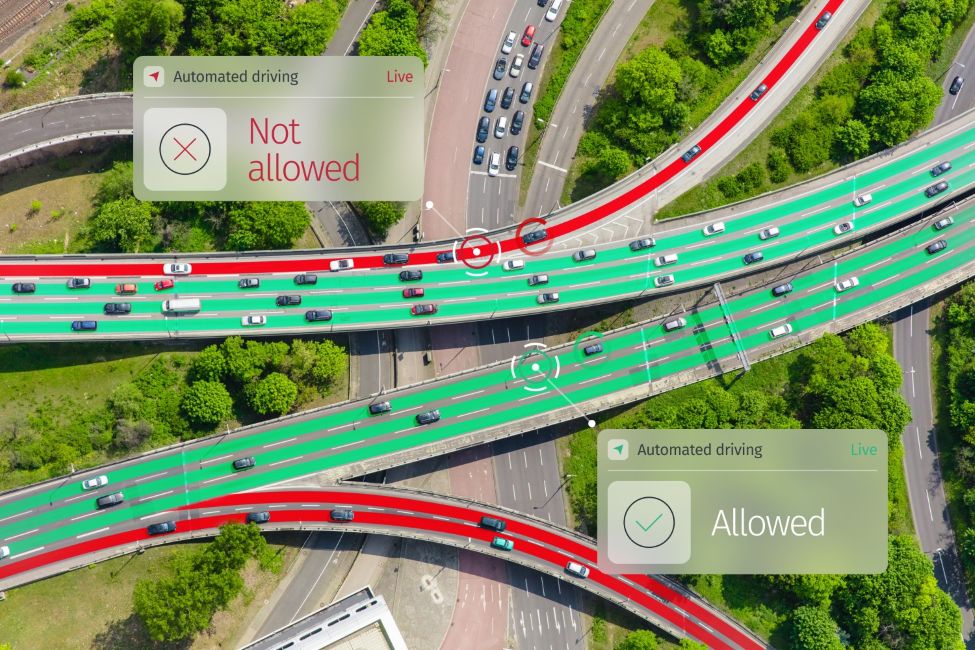
Timmer: Automated driving must be deployed responsibly. Regulation varies by region, and that makes Operational Design Domain (ODD) management critical. HERE supports not only the vehicle, but also backend systems that define, validate, and communicate where and under which conditions automated functions can be used.
That transparency is essential for regulators and for driver trust.
AI: what has positioned the company as a leading location technology provider for automotive?
Timmer: HERE has over 40 years of experience building and operating digital maps at global scale. Today, around 70% of our business comes from automotive, and we serve most of the world’s major OEMs.
This includes 10 of the top 10 Chinese automakers by export volume in 2025 who are all HERE customers. Our differentiation is depth and quality: global coverage, high precision, and continuously updated maps powered by live vehicle data from tens of millions of cars. That combination is very hard to replicate and critical.
AI: Looking ahead, what is the long‑term role of location technology in mobility?
Timmer: As vehicles move toward higher levels of automation and shared use, utilization will increase dramatically. That only works with precise, trusted, and continuously updated location intelligence. Our focus remains road‑based mobility with passenger cars, commercial vehicles, and future autonomous fleets because that space will grow significantly and location technology will only become more central.
More Stories
Envalior on new thermoplastic formulations to meet HV heat challenges
How Road Conditions Can Contribute to Motorcycle Accidents in Washington
The Step-by-Step Panel Beating and Repair Handover Process with Certified Auto Body Specialists