
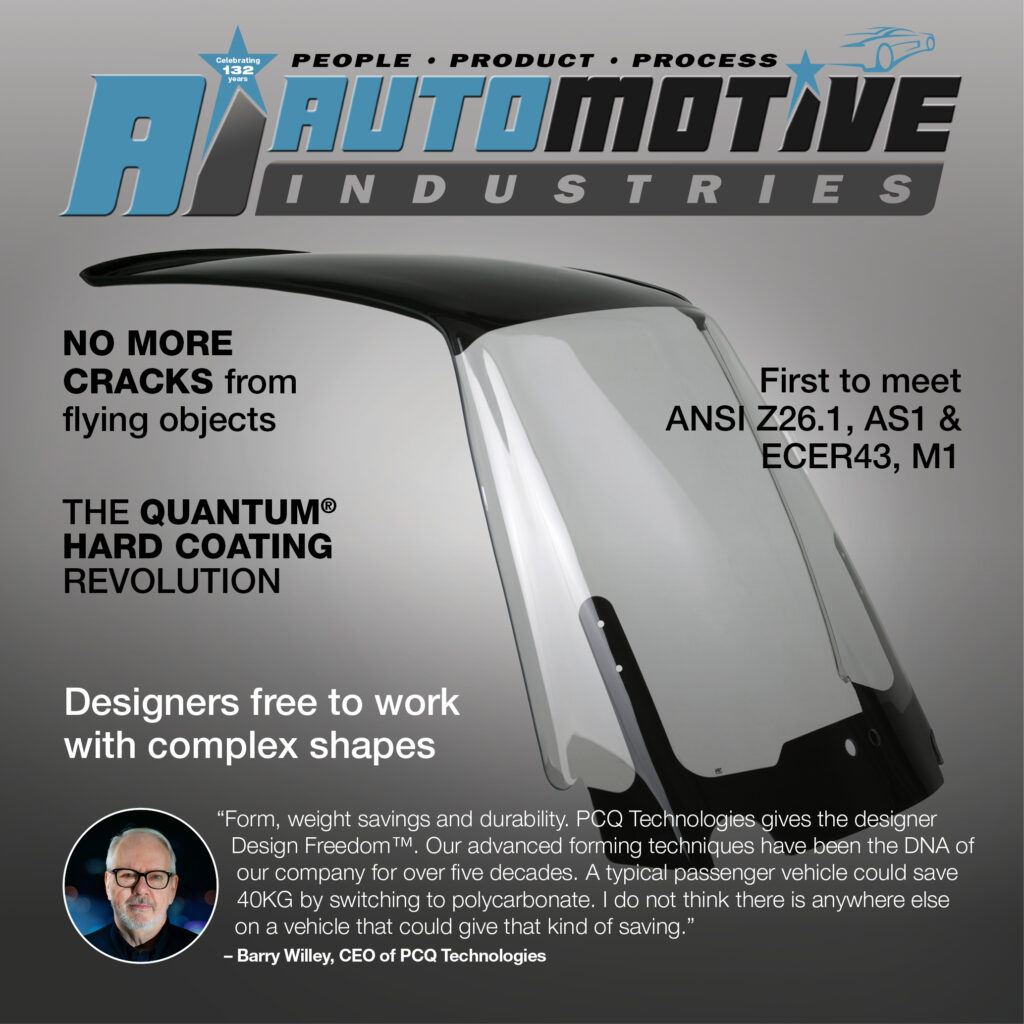
Automotive glass is being replaced with lightweight polycarbonate (PC) glazing which offers 250 times greater impact resistance and provides a 50% weight saving.
The technology has moved from high-performance cars to series production electric passenger vehicles, where weight savings translate into extended range. PCQ Technologies believes PC glazing outperforms glass “in all the ways that matter for next-generation vehicles”. Optical grade PC offers exceptional optical clarity, in addition to shatter resistance and design flexibility.
Automotive Industries (AI) asked Barry Willey, CEO of PCQ Technologies, what breakthrough in automotive PC glazing is taking the technology into the mainstream.

Willey: In one word, “forming”. PCQ Technologies perfected the forming process using optically pure polycarbonate.
This came about as the abundance of optically pure polycarbonate from the compact disc industry became available and met up with technological advances of polycarbonate sheet extruders.
PCQ Technologies saw an opportunity and took advantage of this decades ago, bringing us to where we are today.
AI: What are the advantages of Quantum® Hardcoated Polycarbonate?
Willey: Without a doubt PCQ Technologies ability to form large parts with complex shapes and surpass the requirements of ANSI Z26.1 AS1 and ECE R43 M1 regulations.
When we released Quantum® Hard Coating it revolutionized polycarbonate glazing in the mid-1990s.
Our early windshields with wiper units can still be seen in use decades later, as recently witnessed on a vehicle in the streets of Milan with PCQ glazing looking like new.
This is real world testimonial to the durability of the product. Today our Quantum+ has durability and abrasion resistance which exceed the standards laid out in DOT ANSI Z26.1 and ECE R43.
AI: Where is polycarbonate glazing being used in the automotive sector?
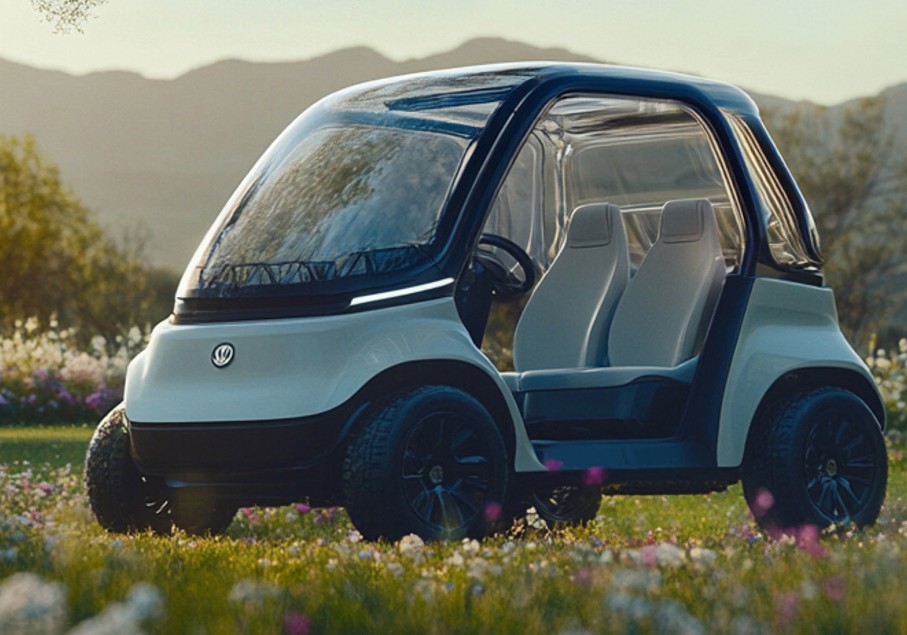
Willey: Other than the obvious headlight covers and B pillar covers, polycarbonate is in use in every high-performance category except automotive.
PCQ Technologies’ Quantum+ solution recently passed ANSI Z26.1, AS1 requirements. Being the first to ever to achieve this with polycarbonate and coatings.
AI: Is it suitable for serial production in passenger vehicles?
Willey: Yes, starting with the high-performance vehicle category.
Automotive cabins look the way they do because of glass and steel. Designers working on projects such as the Lamborghini Manifesto and the BMW Vision 100 envision vehicles which are moving away from steel and glass.
The glazings that make these vehicles stand out can be realized in series production with the freedom offered by polycarbonate and our engineering.
PCQ Technologies has developed IP and experience to produce these parts now. As a Tier 1 OEM supplier, we understand the challenges and have developed our own production equipment and unique processes with serial production at the forefront of this.
AI asked Jason Howard, PCQ Technologies Sales Director, what the advantages are of polycarbonate glazing over traditional glass.

Howard: Form, weight savings and durability. PCQ Technologies gives the designer Design Freedom™.
Our advanced forming techniques have been the DNA of our company for over five decades. In the EV industry, weight savings translate directly to increased battery range.
A typical passenger vehicle could save 40KG by switching to polycarbonate. I do not think there is anywhere else on a vehicle that could give that kind of saving.
Polycarbonate, being more durable than glass, will not break or crack. Most drivers have experienced a stone or object impact that cracks their windshield and impacts on their ability to operate the vehicle.
Replacing glass windshields in modern cars with embedded smart technology is outrageously expensive. PCQ Technologies is a solution for a wide variety of applications.
AI: Where do you see new applications in the automotive industry?
Howard: The early adoption is in performance cars. With PCQ Technologies glazing, designers can advance beyond the limited forming capabilities and delicate nature of glass.
We use polycarbonate in a structural way, which can reduce surrounding parts. Polycarbonate also makes an ideal material for encapsulation.
Solar cell encapsulation is one good example.
AI: How do you work with OEMs and Tier suppliers to develop new closures?
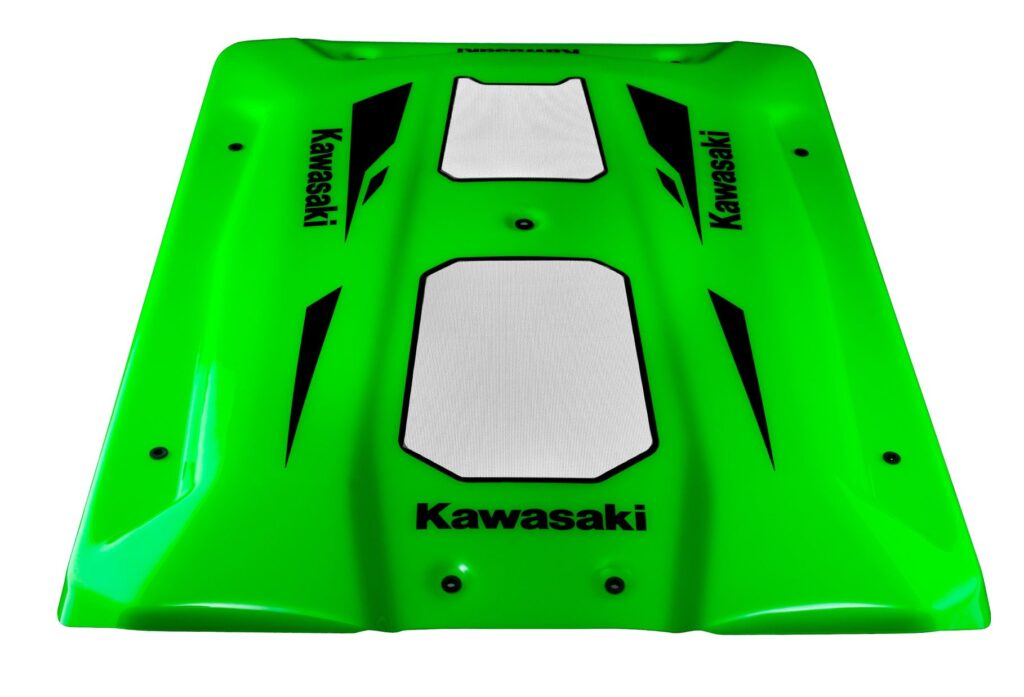
Howard: To take full advantage of the polycarbonate advantage, we participate as early as possible in the development of the vehicle.
The PCQ Technologies designers and engineers work directly with the OEM or nominated design and engineering companies to make sure the material advantages and reduction of unnecessary parts are realized.
To gain the full benefits of polycarbonate, it must be incorporated into the vehicle design from the ground up. Our expertise in high optical tooling and mold production has benefited OEMs world-wide for decades.
And producing our tooling and molds in house keeps us close and reactive, allowing us to deliver the project at all points.
AI: Where to next for PCQ Technologies and polycarbonate glazing?
Willey: With the introduction of Quantum+, PCQ Technologies has already defined the next step, a super tough hydrophobic surface for vehicles in AS1 and M1 categories.

More Stories
Comsysto Reply Supports Audi in Evolving Its B2B Used Car Platform With an AI-Based Multi-Agent System
Rear View Safety Unveils Enhanced AirVue ™ System with Advanced Sensors and Expanded Camera Coverage
mimic robotics Introduces FLUX-mimic, Bringing Frontier Video-Action Models to the Factory Floor at Audi