
















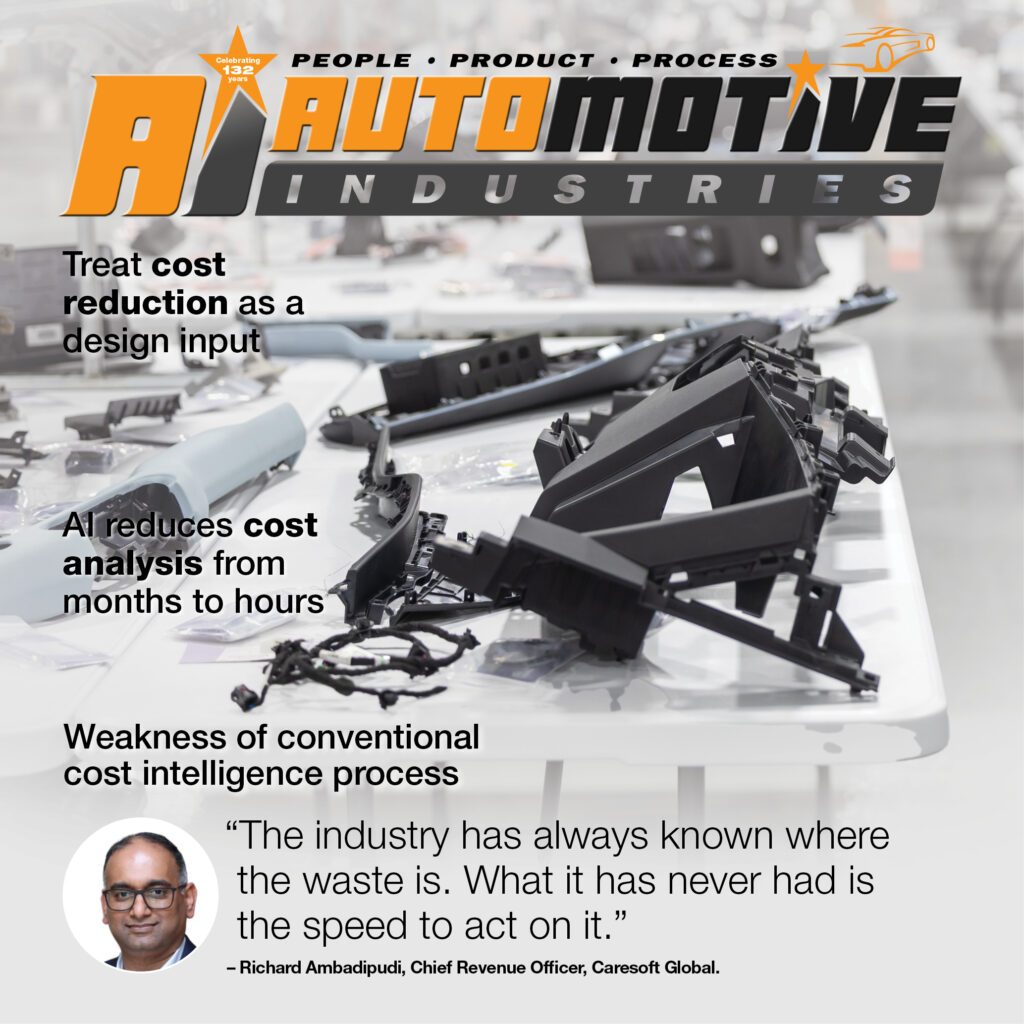
Globally, the automotive industry loses an estimated US$1.3 trillion due to waste, which Caresoft Global believes is the result of “legacy manufacturing defaults,” rather than poor engineering.
Caresoft Global has helped OEMs identify over $3.5 billion in cost saving and Cost avoidance opportunities through more than 60 bespoke programs. With AI now embedded into the process, the pace of that value capture is set to accelerate significantly.
The numbers define the opportunity
Global OEM revenues from new vehicle sales sit at approximately $2.75 trillion annually. Total costs, covering manufacturing COGS and R&D, run to roughly $2.6 trillion.
Margins are structurally thin, and that reality is not changing. The question is how efficiently those costs are managed, and how early in the product development process that discipline begins.
Within the $2.6 trillion cost base, manufacturing COGS accounts for $2.45 trillion. The largest single component is materials and purchased parts: metals, plastics, electronics, battery cells, and everything sourced from the supply base. That line alone runs to between $1.1 and $1.23 trillion per year across the global OEM industry.
The opportunity this creates is significant.
In any industry where design decisions directly govern material specifications and part counts, a one percent improvement in cost efficiency applied systematically translates to $11 to $12 billion in annual savings.
A 2% improvement, consistent with what structured value engineering programs have historically delivered, represents over $22 billion.
The leverage is there. The constraint has always been the same: the right intelligence arriving too late, too fragmented, and too disconnected from the moments in a program when decisions are being made.
Sixty programs. $3.5 billion. This Is not theoretical.
Caresoft Global did not build Eureka as a software concept. It built it from practice.
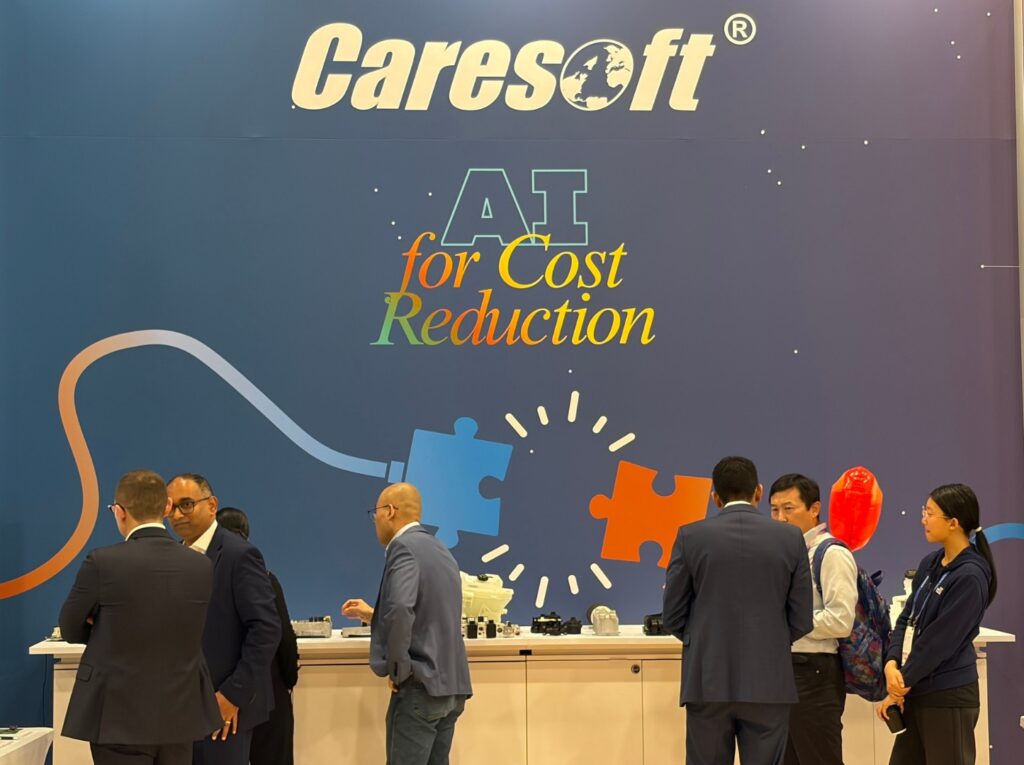
Over the past decade, the company has conducted more than 60 bespoke cost reduction programs for global OEMs, working directly with engineering and procurement teams on live and future vehicle programs across vehicle segments, powertrain systems, electrical architecture, interiors, and chassis. The cumulative output is over $3.5 billion in identified cost saving opportunities delivered to customers.
That track record matters for a specific reason. It validates the thesis that systematic, expert-led benchmarking applied with discipline across vehicle systems consistently surfaces savings that conventional program processes and traditional cost engineering methods leave uncaptured.
More importantly, every one of those programs generated structured insight: where savings concentrate, how design changes interact with manufacturing constraints, what the competitive benchmark looks like across different segments and markets.
Eureka is built on that knowledge. The ideas in Eureka knowledgebase have been proven on real programs and quantified against actual production architectures. It is not a generic AI tool trained on public data. The foundation is
The $3.5 billion in identified savings our programs have delivered is not the ceiling. With AI accelerating the speed at which that knowledge reaches engineering teams, it is the baseline from which the next chapter begins.
The R&D window is where costs are fixed
Global OEMs invest roughly $145 billion annually in R&D covering vehicle engineering, platforms, software, electrification, and validation. Early decisions made during this phase set the vehicle cost structure for five to seven years.
Architecture choices, material selections, joining strategies, module packaging: each one locks the cost profile of every unit that comes off the line for the life of the program.
The ability to influence vehicle cost drops sharply after concept and design freeze and approaches zero by the time production tooling is released.
A design change at the concept and design stage costs engineering hours. The same change after tooling sign-off costs hundreds of thousands of dollars and months of program disruption. The math is unambiguous: cost intelligence has to arrive early, or it arrives too late to matter.
The conventional flow runs in exactly the wrong direction. Teardown benchmarks are commissioned after a competitor vehicle launches. VAVE workshops are scheduled after program budgets are fixed. Cost reviews happen after design decisions have been ratified.
The result is that the organization’s best intelligence about what is achievable arrives systematically after the window to act on it has closed. This is the structural problem Eureka addresses.
What Eureka does
The platform is designed to deliver cost control upstream in the development cycle, engineers can evaluate design alternatives during architecture definition and subsystem development, before the cost structure of the vehicle becomes fixed.
Eureka is Caresoft Global’s patent-pending, AI-powered cost reduction intelligence platform. At its core, it is a continuously updated catalog of actionable cost, mass, and assembly-time reduction ideas, each one derived from physical vehicle teardowns, cross-OEM benchmarking, and expert analysis across all major vehicle systems.
Missing an optimal sourcing decision will get cost locked for five to seven years, missing best architecture timing may result in platform failure, missing the platform cost target could collapse margins.
Each idea in the catalog is structured for engineering workflows. It identifies the system and subsystem it applies to, describes the specific design change, explains the trade-offs, provides visual comparisons between current and optimized approaches, quantifies the expected impact across cost, mass, and assembly time, and maps where the approach has already been adopted across competitor vehicles.
An engineer reviewing a design is not reading a market summary. They are reading a validated recommendation with enough detail to take directly into a design review.
The most significant recent addition to the platform is BOM AI, an AI-driven bill-of-materials parsing engine. In a conventional VAVE workflow, mapping a full vehicle BOM against competitive benchmarks is sequential and slow.
Physical teardown, part validation, BOM analysis, cost modeling, and insight generation: the cycle runs to months. By the time outputs are available, program teams are often already committed to the architecture the analysis was supposed to inform.
BOM AI removes that constraint. A team uploads their BOM, the engine classifies every element, cross-references the full BOM against Eureka’s cost reduction knowledgebase, and delivers a structured gap analysis showing where the current design sits relative to best-in-class alternatives. That runs in hours, not months.
The reason this is reliable is that the AI is not generating the intelligence. It is accelerating access to a knowledge base that Caresoft built over 20 years and 60-plus programs. The expert validation, the impact quantification, the cross-vehicle applicability mapping: that work was done by people. The AI is the delivery mechanism.
The knowledge behind it is deep and domain-specific in a way that cannot be replicated by a general-purpose model.
Three things this changes
First, it shifts cost reduction from reactive to predictive. The standard pattern in automotive is a missed cost target, a program review that flags the gap, a VAVE workshop convened after the design has already moved past the point of easy modification.
Eureka makes benchmark intelligence available before architecture decisions are made, so the team is working from competitive facts rather than assumptions at the moments that count.
Second, it converts competitive benchmarking from an event into a capability.
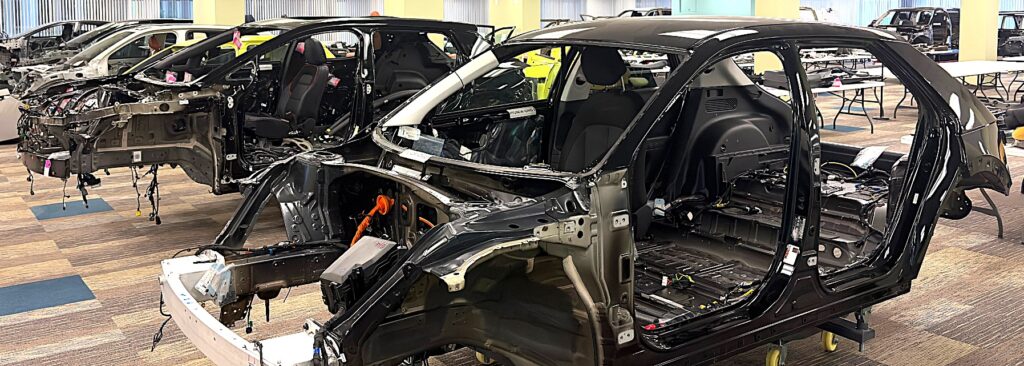
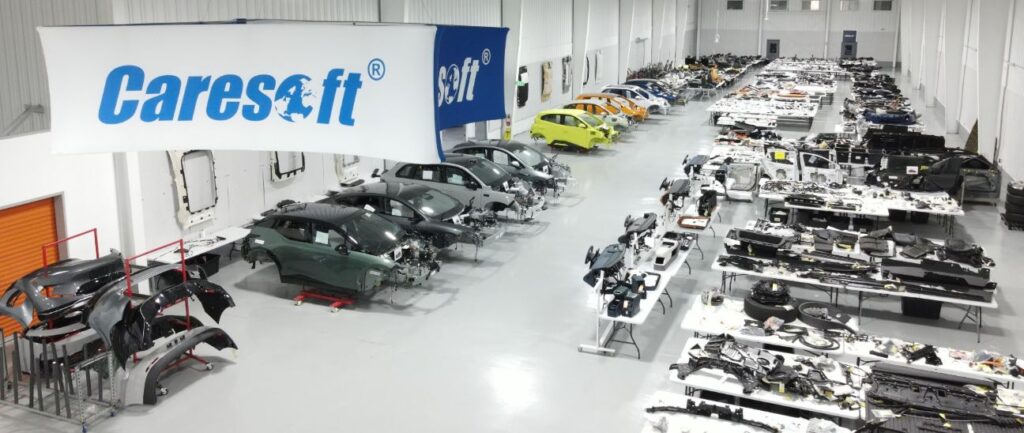
Because Caresoft’s teardown pipeline feeds the platform continuously, program teams are always working against a current competitive reference. When a new vehicle with a relevant structural innovation is torn down at one of Caresoft’s global technology centers, that insight enters the catalog within weeks, available to any engineering team working on a comparable system.
The benchmark keeps pace with the market rather than lagging it.
Third, it connects data to decision. One of the lessons from a decade of data platform investment across the industry is that access to data and the ability to act on it are not the same thing. Eureka bridges that gap through a curated, expert-annotated catalog and an “Ask an Expert” capability that connects program teams directly with Caresoft technical specialists when a query requires judgment beyond what structured data can provide. Intelligence access becomes decision acceleration.
The case for acting now
The $1.2 trillion materials spend will not be optimized by incremental improvements to existing processes.
The scale of the opportunity and the pace of competitive change require intelligence that is continuous, early, and scalable across engineering organizations. OEMs and suppliers that embed this capability into standard program workflows are not running a cost reduction initiative. They are building a structural competitive advantage that compounds across every program cycle.
Caresoft spent two decades and more than 60 programs building the knowledge base that makes Eureka credible.
The $3.5 billion in identified savings those programs generated for customers is the proof that the methodology works. AI has not changed what makes competitive intelligence so important.
It has removed the constraint that prevented that effectiveness from being deployed at the speed and scale the industry’s development timelines demand. That is what has changed. And it changes quite a lot.
Automotive Industries (AI) spoke to Ambadipudi about the structural pressures reshaping the global automotive industry, why $1.3 trillion in annual materials spend carries more latent waste than the industry has been willing to quantify, and why this precise moment in automotive history is the one where AI-powered cost intelligence stops being a capability advantage and becomes an operational necessity.
AI: What has changed for cost engineering that makes this such a critical conversation?

Ambadipudi: The fundamentals of cost engineering have not changed. Design decisions made early in a program govern the cost structure of everything that follows. That has always been true. What has changed is the severity of the consequences of getting those decisions wrong, and the speed at which the competitive reference point is moving.
In the combustion era, an OEM could absorb a degree of cost inefficiency in its vehicle architecture because the business model was relatively forgiving. Margins were thin but stable, programs ran long, and there was time to course-correct. That environment no longer exists.
Electrification is consuming capital at a scale the industry has never seen. Battery costs are compressing margins on every BEV program. Every non-battery system in the vehicle is now carrying a higher share of the profitability load than it did five years ago. The tolerance for cost that was designed in unnecessarily – one that better benchmark intelligence would have eliminated –has effectively gone to zero.
At the same time, the pace of change in vehicle architecture is faster than the industry’s traditional cost intelligence cycle can follow. The combination of those two forces, compressed margin tolerance and an accelerating competitive benchmark, is what makes this moment different from every previous cycle of cost pressure the industry has been through.
AI: You often reference the $1.3 trillion spent on materials globally. Why is it so important, and what does the waste embedded in it look like in practice?
Ambadipudi: It matters because materials are the largest single cost line in the entire automotive value chain, and it is the cost line that responds most directly to engineering decisions.
Labor costs, overhead, depreciation: those are largely fixed by facility and workforce agreements.
Materials and purchased parts are determined by what the engineering team decided to specify, how many parts they chose to use, what joining strategy they selected, and whether those choices were made with an accurate picture of what the best available alternative looked like. That is where the leverage sits.
The waste in that $1.3 trillion is a product of two things that have defined how the industry has operated for decades. The first is legacy manufacturing practice.
OEM engineering teams tend to design from the inside out, starting from what worked on the last program, what the existing supply base can deliver, and what the established tooling infrastructure supports. Those inherited defaults carry costs that were locked in during a different competitive era, under different material economics, before manufacturing methods like large-scale casting or structural integration existed as viable options.
The defaults persist, not because anyone chose them consciously, but because the system rewards continuity over reinvention.
The second is organizational silos. In most large OEM programs, the team responsible for body structure engineering is not in regular dialogue with the team managing procurement strategy, which is not connected to the manufacturing engineering team that understands what assembly complexity actually costs at volume.
Each function optimizes within its own brief. A design decision that looks cost-neutral to the engineer specifying it may carry significant hidden cost in assembly time, fastener count, or supplier complexity that only becomes visible when those functions looki at the same picture simultaneously. By the time that visibility exists, the design is typically too far advanced to change without disrupting the program.
That is how waste accumulates across a $1.3 trillion spend base, not through any single bad decision, but through thousands of reasonable decisions made without a shared view of the full cost consequence.
AI: Cost reduction has been a stated priority in automotive for as long as anyone can remember. Why has the industry historically struggled to capture the savings it knows are available?
Ambadipudi: Because the intelligence and the decision have been chronologically separated in a way that makes it structurally impossible to act on what you know. The teardown that reveals what a competitor is doing on a particular system happens after that vehicle launches.
The benchmark analysis that quantifies the gap between your current design and best practice is commissioned after the program budget is set. The value engineering and analysis workshop that identifies the cost reduction opportunities arrives after concept freeze, when the design is already committed and the cost of change has multiplied.
Every step in the conventional cost intelligence process is downstream of the decision it was supposed to inform.
This is not a failure of effort or expertise. The people doing the teardowns and the benchmark analysis are often exceptional engineers. The failure is structural: the sequence is wrong.
The insight arrives after the architecture decision, after the tooling commitment, after the supplier nomination. At that point, the savings that were theoretically available at the concept stage cost far more to capture than they are worth.
So, they get documented, filed, and carried forward as aspirations for the next program, where the same sequence plays out again.
What the industry has been missing is not better cost engineers. It is a mechanism that puts the right intelligence at the front of the process rather than the back. That is a timing problem more than a knowledge problem, and it is fundamentally what AI-driven cost intelligence addresses.
AI: Why does the industry need AI at this point? Cost engineering expertise and teardown data have existed for years.
Ambadipudi: This is the right question, and I want to answer it honestly rather than generically. The expertise and the data have always been there.
Caresoft alone has built one of the deepest proprietary knowledge bases in engineering knowledge over 15 years and more than 60 programs for OEMs. The problem was never a shortage of knowledge. It was the speed and scale at which that knowledge could be deployed relative to the pace and volume of active program decisions.
A skilled cost engineer will work through a vehicle BOM manually, cross-referencing it against teardown observations, quantifying the gap against competitive benchmarks, and structuring the output into something a program team can act on. That process takes several months per program or even years if the OEM is very bureaucratic.
The automotive industry has hundreds of programs running simultaneously across the global OEM base. The math does not work. You cannot staff your way to the coverage the industry needs at the speed the industry requires.
This is exactly why Caresoft built the Eureka platform. Eureka uses benchmarking knowledge from hundreds of vehicles and thousands of engineering decisions, organizing it so AI can use it quickly during programs. Instead of isolated teardown studies or benchmarking reports, engineers get access to an ever-growing layer of intelligence that links competitive insights directly to the vehicle BOM and engineering choices.
AI did not create the intelligence. It removed the bottleneck between the intelligence existing and the engineer being able to use it within the window of the program where it can still change the outcome. In an industry running hundreds of simultaneous programs against compressed timelines, that bottleneck was the difference between cost optimization and cost aspiration.
AI: Electrification is often framed as a cost problem because of battery expense. How do you think the transition reshapes the cost engineering imperative across the whole vehicle?
Ambadipudi: Electrification is a cost problem, but not primarily because batteries are expensive, though they are. The deeper issue is what battery cost does to the economics of everything else in the vehicle.
When 30 to 40% of your total vehicle cost is locked into a single system that you have limited ability to optimize through conventional engineering methods, the remaining 60 to 70% of the vehicle has to do more work than it ever did in the combustion era.
Every kilogram that can be removed from the body structure extends range or enables a smaller battery. Every assembly step that can be eliminated from a non-battery system frees up margin that the battery is consuming. The non-powertrain systems are carrying a cost reduction responsibility they were not designed to bear.
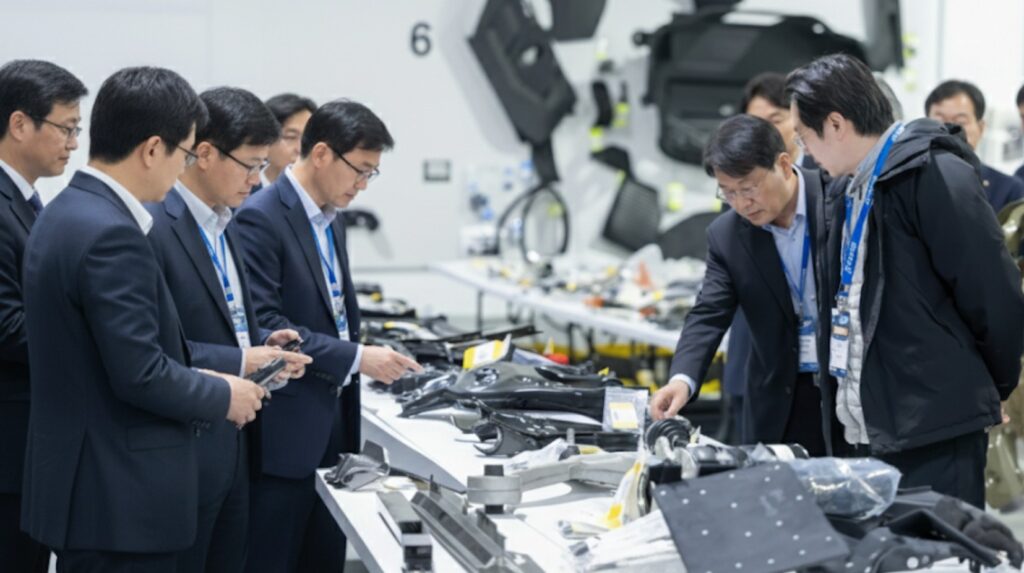
There is a second dimension that often goes underappreciated: the architecture of electric vehicles is genuinely new in ways that the existing knowledge base only partially covers. Structural battery integration, large-scale casting that replaces multi-part assemblies, new thermal management architectures, software-defined vehicle structures that change how physical systems interact.
These are not incremental updates. They represent a new generation of engineering decisions where the competitive benchmark is being established right now, in real time, across programs that are in production or in development today. The OEMs that get access to those benchmarks earliest, and incorporate them into their own programs at the concept stage, will establish cost positions that are very difficult for later-movers to match.
AI: If you step back from the technology entirely, what is the fundamental shift in how the industry needs to think about cost engineering to succeed in this decade?
Ambadipudi: The shift is from treating cost reduction as a corrective activity to treating it as a design input. For most of automotive history, cost reduction has been something the organization does to a vehicle after it has been designed.
The VAVE program, the cost reduction workshop, the procurement renegotiation: all of these operate on a design that already exists and try to take cost out of it after the fact. That model was never fully efficient, but the industry could live with it because programs were long, margins were adequate, and the pace of competitive change was manageable.
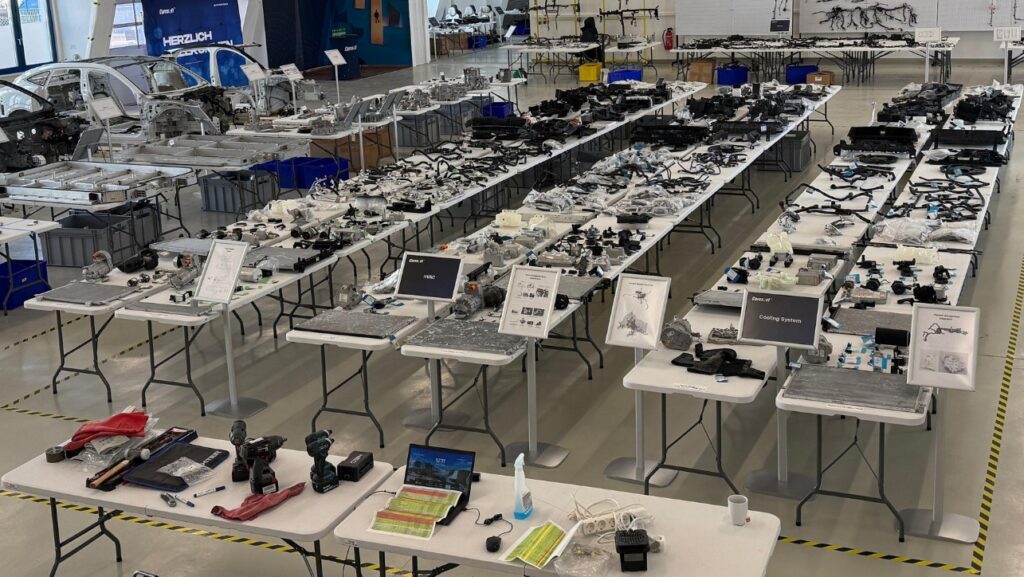
None of those conditions hold today. The industry needs cost intelligence embedded at the moment of design, not applied to the output of design. That means benchmark data available before architecture decisions are made, not after.
It means cost impact quantified as a design parameter alongside weight and performance, not calculated afterward as a consequence. It means the engineer working on a door module at the concept stage knowing exactly what the best-in-class version of that module looks like, what it costs, how it is made, and where the gap is between that benchmark and the current proposal.
When cost intelligence functions as a design input rather than a post-design correction, the entire development process changes. Programs move faster because fewer decisions need to be revisited. Cost targets are set against competitive reality rather than internal history. And the savings that have historically been identified too late to capture become available at the moment they are easiest and cheapest to act on.
That is the shift. And it is not a technology question at its core. It is a question of organizational commitment to putting the right intelligence at the front of the process. The technology exists to support that commitment. The question is whether the industry moves quickly enough to make it standard practice before the margin pressure forces the issue.
About Caresoft Global
Caresoft Global is a world leader in automotive benchmarking and cost reduction production programs.
The company has pioneered engineering-driven benchmarking knowledge and upscaled it to offering cost reduction programs.
Caresoft Global has successfully completed over 60 cost reduction programs for over 20 OEMs, with a combined cost reduction opportunity value of over $3.5 billion.
The company has now introduced Eureka, an AI-powered cost reduction platform that accelerates R&D and optimizes technology and cost for OEMs and suppliers at an unprecedented speed and scale.
More Stories
Explainable Knowledge-Based AI Could Unlock the Next Era of Autonomous Driving by Transforming Compliance, Transparency and Global Regulatory Approval
SwRI, SMU collaborate to advance solid-state batteries
MIKROE celebrates 2000th Click board with NXP RTC targeting ultra-low-power timekeeping with alarms, watchdog, and timestamps