
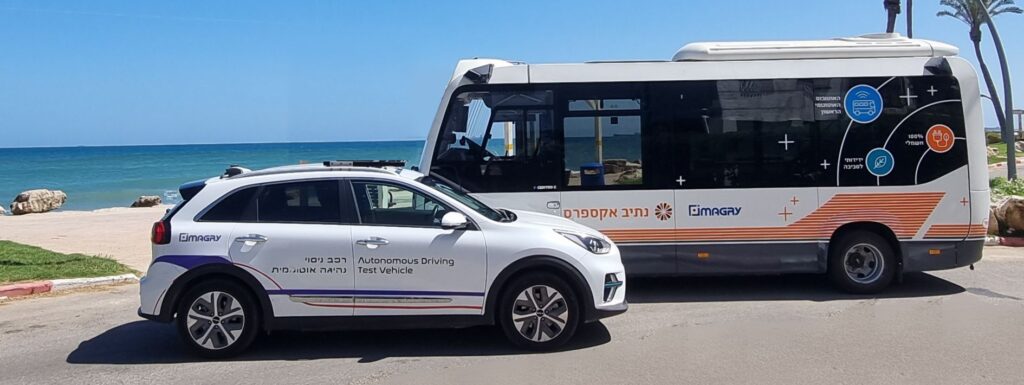
Imagry has autonomous buses and cars on the road.
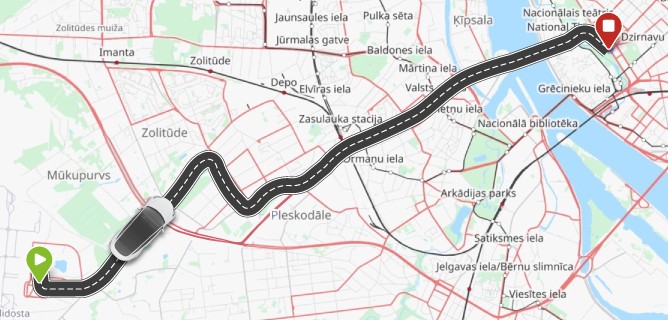
In 2026, camera-based roboshuttles will be driving passengers between the international airport in the Latvian capital of Riga and the city’s central train station commuter hub in a breakthrough for mapless autonomous driving technology.
The shuttles will be deployed through a partnership between Imagry, a provider of real-time artificial intelligence and car-sharing service Carguru, the largest electric car-sharing provider in Latvia.
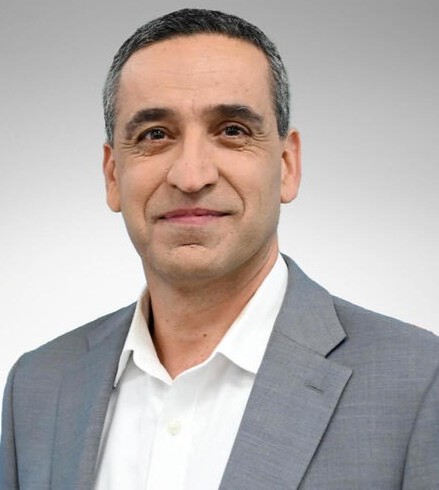
Imagry has been piloting autonomous vehicles on public roads since 2019 (in the US, Germany, Japan, and Israel) and has provided the software for autonomous bus services since 2023, according to CEO Eran Ofir.
Imagry Cortex™ is described by the company as a “unified, real-time autonomy stack that mirrors how humans drive: seeing everything, staying aware, predicting what’s next, and responding instantly.”
It is not reliant on maps, LiDAR, radar, the cloud, or external connectivity for driving, but only for directions.
Ofir told Automotive Industries the company took “an early bet in 2018 to build a system build based on artificial intelligence (AI). It came from the strong belief that sufficient edge computing could be installed in vehicles to allow an end-to-end AI-based system that will mimic the human brain, as far as science and technology allows.”
Sufficient affordable onboard compute power has only become available over the past two years or so, allowing Cortex to be fitted into standard passenger vehicles.
High performance computing is needed for real-time perception, motion planning and control.
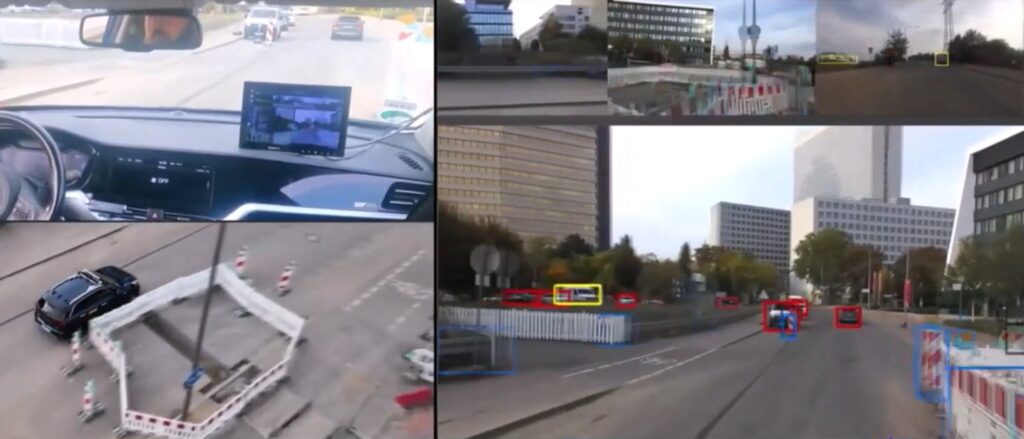
“Perception is based on cameras, the same way that we use our eyes. We have eight different cameras – three at the front, two looking sideways, two below the side mirrors looking back, and one at the back. They capture a 360-degree view of everything around the car up to 300 meters,” he says.
The system feeds the video into numerous stacked neural networks which have been built and trained on hundreds of millions of images since 2018. “That is one of the main differences between us and Tesla (which uses data collected from the global fleet for training one big network).
“Our system is based on a distributed neural network architecture. Every neural network was trained in a very long process to do object detection and classification of a different type of object.
“So, one neural network looks only at traffic lights, another lanes, another parked vehicles, another moving vehicles. There are separate neural networks for roundabouts and sidewalks. And so on. It is the way we humans are trained as we learn to drive.
“We use the output of all the neural networks to build a real time map, and hand it over to another section of our software which does the motion planning, which makes decisions based on supervised learning, which means it learns to drive the way a human does”.
The commands are fed through to the actuators in the vehicle, telling them at what speed to drive, when to brake, when to turn and when to avoid an obstacle, as well as all the other commands that go into driving a vehicle.
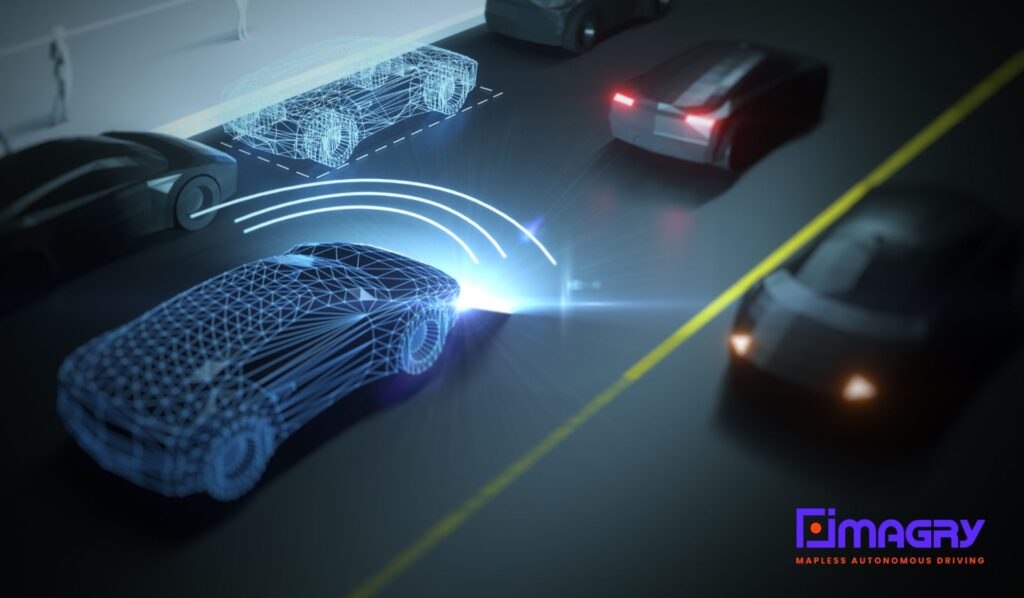
Ofir argues that the system is safer than human drivers.
“First of all, the system captures a 360-degree view of everything happening around the vehicle for a distance of 300 meters. While driving, I cannot observe every user of the road around me.
“What is more important is that the system responds to any event in less than 100 milliseconds. The best human driver, like a Formula 1 trained train driver, has a 330-millisecond response time.
“Typically, for regular human beings like me, and at my age, it would be like 500 to 600 milliseconds. So, Imagry Cortex is at least three times faster than the most trained driver, in terms of responding to everything that is happening on the road.”
The AI is also able to identify and respond to “unknown objects” it has not been specifically trained for, such as a child on a sled or debris falling from a truck when making driving decisions.
Imagry and Carguru will be integrating the autonomous-driving technology into passenger vehicles to create roboshuttles that will address the growing demand for safe, reliable, and sustainable public transportation solutions in Europe, according to a joint statement by the companies.
In the final implementation stage, scheduled for 2027, the Carguru roboshuttle capabilities will be expanded to support bookable paid rides to any destination via a dedicated app.
“By combining Carguru’s experience in sustainable shared mobility with Imagry’s cutting-edge autonomous driving technology, we are taking a major step toward safer, greener, and more accessible transportation.
“This project demonstrates Latvia’s readiness to lead Europe into the era of autonomous mobility,” Vladimirs Reskājs, Founder and CEO of Carguru said at the announcement of the partnership.
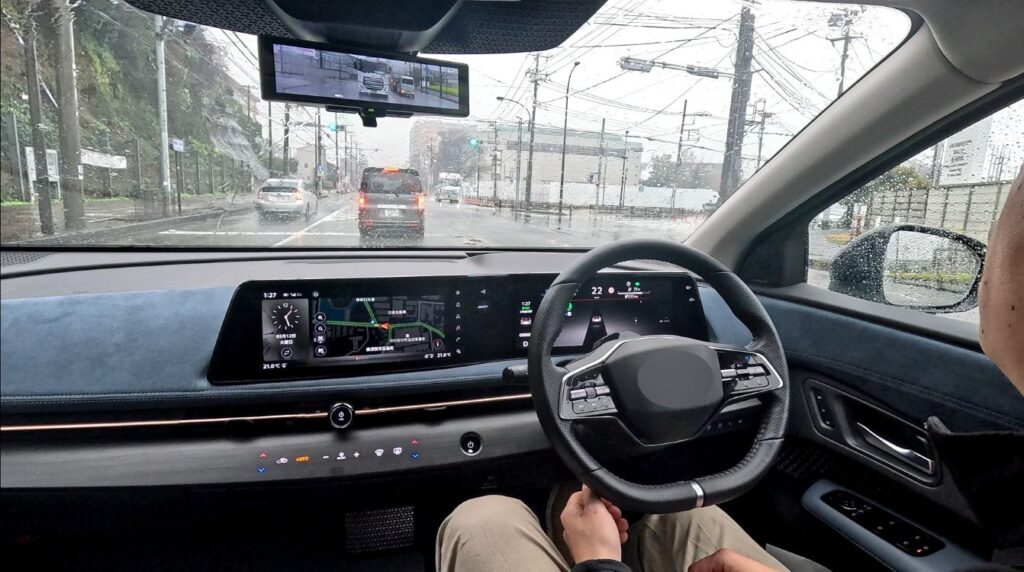
One of the strengths of the system, according to Ofir, is that it has been developed and trained in both left and right-hand drive regions. “There are only two autonomous system companies in the world that can drive on both sides of the road with the very same software” he says.
Modern camera technology is being used to avoid the system being “blinded” when going between dark and bright spaces, such as in and out of tunnels. “We adjust the camera gain control to ensure that they are not blinded in situations where human drivers may struggle,” he told AI.
As for night driving, Ofir says it “is easier in well-lit environments because there are fewer variations in light. Thermal cameras are fitted to the front in case there is not sufficient light.
Latvia was chosen for the first roboshuttles because “there is a desire by the Latvian government to promote and advance the smart mobility sector. Also, this is a place where the big players such as Waymo and Uber are not working, and they are not likely to work there anytime soon. In addition, the route suggested in Riga is a good fit with Imagry’s experience and capabilities,” says Ofir.
The market is already responding to the partnership which is seen as a vote of confidence in the ability of the Imagry Cortex system to scale and operate different types of vehicle. “We are regarded as world leaders in autonomous buses, and will have the first United States autonomous bus service operating on a public road in late 2026.
“The partnership with Carguru gives us the opportunity to deliver 50 Level 4 autonomous vehicles that will drive on public roads. We are considering three different brands (Korean and European), and we might try two different passenger vehicles.
“We are now in discussions with the designated OEMs, as we need to provide 50 vehicles in Riga and expect to provide hundreds more across Europe. It is important for Carguru and for us to provide a comfortable and safe vehicle for passengers,” he says.
There is interest in the mapless technology from operators around the world because of its flexibility. “We are now swamped with opportunities from other fleets that are asking for a similar service. Our distributed NN architecture replaces the need for maps, radar, and LiDAR sensors. Because of this, we need less computing, and the system is less vulnerable to cyber-attacks as it is not getting external instructions of how to drive and what exists on the road.
“It is also more cost-effective. The unit economics that we offer is a third of Waymo’s >$200K per vehicle, or around $70,000. This is due to our technological advantages, which have been tested, proven, and vetted by our customers.”
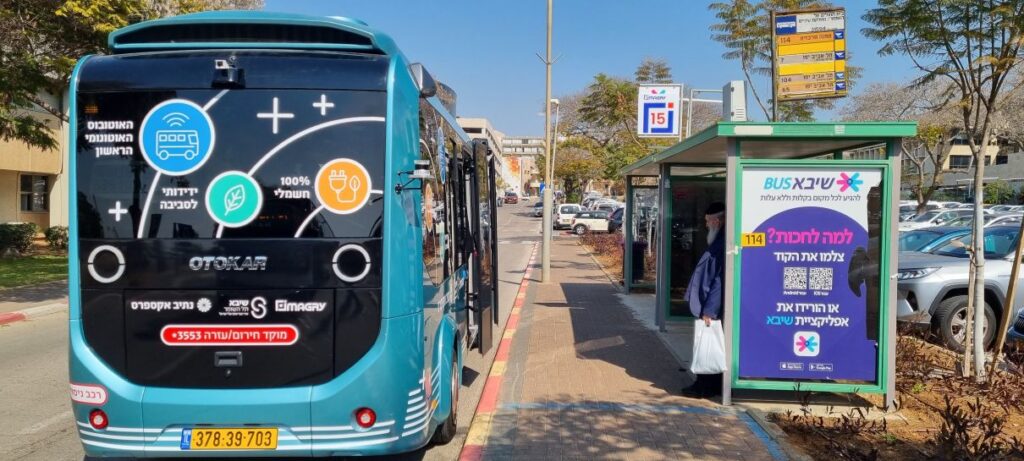
Ofir believes that offering a “white label” option provides a “significant commercial advantage for us. Where companies as Waymo, Poni.ai, Uber, Lyft and similar want their brand displayed on the vehicle, we do not. So, Imagry’s solution can be provided to any existing fleet.
“Imagry is a software company (that also takes care of the integration with the vehicle, in some places by working with partners). It also means that our cycles are much faster as we can kick off a pilot in a new place within three months.
“We know that our system can drive additional types of vehicles (such as commercial vehicles for which we have been approached), but such expansion will occur only after our growth financing.
“We are now in the midst of a series B fundraising, in order to support our growth.
Looking ahead, Ofir says market acceptance is the next hurdle for autonomous driving.
Technologically, the switch to software defined cars over the next five years will enable greater automation.
OEMs may have to write off millions of dollars in sunk costs invested in map-based autonomous driving if they decide to switch from their HD-maps based solutions.
Regulators are facilitating the rollout. “We work closely with the regulators wherever we are operating or plan to operate. We know the European, Japanese, and US regulations well, and we work continuously to comply with them.
“I should mention here that regulations in different countries (as in Europe) are different as each country adds its own flavor, and also that the regulation for roboshuttles and robotaxis is different to the regulations for autonomous buses (the latter is more difficult as a full size bus is a large vehicle that carries tens of passengers, and the potential damage inside and outside the vehicle is bigger).
“In the case of Latvia, we will work with the local government to see that their requirements are met.”
There is a generational divide in the acceptance of autonomous driving.
“It will take some time for people to trust driverless vehicles to transport them and their children, but I strongly believe that my teenage daughters will not have to drive for most of their lives.”
More Stories
NASA on building the future before someone else does
Analog Devices Inc opens systems for collaboration to support automotive innovation
Innoviz innovation in embedded perception