
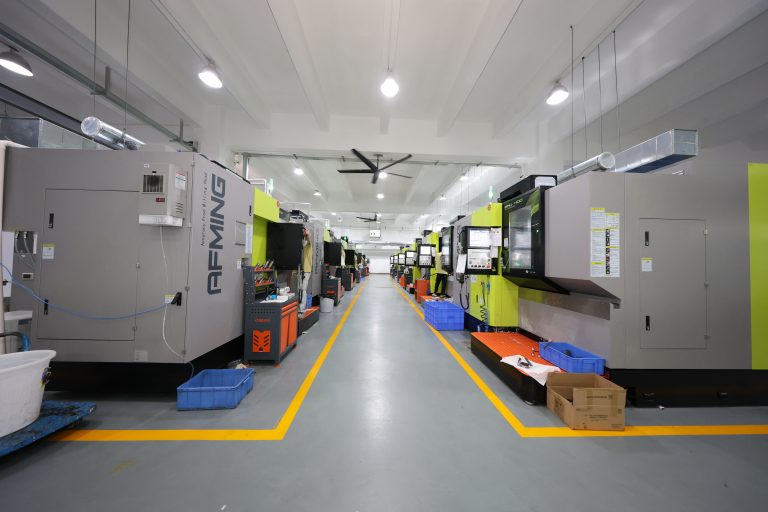
As the automotive landscape keeps shifting—towards electric mobility, autonomous systems, lightweight engineering, and smarter supply chains—manufacturers feel a growing need for speed and precision. Designs change faster, demand swings widely, and competition pushes every brand to innovate without slowing down. In this fast-paced environment, two technologies have become crucial for automakers and suppliers: CNC turning and rapid prototyping.
Together, they help car companies design, test, and produce parts with more accuracy, lower cost, and shorter timelines than ever before.
Why Speed and Precision Are Now Essential in the Automotive World
The modern automotive industry has changed dramatically from what it used to be just a decade ago. Today’s vehicles carry advanced electronics, lightweight materials, complex geometries, and strict safety requirements. Whether it’s an EV motor shaft, a suspension component, or a sensor housing, every part needs immaculate accuracy and consistent quality.
At the same time, automakers don’t just produce parts—they experiment. They modify designs, run simulations, build prototypes, test durability, and revise until the perfect version emerges. Older production methods simply can’t keep up with this pace.
CNC Turning: A Backbone of Automotive Component Manufacturing
CNC turning has become a cornerstone of automotive machining because so many vehicle components are cylindrical or rotational in nature. Shafts, pistons, bushings, bearings, connectors, and pulleys all rely heavily on turning processes.
1. Precision for Critical Rotating Parts
Rotating automotive parts—especially in engines, transmissions, and EV motors—require extremely tight tolerances. Even a slight deviation in diameter or length can cause vibration, premature wear, or mechanical failure. CNC turning provides unmatched consistency and accuracy, making it ideal for these high-stress applications.
2. Repeatability for Large-Scale Production
Once a CNC program is set up, thousands of identical components can be produced with little to no variation. For automakers, this means reliable parts, reduced waste, and predictable assembly processes.
3. Compatibility With High-Strength Materials
Modern vehicles rely heavily on materials like high-grade aluminum, stainless steel, hardened alloys, and titanium. CNC turning handles these materials efficiently, maintaining structural integrity while delivering clean surface finishes.
4. Flexibility for Small-Batch and Custom Runs
While the auto industry is often associated with mass production, small-batch manufacturing still plays a huge role—especially in motorsport, aftermarket parts, EV startups, and high-performance tuning shops. CNC turning supports small or medium volumes without requiring expensive tooling.
Rapid Prototyping: Fueling Innovation in Automotive Engineering
If CNC turning is the backbone of precision parts, rapid prototyping is the engine of innovation. It allows engineers to bring concepts to life quickly, test them in real conditions, and refine designs long before full-scale production begins.
1. Faster Design-to-Production Cycles
In the past, prototyping could take weeks or months. Now, rapid prototyping tools—like 3D printing, quick machining, and soft tooling—cut the entire cycle to days. This helps automakers speed up R&D, especially when developing new EV components or re-designing mechanical parts.
2. Cost Savings in Early-Stage Testing
Traditional manufacturing requires permanent molds or forged dies, which are expensive and time-consuming to build. Rapid prototyping eliminates these upfront costs, allowing engineers to test shapes, dimensions, and functionality without wasting budget.
3. More Room for Experimentation
Because prototypes can be produced quickly and cheaply, designers can explore multiple design versions at once. This leads to better performance, safer components, and innovative features—key advantages in a competitive automotive market.
4. Prototypes That Match End-Use Performance
Modern rapid prototyping isn’t just about mock-ups. With advanced materials and machining, prototypes often behave exactly like final production parts. Engineers can test fit, durability, heat resistance, and aerodynamic behavior using real components.
A Perfect Combination: CNC Turning + Rapid Prototyping in Automotive R&D
While each of these technologies is powerful on its own, their real strength shows when they’re used together. Automotive manufacturers often use rapid prototyping to test shapes and concepts, then switch to CNC turning to refine and finalize the functional parts.
Example Workflow: EV Cooling System Component
- Engineers design a new connector for a battery cooling system.
- Rapid prototyping produces multiple iterations for fit and flow testing.
- After finalizing the design, CNC turning is used to manufacture aluminum versions for road testing.
- Adjustments are made quickly, thanks to flexible machining and prototyping tools.
- The optimized design moves to low-volume or full-scale production.
This integrated workflow removes delays, avoids tooling expenses, and ensures better product performance.
Why Automotive Companies Are Increasingly Outsourcing These Services
Even major manufacturers often outsource CNC turning and rapid prototyping to specialized partners. There are several reasons:
• Access to advanced equipment
High-end multi-axis turning centers and rapid prototyping machines are expensive to maintain. Suppliers who specialize in these services invest continuously in new technology.
• Faster turnaround for development cycles
External partners can produce components quickly without internal bottlenecks.
• Expertise with automotive materials and tolerances
Experienced machining providers understand the specific demands of engine components, EV housings, suspension parts, and safety-critical systems.
• Cost efficiency
Outsourcing reduces labor, equipment, and setup costs, especially for prototypes and small-batch runs.
Companies like PROTO offer a combination of CNC turning, rapid prototyping, low-volume production, and quality control that fits perfectly with automotive workflows.
How This Technology Is Shaping the Future of Cars
As the automotive industry pushes forward, the role of CNC turning and rapid prototyping will only grow.
- EV manufacturers rely on precision-turned shafts, housings, and connectors.
- Autonomous vehicles require compact, high-precision housings for sensors and LiDAR systems.
- Performance tuning shops need custom parts quickly.
- New vehicle platforms demand faster prototyping cycles.
In short, these technologies enable the industry to move faster, innovate boldly, and adapt to a rapidly changing landscape.
Final Thoughts
The shift toward electrification, automation, and lightweight engineering is forcing the automotive industry to rethink how parts are designed and produced. CNC turning provides the accuracy and consistency needed for high-performance automotive components, while rapid prototyping drives innovation by enabling faster, more flexible development.
Together, they form a powerful foundation for the next generation of automotive engineering—helping companies stay competitive, efficient, and ready for the future.

More Stories
Roboteon’s Raj Senguttuvan on AI Orchestration, Digital Twins and the Future of Intelligent Factory Automation
It’s the “Return of the King” as Shelby American Reintroduces F-150 Super Snake Sport Two Door Truck with 810+ Horsepower
Pulse of Quality in Manufacturing Survey Reveals Impact of Geopolitical Tension, Recalls, Trade Tariffs on Automotive Sector